Decriminalisation, digitisation and regulatory simplification driving ease of doing business: Govt

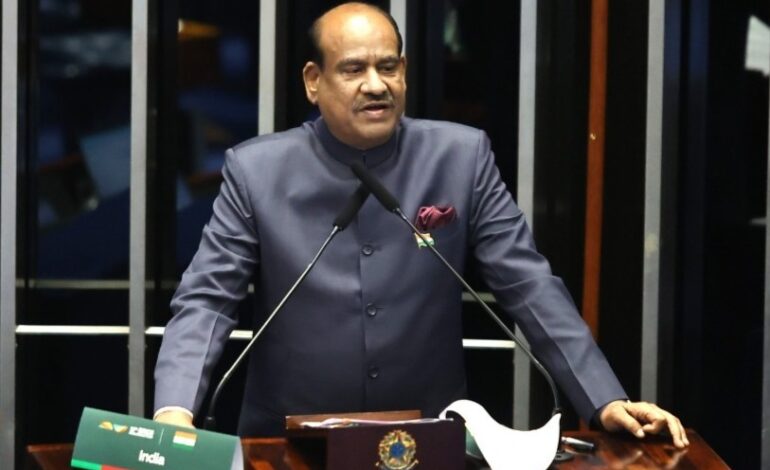
Minister of State for Corporate Affairs Harsh Malhotra

New Delhi, December 16: The Union government on Monday detailed a series of reforms undertaken since 2014 to strengthen ease of doing business, reduce compliance burden and promote ease of living, with a strong emphasis on decriminalisation, digitisation and regulatory simplification.
In a written reply to the Lok Sabha, Minister of State for Corporate Affairs Harsh Malhotra said the reforms have contributed to a near doubling of active companies in the country over the past decade.
A key reform highlighted was the Business Reform Action Plan, launched in 2014 by the department for promotion of industry and internal trade to reduce regulatory obstacles and improve transparency in approvals and clearances. Seven editions of the plan have been completed so far, with states and union territories assessed based on evidence and user feedback.
The government said multiple amendments to the Companies Act, 2013, between 2015 and 2020 focused on easing compliance and decriminalising technical and procedural violations. These changes were aimed at reducing the burden on criminal courts and the National Company Law Tribunal, while supporting small companies, one person companies, start-ups and producer companies.
Reforms were also extended to limited liability partnerships through the LLP (Amendment) Act, 2021, which decriminalised minor violations and introduced a new “small LLP” category to lower compliance costs and encourage formalisation of small businesses.
Additional measures included exemptions under the Companies Act for private companies, government companies, charitable entities, nidhis and companies operating in the international financial services centre at GIFT City. The government also removed incorporation fees for companies with authorised capital up to ₹15 lakh.
To improve access to capital, Indian public companies have been allowed to directly list securities in permissible foreign jurisdictions. The scope of fast-track mergers has also been expanded, including recent amendments in September 2025 that allow more classes of companies to use this route with a more effective deemed approval mechanism.
On the administrative side, the central registration centre, operational since 2016, and integrated digital forms such as SPICe+ and AGILE PRO-S have enabled faster company incorporation and access to services such as PAN, TAN, GST registration and bank accounts. Similar reforms were introduced for LLPs through the FiLLiP form.
The government said it has also established new institutional mechanisms, including the Centre for Processing Accelerated Corporate Exit in 2023 and a central processing centre in 2024 for handling non-STP forms. Adjudication under the Companies Act has been fully digitised through an e-adjudication platform, enabling end-to-end electronic proceedings.
Beyond corporate law reforms, the government highlighted the Jan Vishwas (Amendment of Provisions) Act, 2023, which decriminalised 183 provisions across 42 central Acts. It added that more than 47,000 compliances have been reduced across ministries and states through simplification, digitisation and removal of redundant requirements.
As a result of these measures, the number of active companies rose from 9.52 lakh as of March 31, 2014 to 18.51 lakh as of March 31, 2025. The government said data analytics-driven compliance and enforcement tools integrated into the MCA21 V3 platform are further strengthening transparency and risk-based regulation.