Budget for 140 Crore Indians Sets Course for Viksit Bharat 2047: Harsh Malhotra
DELHI: The Union Budget 2026–27 is a roadmap for building a developed India by 2047, with infrastructure, skilling and inclusive growth as its central pillars, Minister of State Harsh Malhotra
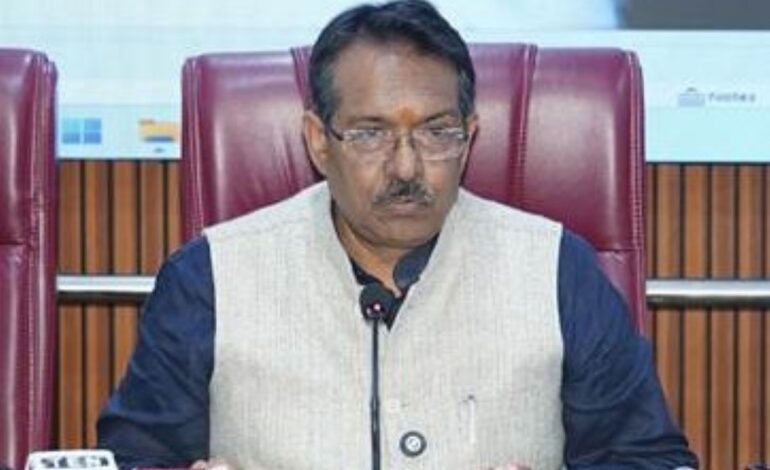
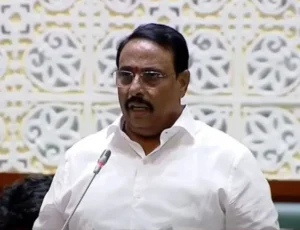
Minister of State Harsh Malhotra addresses the media in Delhi on Friday, outlining the Union Budget 2026–27 and its focus on infrastructure-led growth and the roadmap towards Viksit Bharat 2047.

DELHI: The Union Budget 2026–27 is a roadmap for building a developed India by 2047, with infrastructure, skilling and inclusive growth as its central pillars, Minister of State Harsh Malhotra said while addressing the media.
Calling it a “Budget for 140 crore Indians,” Harsh Malhotra said the proposals balance growth with welfare, ambition with fiscal prudence, and innovation with inclusivity. He said the budget, presented from the newly inaugurated Kartavya Bhawan, marks a historic milestone in India’s development journey.
Harsh Malhotra said the budget draws from the Prime Minister’s vision of Viksit Bharat and lays the foundation for a resilient and future-ready economy. He also credited the Finance Minister for presenting the ninth consecutive Union Budget, reflecting policy continuity, stability and reform-driven governance.
Highlighting the framework of the budget, Harsh Malhotra said it is guided by three core duties—enhancing productivity and competitiveness, accelerating skill development, and ensuring equitable participation across sectors and communities.
He said the government has tripled the overall budget size over the past decade while maintaining fiscal discipline, alongside a sixfold increase in capital expenditure since 2014. These measures, he said, have driven infrastructure growth, employment generation and long-term productivity.
On macroeconomic indicators, Harsh Malhotra pointed to exports touching USD 825 billion, rising defence production under Aatmanirbhar Bharat, declining gross NPAs in the banking sector and steady foreign direct investment inflows as signs of strong global confidence in India’s economy. He said streamlined single-window clearances across 32 central departments and most states, along with the growth of mobile manufacturing units, have strengthened India’s position as a global manufacturing hub.
Education and skilling remain key focus areas, Harsh Malhotra said, citing the announcement of five university townships along industrial corridors and closer integration between academia and industry. He said women-led development has been reinforced through the ninth consecutive gender-focused budget, including hostels in every district to improve access to education and employment.
On emerging technologies, Harsh Malhotra said the budget places strong emphasis on artificial intelligence, with short-term modular courses aimed at professionals, small traders and underemployed individuals. In healthcare, he highlighted a record allocation of about ₹1 lakh crore, including ₹10,000 crore for the Biopharma Shakti initiative, training of 1,00,000 allied health professionals, three AIIMS-Ayurveda institutions and five integrated medical hubs.
Calling infrastructure the backbone of the budget, Harsh Malhotra said about ₹3 lakh crore has been allocated for road development, along with plans for seven high-speed rail corridors. He cited the Delhi–Varanasi high-speed rail corridor and redevelopment of 1,000 stations under the Amrit Bharat initiative. Defence allocation of ₹7.5 lakh crore, he said, strengthens national security while boosting indigenous manufacturing.
Referring to a flagship project, Harsh Malhotra said the Delhi–Mumbai Expressway, scheduled for completion by 2027, will cut travel time from 33 hours to 12 hours, significantly improving logistics efficiency and economic integration.
Focusing on Delhi, he said the government has announced an outlay of about ₹24,000 crore for a comprehensive decongestion plan. Key stretches including Ashram–Badarpur, Punjabi Bagh–Tikri Border and Mehrauli–Gurugram, now under NHAI, will improve traffic flow on 33 km of critical corridors connecting the capital with neighbouring regions.
Harsh Malhotra said the decongestion plan includes extensions of the Delhi–Amritsar–Katra Expressway and UER-II, connectivity to the Delhi–Dehradun Expressway, and construction of a road tunnel from Dwarka Expressway to Nelson Mandela Marg to ease traffic movement.
On environmental priorities, he said the government is committed to eliminating the Bhalswa, Ghazipur and Okhla landfills through waste segregation and reuse under the Waste to Wealth mission. He added that inert waste is already being used in major road projects, while a new water treatment plant at Chandrawal, with an allocation of about ₹380 crore, will support the Nal Se Jal vision in Delhi.
Harsh Malhotra said the budget also provides ₹2,700 crore for railway infrastructure in Delhi, funds for pollution control, natural calamities and support for victims of the anti-Sikh riots, reflecting a compassionate governance approach.
Concluding, he said the budget strengthens affordable education, healthcare and ease of living, and accelerates India’s transition from local to global leadership. He described the Union Budget 2026–27 as not just a financial statement, but an architectural blueprint for a developed India, bringing the goal of Viksit Bharat 2047 decisively within reach.