Network Planning Group Reviews Seven Major Road Projects to Boost Multimodal Connectivity under PM GatiShakti
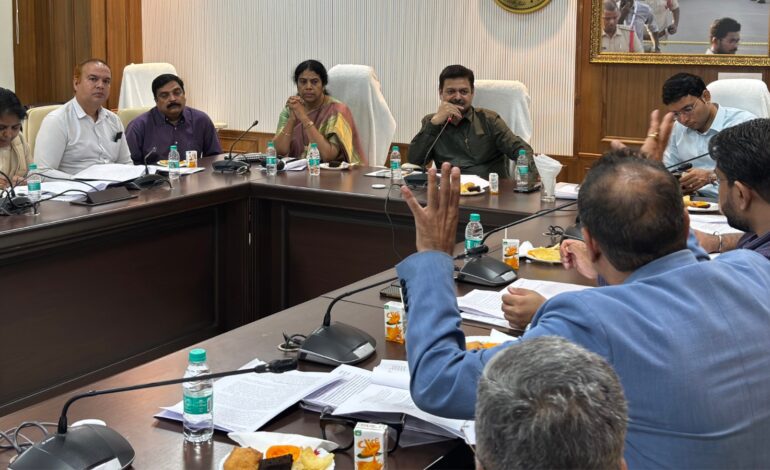
New Delhi: The Network Planning Group (NPG), under the Department for Promotion of Industry and Internal Trade, reviewed seven major road infrastructure proposals during its 108th meeting, as part of
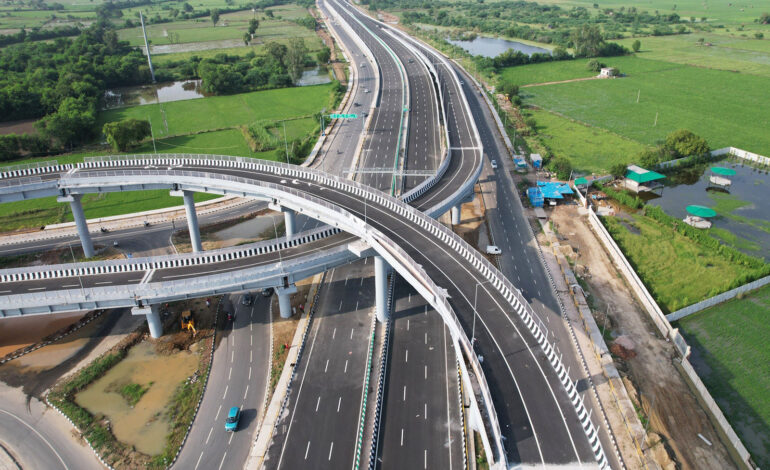
As India moves towards the vision of Viksit Bharat, the expanding highway network is expected to remain a critical driver of economic growth, investment, employment generation and improved quality of life for millions of citizens.

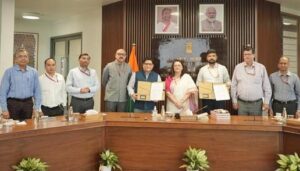
New Delhi: The Network Planning Group (NPG), under the Department for Promotion of Industry and Internal Trade, reviewed seven major road infrastructure proposals during its 108th meeting, as part of the government’s ongoing effort to strengthen integrated multimodal connectivity under the PM GatiShakti National Master Plan.
The projects, all proposed by the Ministry of Road Transport and Highways (MoRTH), were assessed for alignment with PM GatiShakti principles, including seamless multimodal integration, last-mile connectivity to economic and social nodes, and a whole-of-government planning approach.
Collectively, the evaluated projects are expected to enhance logistics efficiency, reduce travel time and costs, improve road safety, and generate significant socio-economic benefits across multiple states and regions.
Salem–Kumarapalayam Six-Lane Corridor to Strengthen Southern Freight Movement
In Tamil Nadu, the NPG reviewed the proposal for six-laning of the 102.03 km Salem–Kumarapalayam stretch of NH-544, a critical segment of the high-density Kochi–Coimbatore–Bengaluru freight and passenger corridor.
The project includes continuous service roads in urban and industrial stretches, upgraded junctions and interchanges, and construction and widening of bridges, flyovers, road-over-bridges and culverts. Designed to meet future traffic demand, the corridor is expected to significantly improve connectivity to industrial clusters, logistics hubs, SEZs, inland container depots and logistics parks.
By strengthening road–rail–air–port linkages across Salem, Erode, Tiruppur, Coimbatore and Hosur, the project will support key sectors such as textiles, agri-processing, manufacturing and containerised cargo.
Amaravati Outer Ring Road to Decongest Capital Region
The 189.93 km Amaravati Outer Ring Road (ORR) in Andhra Pradesh was reviewed as a greenfield project aimed at easing congestion in the Amaravati capital region, including Vijayawada, Guntur and Tenali.
The ORR is designed to divert through-traffic away from city centres, improve airport access, and enable future integration with rapid transit corridors. Envisioned as a multimodal logistics spine, the project will connect inland urban and industrial hubs with National Waterway-4 and major ports such as Machilipatnam and Krishnapatnam.
Once operational, the corridor is expected to reduce travel time by 30–40 percent, lower fuel consumption, and reduce vehicular emissions, contributing to both logistics efficiency and environmental sustainability.
Strategic Road Connectivity in Jammu & Kashmir Border Areas
The NPG evaluated the 62.10 km two-lane road project from Rafiabad to Tangdhar in Jammu & Kashmir, aimed at improving connectivity in strategically sensitive border areas along the Line of Control.
The corridor will link Kupwara, Chowkibal, Tangdhar and Teetwal, strengthening defence logistics while improving access to healthcare, education and essential services in remote villages. The project will also support tourism, horticulture and local livelihoods, while connecting the region with NH-01, Srinagar Airport and railheads at Sopore and Baramulla.
Leh Bypass to Improve Urban Mobility and Logistics in Ladakh
In Ladakh, the proposed 48.11 km Leh Bypass-1 was assessed as a strategic greenfield corridor connecting NH-01 (Srinagar–Leh) with NH-03 (Leh–Manali).
The bypass is intended to divert through-traffic away from congested stretches of Leh city, improve access to Leh Airport, and enhance connectivity to industrial estates at Phyang and Leh. The project is expected to reduce travel time, lower transportation costs, stimulate trade and tourism, and generate economic opportunities for nearby villages.
Chitrakoot–Satna Four-Lane Upgrade to Support Industry and Tourism
The proposal to upgrade the 77.10 km Chitrakoot–Majhgawan–Satna corridor from a two-lane road to a four-lane divided carriageway across Madhya Pradesh and Uttar Pradesh was also reviewed.
The upgradation will improve inter-state connectivity, reduce freight bottlenecks, and support heavy industrial traffic from cement plants in the Satna region. Improved access to airports, rail networks and logistics facilities will enhance multimodal integration, while better road connectivity is expected to boost pilgrimage and tourism activity in Chitrakoot.
Rourkela–Sithiyo Greenfield Highway to Link Economic Nodes
The 156.10 km four-lane greenfield highway from Rourkela to Sithiyo, spanning Odisha and Jharkhand, was evaluated as a strategic corridor connecting PM GatiShakti economic nodes, including a seafood cluster and a SEZ.
The highway will integrate with major national and international corridors such as the Asian Highway network, NH-53, NH-19, the Raipur–Dhanbad corridor and the Golden Quadrilateral. The project is expected to significantly enhance regional mobility, improve logistics efficiency and strengthen inter-state connectivity.
Patna Ring Road Section to Ease Urban Congestion
The NPG also reviewed the proposal for a 9.98 km six-lane greenfield stretch from Kanhauli to Sherpur as part of the Patna Ring Road project in Bihar.
Connecting NH-30 and NH-922, the corridor will help decongest Patna city and improve access to railway stations, the upcoming Bihta Airport and the proposed Kanhauli Bus Terminal. Enhanced connectivity to industrial and logistics hubs in the Bihta region is expected to support efficient freight movement and urban economic growth.
Strengthening Integrated Infrastructure Planning
Officials noted that all seven projects demonstrate strong alignment with PM GatiShakti’s integrated planning framework by linking roads with rail, ports, airports, waterways, industrial clusters and social infrastructure. The coordinated evaluation process aims to ensure optimal infrastructure utilisation, faster project execution and maximised socio-economic returns.
The reviewed projects will now move forward through subsequent appraisal and approval stages, contributing to India’s broader objective of building a future-ready, multimodal infrastructure network that supports economic growth, regional development and logistics competitiveness, according to a statement released by the ministry.