India Energy Week 2026 to be held in Goa from January 27–30
Panaji, January 7: India Energy Week (IEW) 2026 will be held in Goa from January 27 to 30, bringing together global ministers, chief executives, policymakers, financial institutions, academics and technology
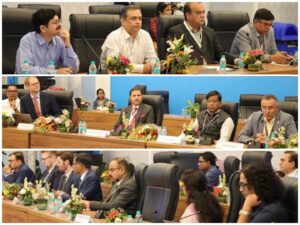
India Energy Week (IEW) 2026 will be held in Goa from January 27 to 30, bringing together global ministers, chief executives, policymakers, financial institutions, academics and technology providers at a crucial moment for the international energy sector.

Panaji, January 7: India Energy Week (IEW) 2026 will be held in Goa from January 27 to 30, bringing together global ministers, chief executives, policymakers, financial institutions, academics and technology providers at a crucial moment for the international energy sector. Positioned as the first major global energy gathering of the year, the event will focus on energy security, investment mobilisation and practical pathways for decarbonisation.
Building on the scale and momentum of previous editions, the 2026 edition of India Energy Week is expected to draw participation from more than 120 countries. The 2025 edition recorded over 68,000 attendees, 570 exhibitors and 5,400 conference delegates, with 100 conference sessions and more than 540 global speakers. Organisers said the upcoming edition will expand further, reinforcing IEW’s position among the world’s leading energy dialogue platforms.
Hosted under the patronage of the Ministry of Petroleum and Natural Gas, Government of India, and jointly organised by the Federation of Indian Petroleum Industry and dmg events, IEW 2026 is designed as a neutral, globally connected forum for cooperation on energy security, affordability and sustainability. Delegations from the Americas, Europe, the Middle East, Africa and the Asia-Pacific region are expected, underlining India’s growing role in global energy diplomacy.
According to the International Energy Agency World Energy Outlook 2025, India is projected to account for over 23 per cent of global incremental energy demand by 2050, the largest share for any country. Against this backdrop, the conference will focus on strengthening resilient energy systems while accelerating the clean energy transition.
Reform-led energy framework
India Energy Week 2026 will spotlight India’s reform-driven energy framework that seeks to balance economic growth, climate responsibility and consumer protection. Recent legislative and regulatory changes under the Oilfields (Regulation and Development) Act, 2025 and the Petroleum and Natural Gas Rules, 2025 have strengthened the upstream ecosystem by enabling single petroleum leases covering exploration, production, decarbonisation and integrated energy projects. The framework also provides for time-bound approvals, long-term lease stability of up to 30 years, infrastructure sharing mechanisms and enhanced investor protection through arbitration and compensation safeguards.
Clean energy and ethanol programme
India’s ethanol blending programme, which has emerged as a global benchmark, will be a key area of discussion. Since 2014, the programme has resulted in cumulative foreign exchange savings of ₹1.59 lakh crore, reduced carbon dioxide emissions by 813 lakh metric tonnes and substituted 270 lakh metric tonnes of crude oil. Payments of ₹2.32 lakh crore have been made to ethanol distillers by oil marketing companies, with ₹1.39 lakh crore paid directly to farmers. Biofuels, green hydrogen, sustainable fuels and emerging low-carbon technologies are expected to feature prominently across sessions.
Infrastructure expansion and energy security
The conference will also highlight India’s expansion of domestic energy infrastructure. Petrol retail outlets have increased from around 52,000 in 2014 to over one lakh in 2025, while CNG stations have grown from fewer than 1,000 to more than 8,400. PNG household connections have expanded from 25 lakh to over 1.59 crore, and the natural gas pipeline network has grown by about 66 per cent to more than 25,900 km. City gas distribution coverage now extends across the country, excluding island territories.
Price stability and consumer protection
Despite volatility in global energy markets, India has maintained relative price stability for consumers. Petrol and diesel prices in Delhi in 2025 remained lower than in 2021, even as prices rose sharply in several major economies. Central excise duty cuts of ₹13 per litre on petrol and ₹16 per litre on diesel were fully passed on to consumers, along with an additional ₹2 per litre reduction implemented by oil marketing companies in March 2024. LPG prices for PMUY beneficiaries have been maintained at around ₹553 per cylinder, among the lowest globally.
Global energy dialogue platform
Over four days, IEW 2026 will feature ministerial roundtables, CEO dialogues, public-private sector interactions, technology showcases, exhibitions, social events and media engagements. Dedicated sessions will focus on hydrogen economies, green finance, sustainable fuels, circularity, digital transformation and workforce development. The expanded exhibition will host hundreds of companies across the energy value chain, supported by extensive international participation and country pavilions.
India Energy Week is India’s flagship global energy platform, aimed at advancing a secure, sustainable and affordable energy future through policy alignment, investment facilitation and technological collaboration. The 2026 edition will be held in Goa from January 27 to 30.
More information is available at indiaenergyweek.com.