Amit Shah Inaugurates Anti-Terrorism Conference 2025, Calls for Unified National Counter-Terror Grid
New Delhi, December 27: Union Home Minister and Minister for Cooperation Amit Shah on Friday inaugurated the two-day Anti-Terrorism Conference–2025 in the national capital, calling for the creation of a
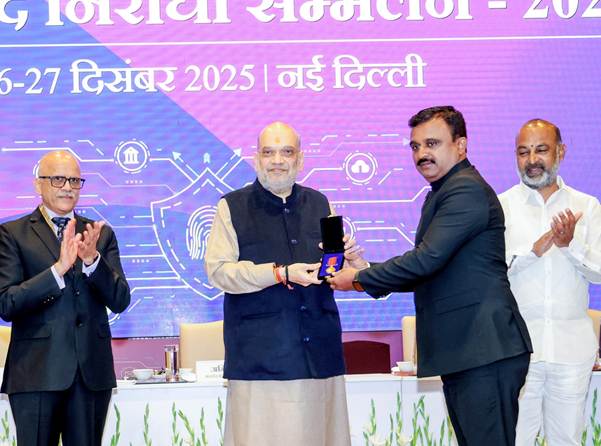
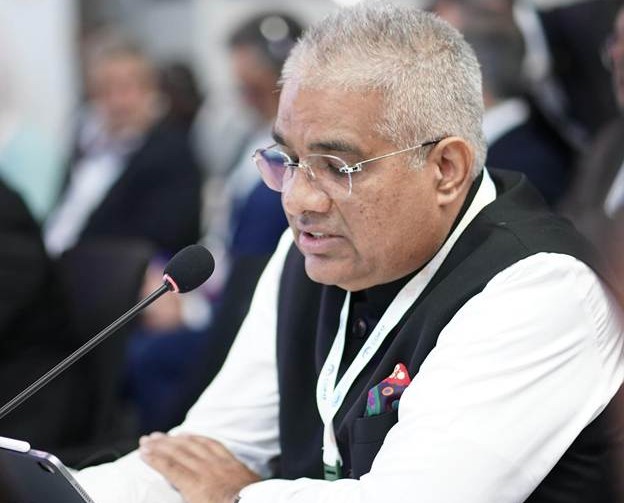
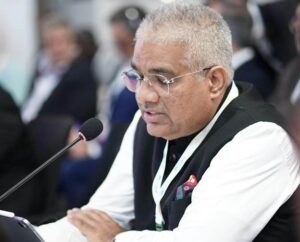
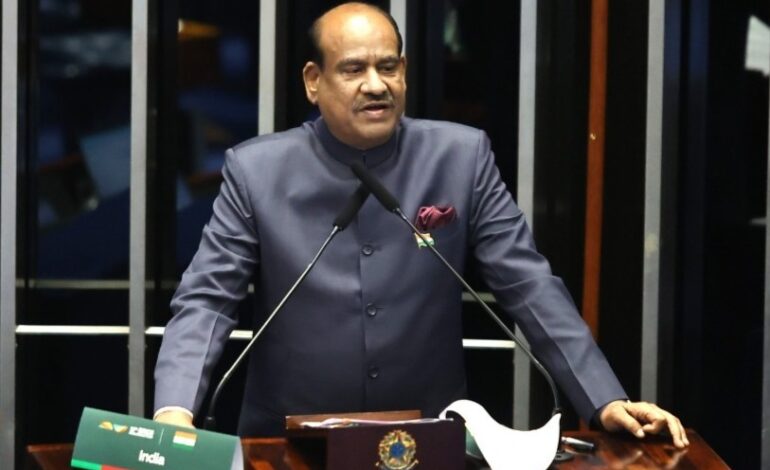
Union Home Minister Amit Shah, MoS Bandi Sanjay at the Anti-Terrorism Conference–2025 in New Delhi on Friday.

New Delhi, December 27: Union Home Minister and Minister for Cooperation Amit Shah on Friday inaugurated the two-day Anti-Terrorism Conference–2025 in the national capital, calling for the creation of a strong, technology-enabled and operationally uniform national anti-terrorism grid to counter emerging and future threats.
The annual conference, organised by the National Investigation Agency under the Ministry of Home Affairs, has emerged as a key platform for coordination among central agencies and state police forces in line with Prime Minister Narendra Modi’s zero-tolerance policy against terrorism.
Addressing senior police officers, intelligence officials and experts from across the country, Shah said terrorism is rapidly evolving due to the increasing use of technology, cyber tools and hybrid warfare methods. “We must remain two steps ahead of terrorists by anticipating future challenges and building an impenetrable anti-terrorism grid for coming generations,” he said.
Shah underlined the need for all agencies to analyse every major terrorist incident in India and globally to strengthen counter-terror capabilities. He stressed that operational uniformity across states is critical for accurate threat assessment, effective intelligence sharing and coordinated action. In this context, he called for the early adoption of a common Anti-Terrorism Squad (ATS) structure by all states.
During the event, the home minister unveiled the updated crime manual prepared by the NIA and launched two national digital platforms—the Organised Crime Network Database and the Lost/Looted and Recovered Weapon Database—aimed at strengthening investigation, prosecution and inter-agency coordination.
Referring to recent terror-related incidents, Shah said India has set a new benchmark by acting decisively against both planners and executors of attacks. “For the first time, those who planned a terrorist incident were punished through Operation Sindoor, while those who executed it were neutralised under Operation Mahadev,” he said, adding that such actions sent a clear message to terror sponsors across the border.
Highlighting the nexus between organised crime and terrorism, Shah said criminal networks often begin with extortion and ransom before linking up with terror groups once their leaders flee abroad. He announced that the government is preparing an action plan for a “360-degree strike” against organised crime and urged states to actively use the new databases with support from agencies such as the NIA, CBI and Intelligence Bureau.
The home minister also emphasised greater use of national intelligence platforms such as NATGRID and NIDAAN, calling for their mandatory application in specific categories of investigations. He advocated replacing the “need to know” approach with a “duty to share” culture among agencies to ensure seamless data integration.
As India’s economy and global footprint expand, Shah cautioned that internal security challenges will also grow. “National security preparedness does not begin at the borders alone—it must start much earlier, through coordinated intelligence, technology and policy action,” he said, urging all central and state agencies to function as a unified “Team India” against terrorism.
The conference is expected to culminate in a set of actionable recommendations aimed at strengthening India’s counter-terrorism architecture in an increasingly complex global security environment.