Home Ministry and National Judicial Academy host National Conference on New Criminal Laws in Bhopal
Union Home Secretary Govind Mohan says India’s new criminal laws mark a shift toward secure, transparent, and technology-driven justice under Prime Minister Modi’s leadership Bhopal, Nov 10: The Ministry of

The event brought together 120 participants from all states and union territories, representing the judiciary, prosecution, and police—the three pillars of India’s criminal justice system.

Union Home Secretary Govind Mohan says India’s new criminal laws mark a shift toward secure, transparent, and technology-driven justice under Prime Minister Modi’s leadership
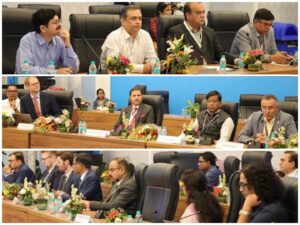
Bhopal, Nov 10: The Ministry of Home Affairs, in collaboration with the National Judicial Academy (NJA), Bhopal, organized a two-day National Conference on India’s three new criminal laws on November 8–9, 2025. The event brought together 120 participants from all states and union territories, representing the judiciary, prosecution, and police—the three pillars of India’s criminal justice system.
Addressing the conference, Union Home Secretary Govind Mohan said that under the leadership of Prime Minister Narendra Modi, the government is building a secure, transparent, and evidence-based criminal justice system. He emphasized that under the guidance of Union Home Minister Amit Shah, India has entered a new era of speedy and victim-centric justice.
Highlighting the transformation, he said the new criminal laws are designed to decolonize India’s justice framework and make it technology-enabled. He praised the National Judicial Academy for drafting model rules and standard operating procedures for digital innovations such as e-Sakshya (electronic evidence), e-Summons, Nyay Shruti (audio-visual accessibility in courts), and community service as an alternative sentencing mechanism.
The Home Secretary noted that technology is the bedrock of the new framework, ensuring speed and efficiency in investigation, trial, and judgment. He said the e-Committee of the Supreme Court has played a vital role in integrating technology with judicial processes. Mohan urged state governments to set up dedicated monitoring mechanisms and ensure digitization across police, prosecution, and court systems to fully institutionalize these reforms.
Justice Aniruddha Bose, Director of the National Judicial Academy, described the event as a unique platform bringing together police, prosecution, and judiciary for joint capacity-building. He underscored the importance of adapting to new technologies and concepts to ensure effective implementation of the reformed legal framework.
The two-day conference featured detailed discussions on digital transformation in investigation and justice delivery, handling of electronic evidence, and new procedural timelines for ensuring time-bound justice. Participants engaged in case studies, interactive sessions, and live demonstrations of digital tools supporting the new system.
According to official data, implementation of the Bharatiya Nyaya Sanhita (BNS), Bharatiya Nagrik Suraksha Sanhita (BNSS), and Bharatiya Sakshya Adhiniyam (BSA) is progressing rapidly. So far, training has been completed for 15.3 lakh police officers, 12,100 prosecutors, 43,941 prison officers, 3,036 forensic scientists, and 18,884 judicial officers. Over 50 lakh FIRs have been registered under BNS, with 33 lakh charge sheets filed and 22 lakh Sakshya IDs generated since implementation.
The conference reaffirmed India’s commitment to a modern, data-driven, and citizen-centric criminal justice system, marking a significant milestone in the country’s legal reform journey.