India Eyes Leadership in Sustainable Aviation Fuel as Ministry Launches Feasibility Study
New Delhi, September 3: India is taking decisive steps towards decarbonizing its burgeoning aviation sector with the launch of a comprehensive feasibility study on Sustainable Aviation Fuel (SAF). The report,
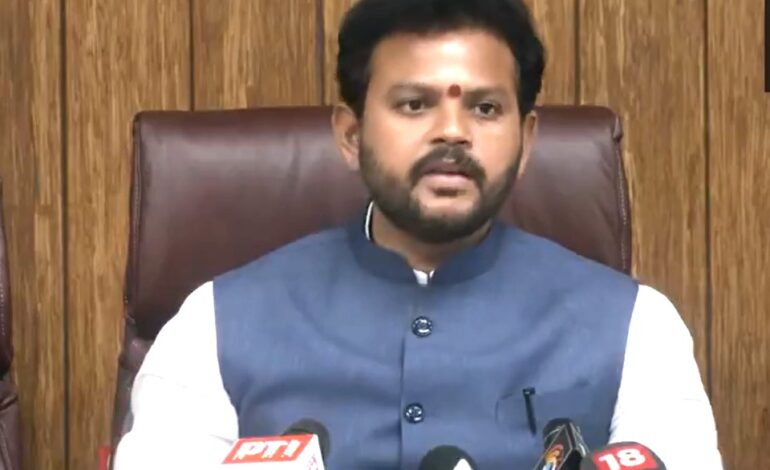
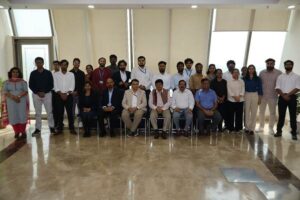
The launch event, held at Udaan Bhawan, was attended by Union Civil Aviation Minister Ram Mohan Naidu, Secretary of Civil Aviation Samir Kumar Sinha, Director General of Civil Aviation Faiz Ahmed, and ICAO’s Deputy Director of Environment, Jane Hupe.

New Delhi, September 3: India is taking decisive steps towards decarbonizing its burgeoning aviation sector with the launch of a comprehensive feasibility study on Sustainable Aviation Fuel (SAF). The report, unveiled today by the Ministry of Civil Aviation in collaboration with the International Civil Aviation Organization (ICAO) and with support from the European Union, outlines a strategic roadmap for India to become a global leader in SAF production and utilization.
The launch event, held at Udaan Bhawan, was attended by Union Civil Aviation Minister Ram Mohan Naidu, Secretary of Civil Aviation Samir Kumar Sinha, Director General of Civil Aviation Faiz Ahmed, and ICAO’s Deputy Director of Environment, Jane Hupe. The study, conducted under the ICAO ACT-SAF Programme, assesses India’s domestic capacity for producing and deploying drop-in SAF, identifying key factors such as feedstock availability, infrastructure readiness, policy framework, and potential for market development.
Minister Naidu emphasized the critical role of SAF in achieving India’s sustainability goals, highlighting that “SAF is a practical and immediate solution to decarbonize the aviation sector, capable of reducing lifecycle CO₂ emissions by up to 80% compared to conventional jet fuel.” He reaffirmed India’s ambition to achieve 1% SAF blending by 2027, progressing to 2% by 2028 and 5% by 2030, aligning with international climate commitments under CORSIA.
India’s vast agricultural landscape offers a significant advantage, with over 750 million metric tonnes of biomass and nearly 230 million tonnes of surplus agricultural residue available annually. This resource base positions India to meet not only its domestic SAF demand but also to potentially emerge as a major exporter of sustainable aviation fuels.
The country has already taken key steps, such as designating COTECNA Inspection India Pvt. Ltd. as the first SAF certification body and certifying Indian Oil Corporation’s Panipat Refinery as India’s first SAF producer. Minister Naidu noted that the expansion of SAF production could simultaneously reduce crude oil imports and cut emissions by 20-25 million tonnes annually, while supporting rural economies through a strengthened biomass and agricultural waste value chain.
Addressing the gathering, the Minister articulated India’s broader green aviation vision. “Under Prime Minister Narendra Modi’s leadership, we are committed to positioning India as a pioneer in sustainable aviation, leveraging our strengths in agriculture and renewable energy to drive this transformation,” he stated.
Highlighting India’s commitment to global climate goals, Secretary of Civil Aviation Shri Sinha emphasized the collective responsibility to combat climate change, noting that India already operates one of the youngest, most fuel-efficient aircraft fleets worldwide. He pointed out that with 88 airports already powered entirely by green energy, India continues to set benchmarks in sustainable aviation practices.
The Director General of Civil Aviation also underscored the strategic importance of the SAF feasibility study, which will inform the development of a comprehensive national SAF policy. With passenger traffic projected to double to 500 million by 2030, India’s aviation industry is poised for rapid growth, making the integration of sustainable fuels a key component of its future trajectory.
The SAF Feasibility Report, the ministry said, signals a long-term commitment to creating a resilient, low-carbon aviation ecosystem. With strong domestic supply chains rooted in agricultural waste and municipal solid waste, India aims to not only meet its environmental targets but also to emerge as a global pioneer in green aviation technology, cementing its position on the international stage.