India Unveils First-Ever National Guidelines for Animal Blood Transfusion and Veterinary Blood Banks
New Delhi, August 25: In a landmark move for veterinary healthcare, the Department of Animal Husbandry & Dairying (DAHD) has released India’s first-ever “Guidelines and Standard Operating Procedures (SOPs) for
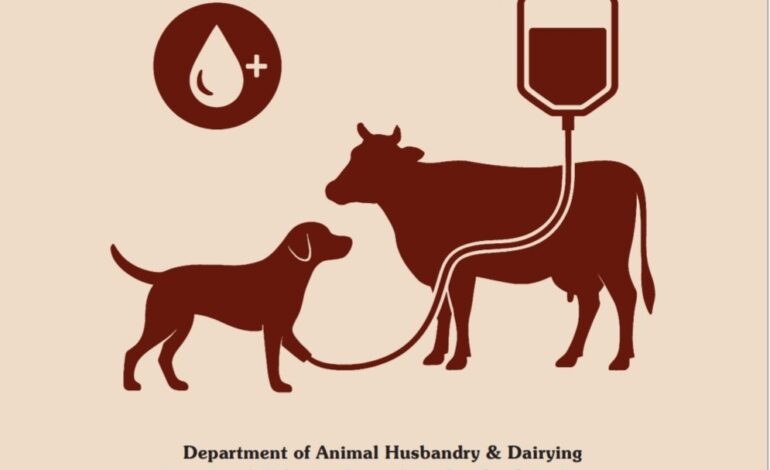
The framework aims to standardize veterinary transfusion practices, establish state-regulated blood banks, and promote biosafety while aligning with global best standards.

New Delhi, August 25: In a landmark move for veterinary healthcare, the Department of Animal Husbandry & Dairying (DAHD) has released India’s first-ever “Guidelines and Standard Operating Procedures (SOPs) for Blood Transfusion and Blood Banks for Animals.” The framework aims to standardize veterinary transfusion practices, establish state-regulated blood banks, and promote biosafety while aligning with global best standards.
Until now, most animal blood transfusions in India were performed as emergency measures, often without donor screening, blood typing, or standardized storage protocols. The newly launched guidelines fill this gap by detailing procedures for donor selection, blood collection, component processing, transfusion monitoring, and adverse reaction reporting.
Key Features
- Establishment of state-regulated veterinary blood banks with biosafety-compliant infrastructure.
- Mandatory blood typing and cross-matching to prevent incompatibility reactions.
- Clear donor eligibility norms on health, vaccination, age, weight, and disease screening.
- Emphasis on voluntary, non-remunerated donations with a Donor Rights Charter.
- Integration of One Health principles to manage zoonotic risks.
- Roadmap for a National Veterinary Blood Bank Network (N-VBBN) with digital registries, real-time inventories, and an emergency helpline.
- Training modules in BVSc & AH curriculum, postgraduate programs, and Continuing Veterinary Education.
The framework also encourages innovation through mobile collection units, cryopreservation for rare blood types, and mobile apps for donor-recipient matching.
Sector Impact
India is home to over 537 million livestock and 125 million companion animals, contributing 5.5% to national GDP and over 30% to agricultural GDP. With rising demand for advanced veterinary care, particularly in trauma, surgery, and infectious disease management, the guidelines are expected to significantly improve animal survival rates and welfare standards.
Officials described the release as a “milestone in veterinary healthcare”, strengthening clinical care, safeguarding rural livelihoods, and advancing the cause of animal welfare. The advisory framework will remain dynamic, evolving with scientific evidence and stakeholder feedback.