893 E20 petrol samples meet BIS standards, says Centre amid Karnataka ethanol-content controversy
Oil marketing companies report that all 56 samples tested in Karnataka contained 19–20% ethanol, disputing claims of 26–31% and seeking joint sampling and independent verification.
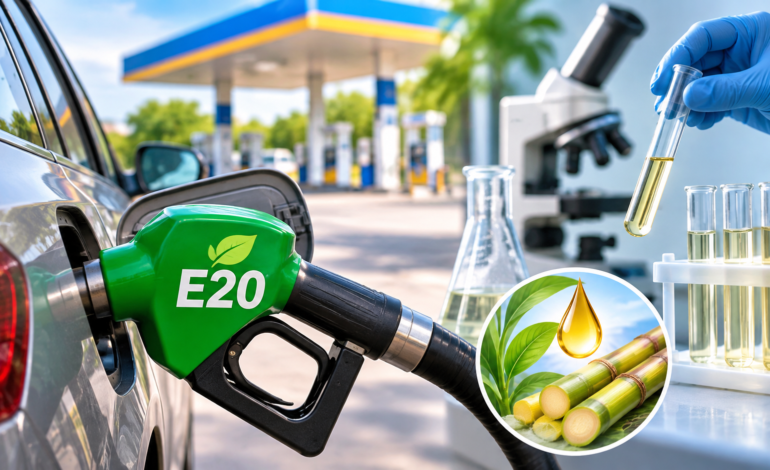
According to the Ministry, all 56 samples tested in Karnataka also conformed to the Bureau of Indian Standards (BIS) specification IS 17021, recording ethanol content between 19% and 20%, with an average of 19.30%.

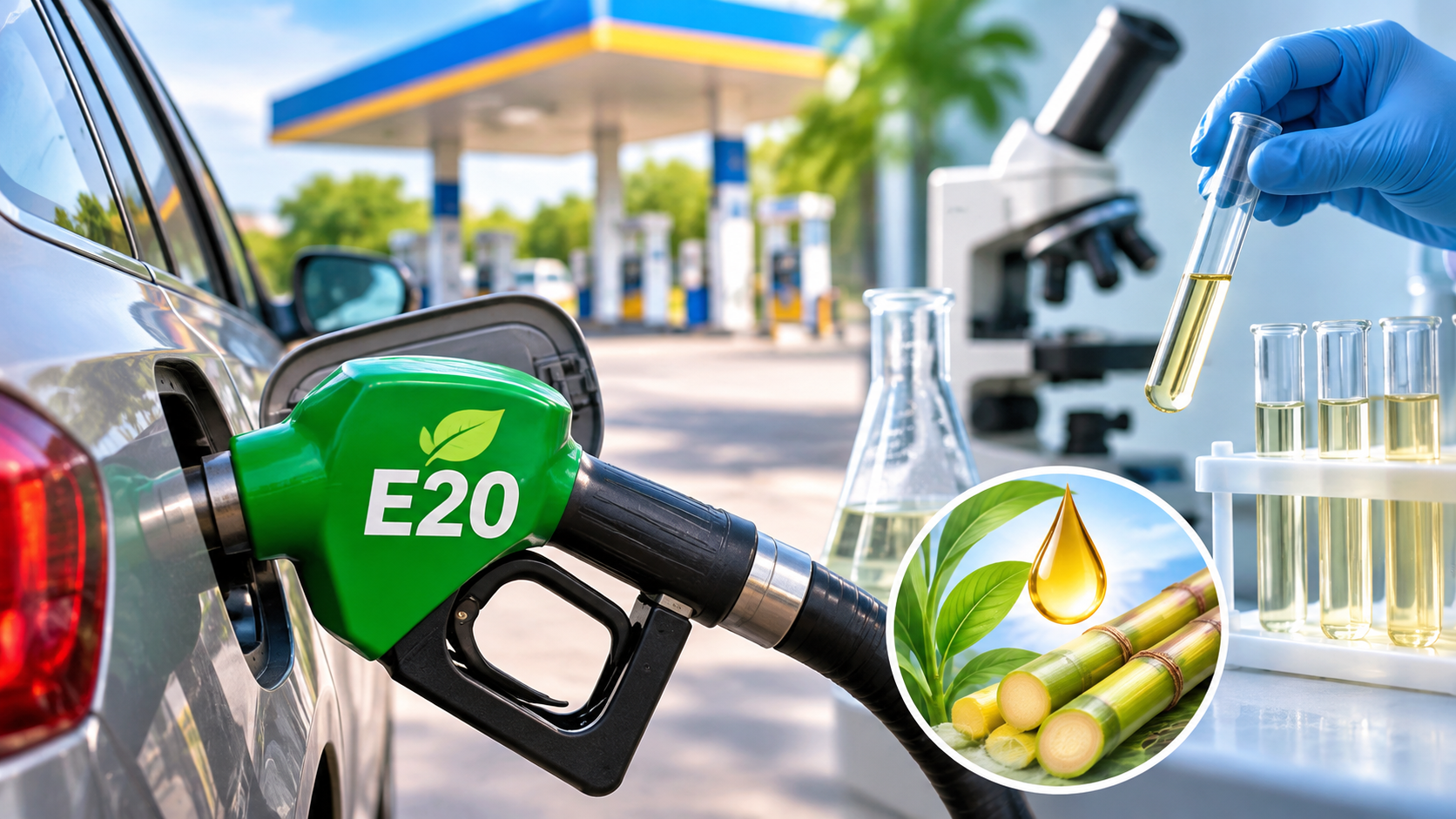
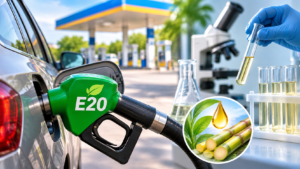
NEW DELHI: The Ministry of Petroleum and Natural Gas on Saturday said that 893 samples of E20 petrol tested across 27 States and Union Territories complied with prescribed quality standards, amid a controversy over reports that petrol at certain retail outlets in Karnataka contained ethanol levels of 26–31%.
According to the Ministry, all 56 samples tested in Karnataka also conformed to the Bureau of Indian Standards (BIS) specification IS 17021, recording ethanol content between 19% and 20%, with an average of 19.30%.
The three public sector oil marketing companies (OMCs) — Indian Oil Corporation Limited (IOCL), Bharat Petroleum Corporation Limited (BPCL) and Hindustan Petroleum Corporation Limited (HPCL) — have disputed the reported higher ethanol levels, questioning the sampling procedures and testing methodology used in the October 2026 exercise conducted in Karnataka.
The companies maintain that E20 petrol supplied through their networks, including in Karnataka, meets the prescribed specifications. They have sought access to the original samples and laboratory records for independent verification.
893 samples tested across 27 States and UTs
The Centre for High Technology (CHT), under the Ministry of Petroleum and Natural Gas, has been monitoring ethanol blending and fuel quality through the OMC/CHT Quality Coordination Cell (QCC).
Under this exercise, 893 samples collected from OMC depots and retail outlets were tested in refinery and OMC quality-control laboratories using the method prescribed under IS 17021, Annex C.
The samples comprised 330 from IOCL, 280 from BPCL and 283 from HPCL. All were found within the specified ethanol content range of 19–21%, according to the Ministry.
The 56 Karnataka samples were collected from different locations and covered all three public sector oil marketing companies.
OMCs question Karnataka sampling procedure
The dispute follows a press release issued by Karnataka’s Department of Food, Civil Supplies, Consumer Affairs and Legal Metrology, which reported ethanol levels of 26–31% in petrol samples collected from certain retail outlets.
The OMCs have raised concerns about the sampling and testing procedures adopted during the October exercise.
Under the Motor Spirit and High Speed Diesel (Regulation of Supply, Distribution and Prevention of Malpractices) Order, 2005, read with the Marketing Discipline Guidelines (MDG) 2024, six one-litre samples are required to be drawn for testing and verification.
Two samples are to be handed over to the dealer against acknowledgement, two retained by the oil company or department, and two sent to a laboratory specified under the applicable regulatory framework. Sample labels are required to be jointly signed, with test results communicated to the dealer and oil company within the prescribed timeframe.
The OMCs have stated that representatives of the companies were not involved in the October sampling exercise and that they have not received the corresponding retention samples, complete outlet-wise details or laboratory reports.
They have also questioned the use of certificates from a third-party laboratory, stating that the documents do not contain sufficient technical information to independently validate the reported ethanol levels.
Testing methodology under scrutiny
The Ministry’s statement points to the testing requirements prescribed under IS 17021:2018, including Amendment No. 3 issued in August 2025.
The standard provides for determining ethanol content through specified methods, including Fourier Transform Infrared Spectroscopy (FTIR) under ASTM D5845, water extraction under Annex C, or Gas Chromatography under ASTM D4815/D6839.
Where Gas Chromatography is used, the sample must first be diluted in a 1:1 ratio with oxygenate-free petrol, and the result corrected against an E10 certified reference material.
The OMCs have said that the certificates cited in Karnataka’s press release mention only ethanol percentage by Gas Chromatography, without specifying the applicable test method, dilution procedure or reference material used for correction.
They have also questioned the reported density readings of 0.742–0.749 g/cc for samples claimed to contain 26–31% ethanol. The companies said these readings were lower than the 0.752–0.760 g/cc recorded in their own E20 sample surveys.
The Ministry said these discrepancies reinforce the need for testing under the prescribed methodology and verification using appropriate reference samples.
E20 mileage and vehicle compatibility concerns
The statement also addresses claims of substantial financial losses to consumers arising from reduced mileage and vehicle repair costs.
It refers to estimates of approximately ₹62,000 crore in annual mileage-related losses and ₹39,000 crore in vehicle repair costs, together amounting to around ₹1.01 lakh crore.
The Ministry has questioned the assumptions behind these estimates, particularly the application of a uniform 10% mileage reduction across the country’s vehicle population.
Citing studies involving the Inter-Ministerial Committee, Indian Oil Corporation, the Automotive Research Association of India (ARAI) and the Society of Indian Automobile Manufacturers (SIAM), the Ministry said vehicles calibrated for E20 could experience mileage reductions of approximately 1–2%, while certain other vehicles could see reductions of 3–6%, depending on vehicle category and calibration.
It said any assessment of the impact of ethanol blending should account for vehicle specifications, fuel compatibility, materials performance and actual repair data rather than relying on blanket assumptions.
Ethanol programme’s economic and environmental contribution
The Ministry has also highlighted the wider outcomes of the Ethanol Blended Petrol (EBP) Programme, which began with a pilot initiative in 2001 and has since developed through successive policy interventions.
Since Ethanol Supply Year (ESY) 2014–15, the programme has reportedly generated foreign-exchange savings of more than ₹1.97 lakh crore, substituted approximately 316 lakh metric tonnes of crude oil and reduced around 952 lakh metric tonnes of carbon dioxide emissions. It has also resulted in transfers exceeding ₹1.66 lakh crore to farmers.
During ESY 2025–26, ending October 31, 2026, public sector OMCs procured 1,089 crore litres of ethanol and blended 1,134 crore litres against petrol sales of approximately 5,673 crore litres.
Ethanol blending is carried out through calibrated and automated systems at refineries and depots, with prescribed quality-control procedures governing the process, the Ministry said.
OMCs seek joint sampling and independent testing
The three oil marketing companies have requested the Karnataka Government to share complete sampling documentation, outlet-wise laboratory reports and details of the testing methods used in the October exercise.
They have also sought access to counterpart samples for independent testing at an authorised laboratory using the prescribed referee method, in the presence of representatives of the State Government and OMCs.
The companies have expressed their willingness to participate in joint sampling and testing in accordance with the Control Order and MDG 2024.
The outcome of such verification will be important in establishing whether the reported higher ethanol levels reflect actual deviations in fuel quality or differences in sampling and testing procedures.
The Ministry has reiterated that petroleum product quality and regulatory compliance remain subject to established quality-assurance and monitoring mechanisms across the supply and distribution network.