Namami Gange combines treatment technologies, clean energy and performance-linked operations
The programme has completed 116 sewerage projects and created 2,237 MLD of new treatment capacity, while adopting compact plants, constructed wetlands and energy recovery to meet local requirements.
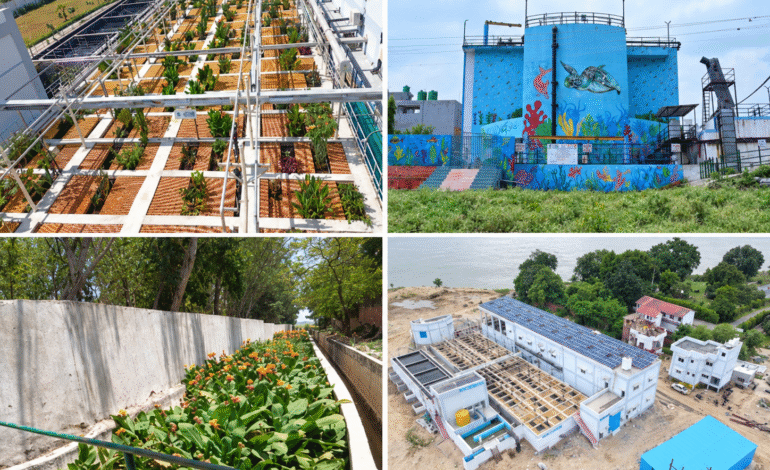
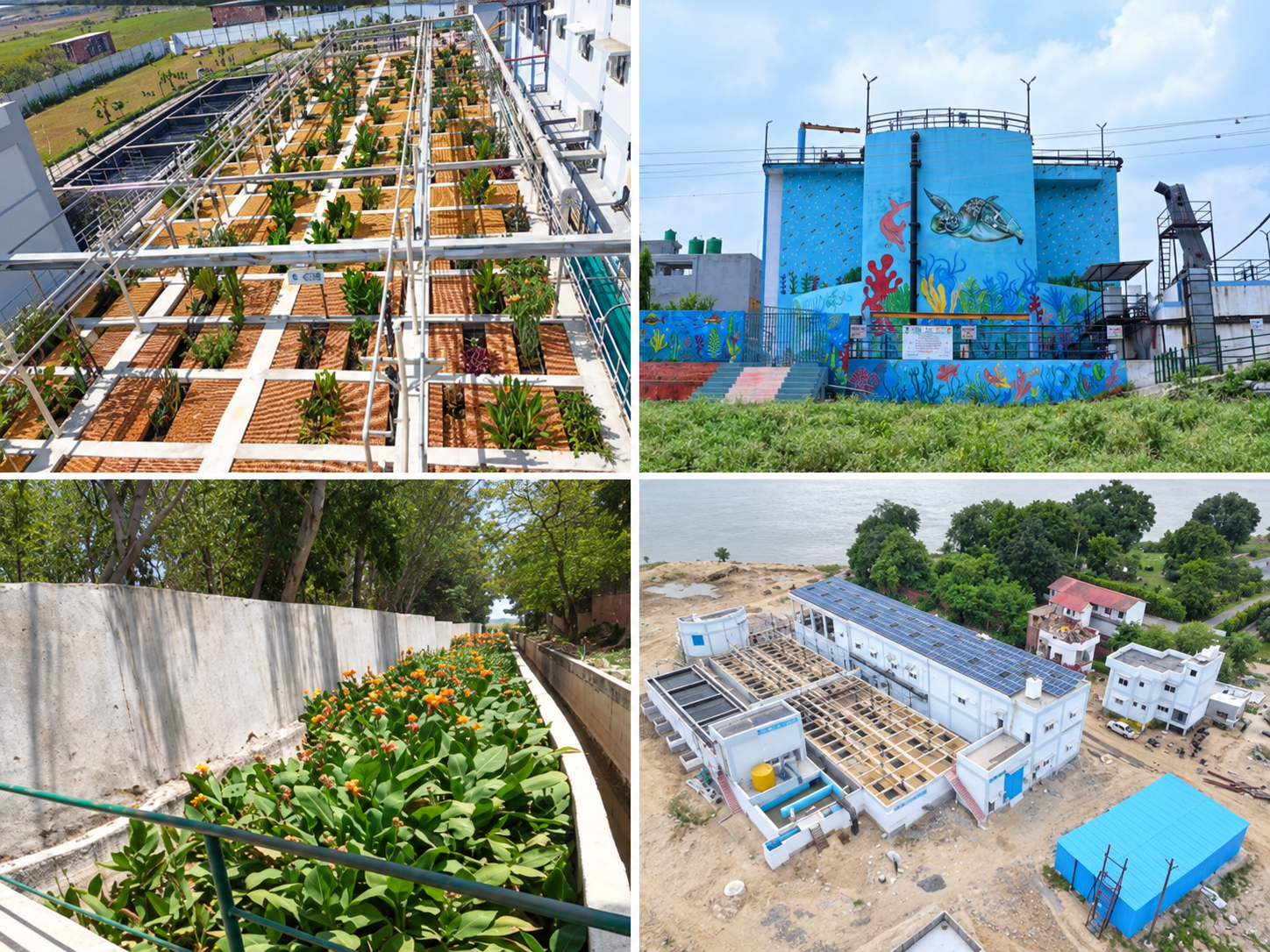
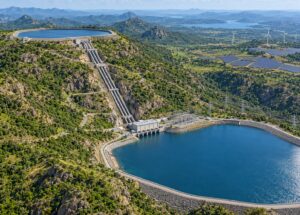
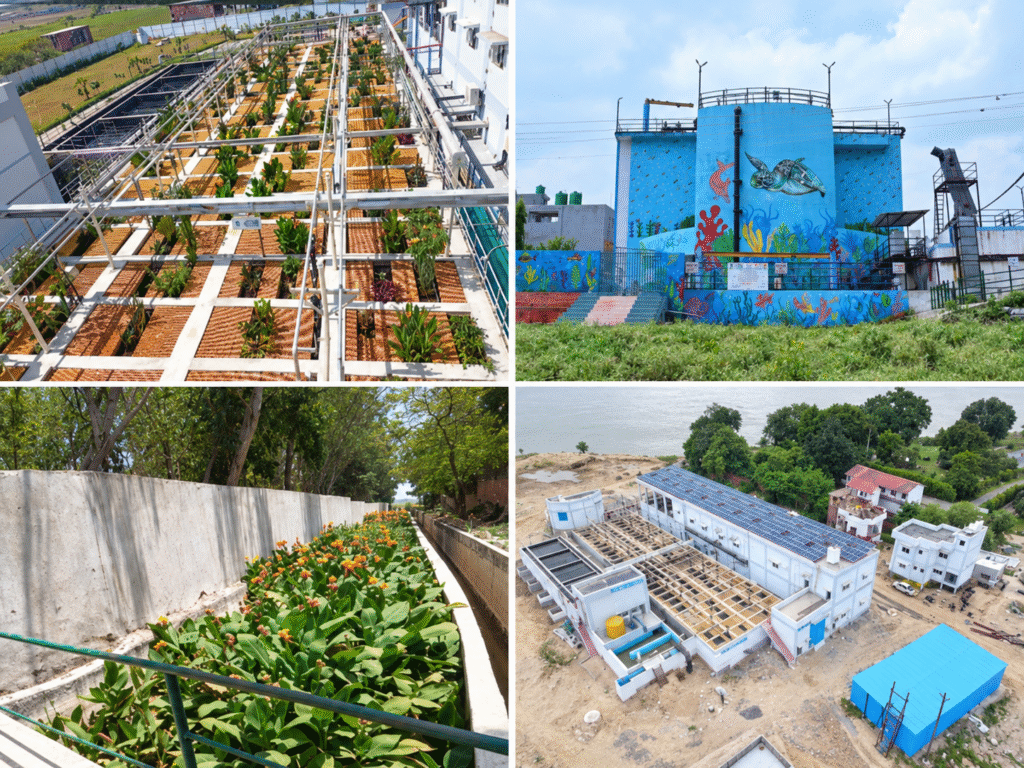
Clockwise from top left: Food Chain Reactor, Muni Ki Reti multi-storey treatment plant, solar-powered sewage treatment facility and constructed wetland.

NEW DELHI: The Namami Gange programme is combining conventional sewage treatment with compact plants, nature-based systems and energy recovery technologies to address different conditions across towns and cities in the Ganga basin.
A PIB Research backgrounder dated October 21 said the programme had undertaken 199 sewerage infrastructure projects worth an estimated ₹31,327 crore, of which 116 had been completed.
The projects aim to create 5,270 million litres per day (MLD) of new sewage treatment capacity, with 2,237 MLD created so far. Another 873 MLD of existing capacity has been rehabilitated against a target of 925 MLD.
The programme follows a technology-neutral approach, selecting treatment processes according to sewage characteristics, available land, local geography, discharge standards and opportunities for treated-water reuse.
Alongside conventional biological treatment, it uses technologies including Food Chain Reactors, electrocoagulation, advanced oxidation, aerobic granular sludge treatment and decentralised packaged systems.
Compact plants address land constraints
At Muni Ki Reti in Uttarakhand, a four-storey municipal sewage treatment plant uses vertical construction to accommodate treatment infrastructure on a restricted site.
The 7.5 MLD facility occupies approximately 900 square metres. According to the backgrounder, its land requirement is around 120 square metres per MLD, compared with 400 square metres for the conventional alternative cited.
Food Chain Reactor technology incorporates fixed artificial media and plant roots into biological treatment. Five plants using the technology are operational—two at Bhatpara in West Bengal and three at Prayagraj in Uttar Pradesh—with another under construction at Bhagalpur in Bihar.
Electrocoagulation, which uses electric current and a metal anode to help remove pollutants, has been deployed at 17 installations in Uttarakhand. The backgrounder identifies it as an option for cold conditions, hilly terrain and locations with limited access.
At Varanasi’s Assi Drain, an advanced oxidation-based pilot was designed to treat excess wastewater onsite, reducing the need for long interception and diversion sewer lines. Its financing arrangement links payments to treatment volumes and performance indicators, without an upfront capital payment.
Wetlands and decentralised systems
For smaller settlements, the programme uses alternatives to extensive sewer networks and large treatment plants.
At Bithoor in Uttar Pradesh, six constructed wetlands provide approximately 2 MLD of treatment directly on drains. The backgrounder reports that biochemical oxygen demand—a measure of organic pollution—fell from around 75 milligrams per litre at the inlet to below 10 milligrams per litre in treated effluent.
Packaged Johkasou systems offer another option for low-flow applications and sites where conventional construction is difficult. Six installations have been recorded in Uttarakhand.
At Devprayag, a 1.2 MLD soil biotechnology-based plant combines physical treatment with biological processes using mineral media, native microorganisms and plants.
The programme also addresses waste from areas without sewer connections through faecal sludge and septage management. A 10-kilolitre-per-day pilot at Chunar in Uttar Pradesh was sanctioned at a construction cost of ₹2.70 crore.
Recovering energy from sewage
Energy recovery and solar generation are being used to reduce treatment plants’ dependence on purchased electricity.
At Varanasi’s 140 MLD Dinapur plant, biogas-based generation supplies approximately 2.2 lakh–3 lakh electricity units a month against reported consumption of 4.2 lakh units, meeting around 52%–72% of requirements.
At the 80 MLD Naini plant in Prayagraj, solar power contributes around 1,400 units daily and biogas another 4,500 units, against total daily requirements of about 8,900 units.
The backgrounder also describes a proposed 220 MLD Meerut facility where full solar power supply is envisaged. A 10 MW offsite solar plant was being considered by the concessionaire.
Long-term operation and rehabilitation
The programme combines new construction with upgrades to ageing treatment plants and trunk sewers. Rehabilitation addresses damaged equipment, treatment-standard compliance and gaps in existing facilities.
Under the Hybrid Annuity Model, construction-linked payments are combined with performance-linked payments over 15 years to support sustained operation.
The backgrounder records 31 projects covering 1,955 MLD under this model. Of these, 11 projects covering 454 MLD have been completed, while six covering 235 MLD are at an advanced stage.
The approach seeks to make sewage treatment a continuing service, with attention to operating performance, maintenance, energy use and sludge management alongside infrastructure development.