SEMICON India 2026 concludes with 51656 registrations, 56 strategic initiatives, stronger global semiconductor partnerships
Five semiconductor units are now in commercial production, while 56 new agreements and initiatives at SEMICON India 2026 expand India’s capabilities in chip design, fabrication, advanced packaging, R&D and talent.
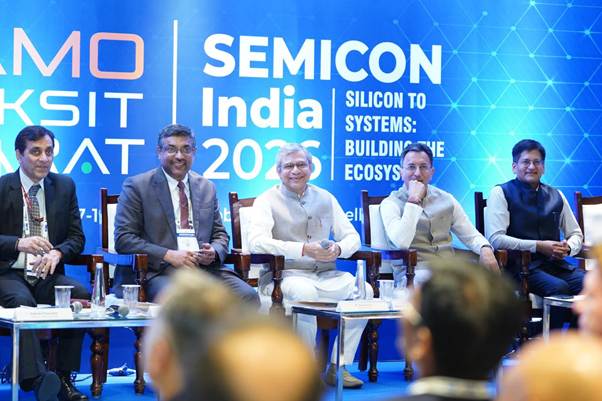
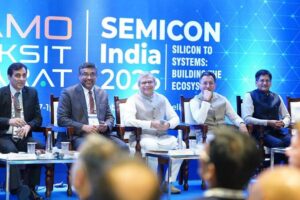
Held from September 17 to 19 under the theme “Silicon to Systems: Building the Ecosystem,” the three-day event recorded 51,656 registrations and cumulative footfall of around 40,000.

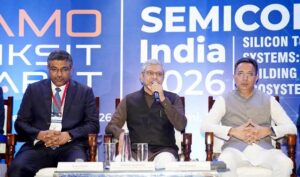
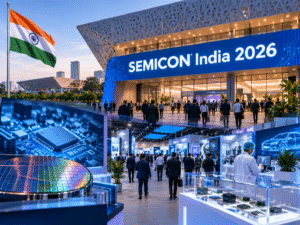
NEW DELHI: SEMICON India 2026, the fifth edition of India’s flagship semiconductor conference, concluded at Yashobhoomi in New Delhi with a strong focus on indigenous technology, commercial semiconductor production, global partnerships, advanced packaging, sovereign computing and talent development.
Held from September 17 to 19 under the theme “Silicon to Systems: Building the Ecosystem,” the three-day event recorded 51,656 registrations and cumulative footfall of around 40,000. More than 600 exhibitors, including around 300 international companies, participated, with representatives from 52 countries, six Country Pavilions and 12 State Pavilions showcasing different segments of the semiconductor value chain.
The event also featured more than 150 speakers, a Startup Pavilion, Workforce Development Zone, Innovation Showcase and Student Hackathon.
From policy to commercial production
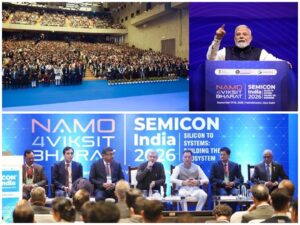
Prime Minister Narendra Modi inaugurated SEMICON India 2026 and highlighted India’s transition from policy formulation and project planning towards commercial semiconductor production.
During the event, the Prime Minister virtually inaugurated commercial production lines at CDIL Semiconductor in Mohali and Suchi Semicon in Surat, taking the number of operational commercial semiconductor units among the 12 projects approved under Semicon 1.0 to five.
The Prime Minister also outlined the next phase of India’s semiconductor strategy through Semicon 2.0, which has an outlay of ₹1,27,500 crore.
The programme is structured around six pillars: semiconductor design; machines and materials; new fabrication facilities; advanced packaging; research and development; and talent development.
The transition from Semicon 1.0 to Semicon 2.0 marks a broader effort to build capabilities across the semiconductor value chain rather than focusing only on fabrication capacity.
56 MoUs and strategic initiatives
Across the three days, 56 MoUs, announcements and strategic initiatives were unveiled covering semiconductor design, fabrication, advanced packaging, equipment and materials, power electronics, artificial intelligence, high-performance computing, R&D, logistics, technology commercialisation, skilling and workforce development.
The initiatives brought together semiconductor manufacturers, equipment and materials companies, design firms, academic institutions, startups and skilling organisations.
The focus was increasingly on developing the supporting ecosystem required for a globally competitive semiconductor industry, including precision manufacturing, gases, chemicals, equipment, intellectual property, logistics and skilled manpower.
Day 2 focused on ecosystem development
The second day focused on translating India’s semiconductor mission into wider ecosystem development.
Electronics and IT Minister Ashwini Vaishnaw outlined the implementation approach for Semicon 2.0, with emphasis on design, machines and materials, fabs, advanced packaging, applied R&D and talent.
Discussions covered resilient supply chains, AI-enabled chip design and manufacturing, advanced packaging, indigenous R&D, power electronics, display technologies, workforce development and women’s participation in semiconductor manufacturing.
International engagement was also prominent, with India-Singapore, India-Europe and India-South Korea country roundtables exploring opportunities in manufacturing, advanced packaging, equipment, materials, investment, R&D and talent.
Indigenous innovation takes centre stage
The concluding day placed particular emphasis on indigenous innovation and deep-tech entrepreneurship.
The Digital India RISC-V Grand Challenge, organised by Maker Village under the Chips to Startup Programme of the Ministry of Electronics and Information Technology, attracted 1,236 teams comprising 5,045 participants.
Three teams received total prize money of ₹60 lakh for solutions developed using indigenous processor technologies.
Meevisai Technologies, representing Team Digital Dawgs from SASTRA University, Thanjavur, won the first prize for an autonomous water-surface cleaning robot based on the indigenous SHAKTI processor developed by IIT Madras.
Digiscope LLP, representing Team Binary Bandits from ER&DCI Institute of Technology, Thiruvananthapuram, won the second prize for VEGA Chikitsa, a digital stethoscope based on the indigenous VEGA processor developed by C-DAC.
The third prize went to Zetawave Technologies, representing Team NeuroBytes from IISc Bengaluru, for a forest-environment monitoring system using the VEGA processor.
New AI and semiconductor challenges
The concluding session also saw the launch of the Bharat AI-SoC Challenge 2026–27 under the Chips to Startup Programme.
The challenge, aimed at students and working professionals involved in AI and system-on-chip design, is supported by the UK Government through the UK-India Technology Security Initiative.
The Semi-Conductor Laboratory, Mohali, launched the Device Manufacturing Integrated System (DMIS), an indigenous manufacturing execution system designed to manage wafer-fabrication activities from order booking and fabrication through final packaging.
Its modular architecture is intended to strengthen shop-floor control and manufacturing efficiency.
Push for sovereign computing
Several initiatives focused on building indigenous digital infrastructure and sovereign computing capabilities.
C-DAC and NLC India Limited announced a collaboration to establish a data centre within India’s energy-sector ecosystem using indigenous technologies and expertise.
C-DAC and Bharat Electronics Limited (BEL) also announced a partnership to jointly develop and deliver indigenous high-performance computing, AI and sovereign data-centre solutions.
C-DAC launched PARAM Vidya, a ready-to-deploy AI Excellence Lab-in-a-Box for universities, research institutions, startups and MSMEs.
Another platform, PARAM Shavak-QS, was inaugurated as a compact high-performance quantum simulation platform aimed at supporting research, education and innovation in quantum technologies.
Semiconductor workforce gets major push
Workforce development emerged as a major theme throughout the conference.
The Electronics Sector Skills Council of India announced partnerships with Maitrio Labs and Truechip Solutions to strengthen semiconductor training infrastructure and develop skills in circuit design, verification and testing.
An MoU between SEMI and Peachtree Elevate will focus on technical training, professional education and certification pathways.
NIELIT announced initiatives covering ATMP skilling and a Digital Twin for Semiconductor Manufacturing, combining digital learning, hands-on training and immersive simulations.
An MoU was also exchanged between the Ramaiah Institute of Advanced Skills and Technology and IISc Bengaluru to strengthen institutional collaboration in semiconductor capabilities.
Hackathons connect students with industry
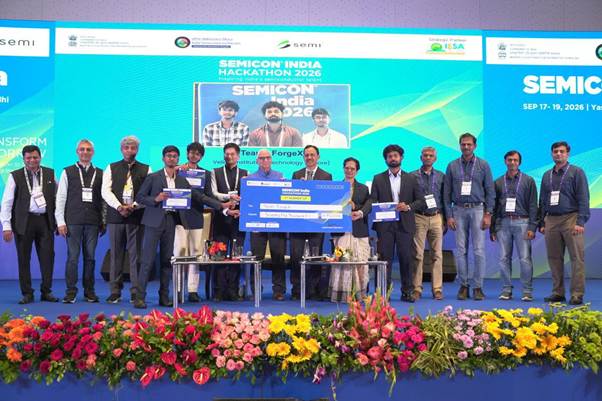
The SEMICON India Hackathon received 3,808 team registrations from 881 colleges and 1,053 ideas, with 10 teams reaching the Grand Finale.
Teams from VIT Vellore and IIT Madras emerged as winners, while teams from KPR Institute and VIT Vellore were runners-up.
Three other hackathons organised by KLA, Synopsys and Lam Research in partnership with CeNSE-IISc attracted more than 3,800 team registrations from over 900 colleges.
Participants were offered industry-relevant semiconductor challenges, with winners receiving cash prizes, internships, software tools and compute credits.
Six country roundtables deepen global engagement
International partnerships remained central to SEMICON India 2026.
The six Country Roundtables brought together stakeholders from the United States, Japan, Singapore, Europe, South Korea and Malaysia.
The India-US Roundtable on Day 1 attracted 180 participants, while the India-Japan Roundtable had 200 participants. Discussions covered commercial partnerships, technology collaboration, equipment and materials, resilient supply chains and R&D.
The India-Singapore roundtable attracted 142 participants, while India-Europe and India-South Korea sessions had 139 and 115 participants respectively.
The India-Malaysia Roundtable on the final day brought together around 150 participants and focused on Malaysia’s established back-end semiconductor capabilities and India’s strengths in design, engineering and manufacturing.
The discussions explored cooperation in OSAT, advanced packaging, materials, equipment, supply chains and talent.
From “Silicon to Systems”
The scale of SEMICON India 2026 reflects the widening scope of India’s semiconductor ambitions.
The conference brought together the entire “Silicon to Systems” journey — from chip design and intellectual property to materials, equipment, fabrication, advanced packaging, electronics manufacturing, R&D, startups, sustainability and talent.
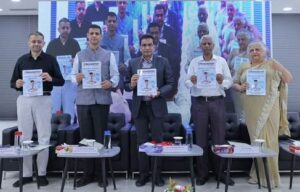
The concluding session also featured the launch of the EY and India Semiconductor and Electronics Association report “Semicon India 2.0: From Capacity Creation to Ecosystem Leadership.”
The report projects an opportunity for India’s semiconductor market to grow from nearly $64 billion in 2026 to $200 billion by 2035, while outlining a roadmap for leveraging India’s domestic demand and design talent across manufacturing, advanced packaging and innovation.
With commercial production now underway at five of the 12 projects approved under Semicon 1.0, and Semicon 2.0 expanding the focus to the wider ecosystem, SEMICON India 2026 marked a shift in the country’s semiconductor narrative — from announcing ambition to building manufacturing capacity, indigenous technologies, skilled talent and international partnerships.