LokOS Emerges as Digital Backbone for Rural Livelihoods, Digitises 10 Crore SHG Members Across India
DAY-NRLM platform strengthens transparency, financial inclusion and women-led rural entrepreneurship through real-time digital governance
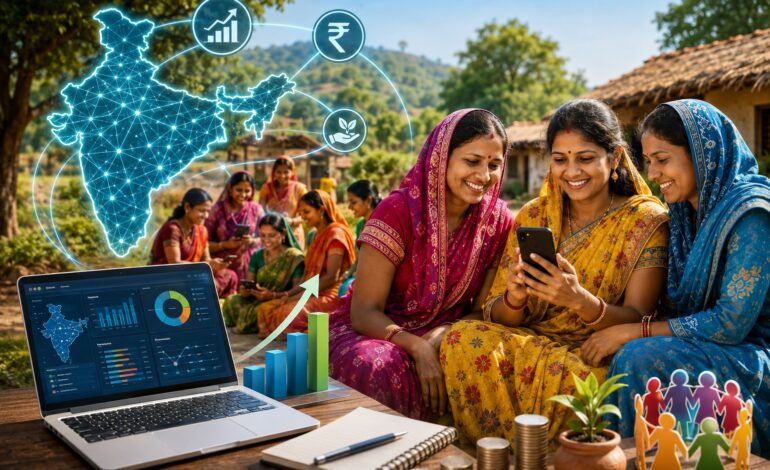
LokOS offers a range of digital capabilities, including Aadhaar- and bank-linked digital identities for community institutions and members, digital financial records, livelihood profiling, role-based administration and real-time analytics dashboards that enable data-driven decision-making from the village level to national programme monitoring.

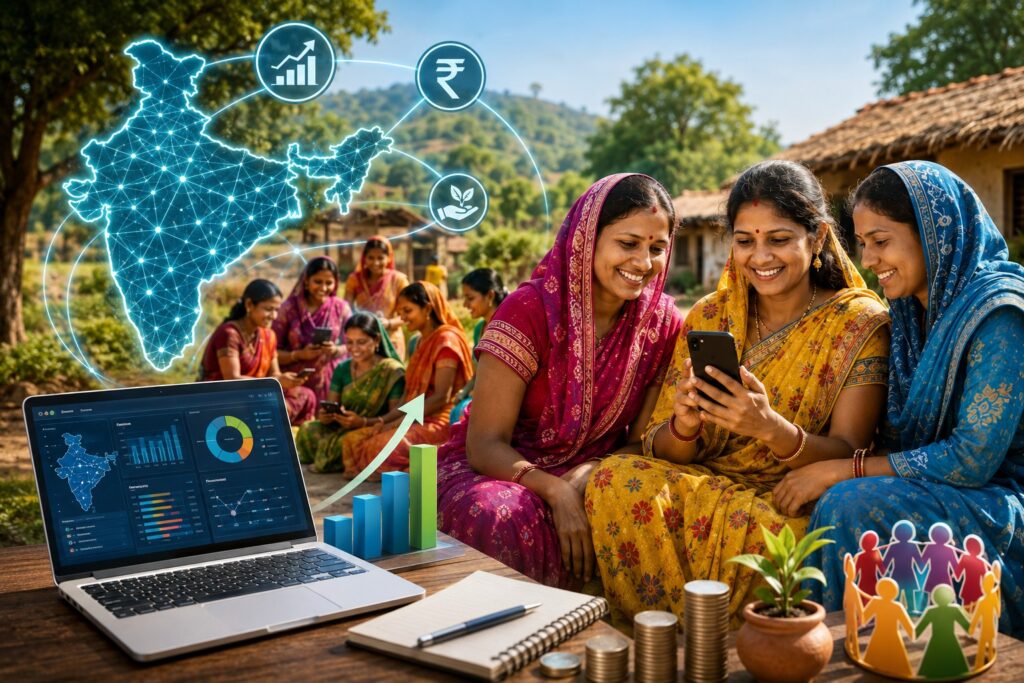
New Delhi: The Ministry of Rural Development’s LokOS (Lok Operating System) platform has emerged as a key pillar of India’s rural digital governance architecture, enabling end-to-end digitisation of Self-Help Groups (SHGs) and their federations under the Deendayal Antyodaya Yojana–National Rural Livelihoods Mission (DAY-NRLM). The platform currently supports more than 10 crore SHG members and records financial transactions worth nearly ₹2 lakh crore annually within the SHG ecosystem.
Designed as a web and mobile platform, LokOS digitises member records, savings, lending, repayments, financial transactions, livelihood activities and convergence with government schemes, replacing manual record-keeping with real-time digital monitoring and improving transparency, accountability and operational efficiency.
The platform has also become the digital foundation for SHE-LEAPS (Self-Help Entrepreneur-Livelihoods and Enterprise Application for Prosperity and Sustainability), a rural entrepreneurship platform launched on June 29, 2026. SHE-LEAPS provides women associated with Self-Help Groups a unified digital platform for enterprise creation, business management and performance tracking across both farm and non-farm enterprises, supporting sustainable rural livelihoods.
LokOS offers a range of digital capabilities, including Aadhaar- and bank-linked digital identities for community institutions and members, digital financial records, livelihood profiling, role-based administration and real-time analytics dashboards that enable data-driven decision-making from the village level to national programme monitoring. The government highlights these six core digital features, illustrating how the platform integrates governance, financial records and analytics into a single ecosystem.
According to the ministry, the platform has now expanded to cover 34 States and Union Territories, 762 districts, 7,241 blocks, 2.57 lakh Gram Panchayats and 5.92 lakh villages across the country. It digitally connects 34,314 Cluster Level Federations (CLFs), 5.62 lakh Village Organisations (VOs), 94.16 lakh Self-Help Groups and 10.03 crore SHG members, making it one of the world’s largest digital community institution platforms. The infographic in the backgrounder shared by the ministry visually presents this nationwide coverage and institutional reach.
LokOS also enables digital monitoring of financial assistance provided under DAY-NRLM. The platform currently tracks ₹9,718.41 crore under the Revolving Fund (RF), ₹64,607.66 crore under the Community Investment Fund (CIF) and ₹38.34 crore under the Community Enterprise Fund (CEF).
A major focus area of the platform is supporting the Government’s Lakhpati Didi initiative aimed at promoting women-led entrepreneurship in rural India. LokOS facilitates beneficiary tracking and programme implementation through a network of 6,611 Master Trainers, 4.09 lakh Community Resource Persons (CRPs) and 3.87 crore Potential Lakhpati Didis (PLDs). It also maintains 18.50 crore Digital Aajeevika Registers (DARs) to strengthen livelihood planning and monitoring.
The Ministry said LokOS represents a transformative step towards digitally empowered rural governance by integrating community institutions, financial management and livelihood development onto a common digital platform. Beyond improving governance and transparency, the system is expected to accelerate financial inclusion, strengthen women-led enterprises and support the creation of self-reliant rural communities across India.