Rakhigarhi Human Remains Sent for Advanced Scientific Study, Opening New Window into Harappan Civilization
Ancient DNA, isotope analysis and forensic anthropology could soon reveal how Harappan people lived, migrated, adapted and evolved, offering unprecedented insights into one of humanity's earliest urban societies.
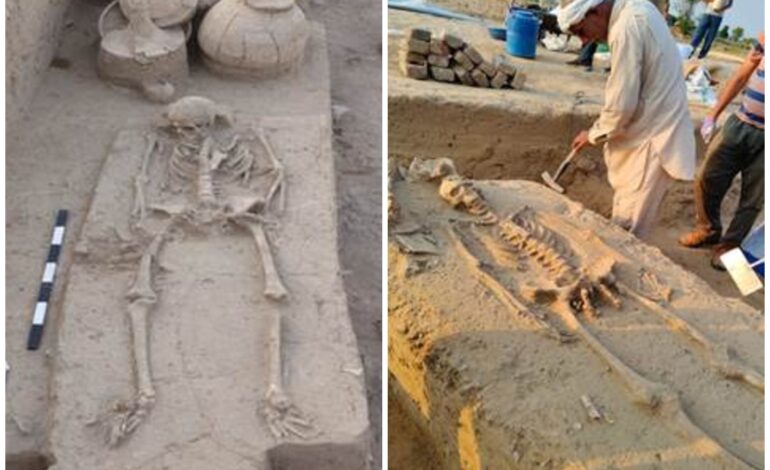
Spread across nearly 550 hectares in Haryana, Rakhigarhi has emerged as one of South Asia's most significant archaeological sites, revealing evidence of planned urban settlements, drainage systems, craft production centres, trade networks and burial grounds dating from the Early Harappan to Mature Harappan periods.

New Delhi: In a major step towards unlocking the biological history of the Indus-Saraswati Civilization, human skeletal remains excavated from the ancient archaeological site of Rakhigarhi in Haryana have been formally transferred by the Archaeological Survey of India (ASI) to the Anthropological Survey of India (AnSI) for advanced scientific investigation.
The transfer follows a recently signed memorandum of understanding between the two institutions and is expected to strengthen multidisciplinary research into Rakhigarhi, widely regarded as the largest known settlement of the Indus-Saraswati Civilization.
Spread across nearly 550 hectares in Haryana, Rakhigarhi has emerged as one of South Asia’s most significant archaeological sites, revealing evidence of planned urban settlements, drainage systems, craft production centres, trade networks and burial grounds dating from the Early Harappan to Mature Harappan periods.
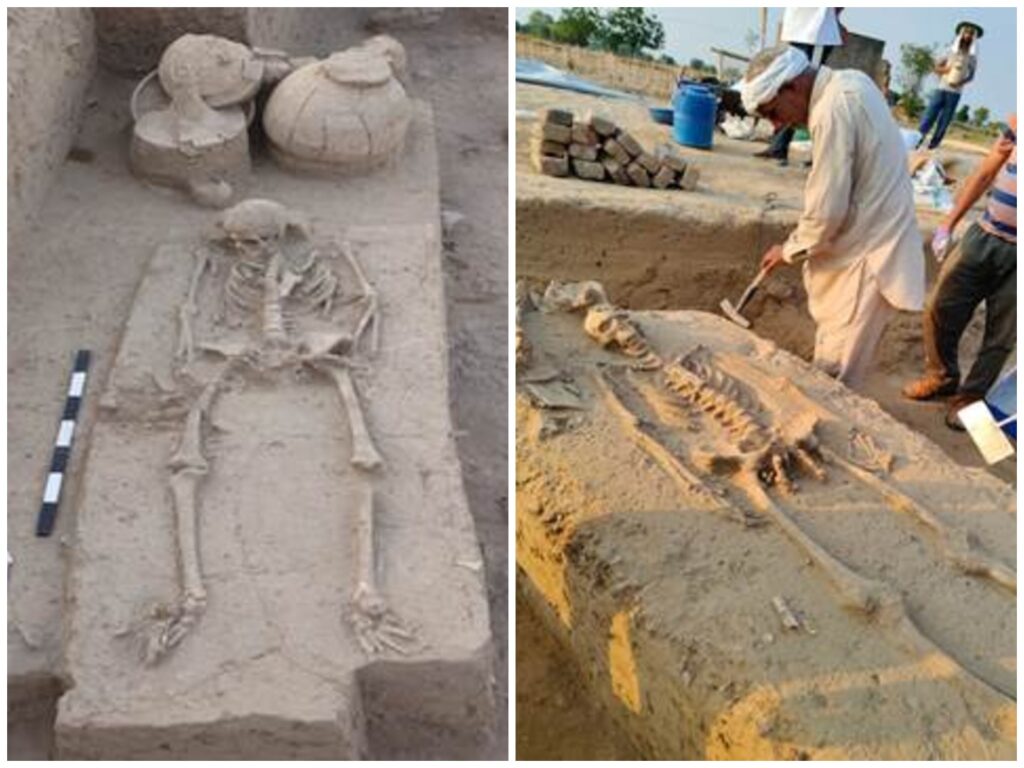
During excavations conducted in the 2025-26 field season, archaeologists uncovered eight burials at Mound No. 7, a site previously identified as a cemetery. Three complete human skeletons along with skeletal fragments recovered from other burials have now been moved to AnSI’s ancient skeletal repository and laboratory in Kolkata for detailed analysis. Additional skeletal materials from the excavation are expected to be transferred in the coming weeks.
Researchers believe the remains offer a rare opportunity to apply cutting-edge scientific techniques that were unavailable when many earlier Harappan discoveries were made. These include ancient DNA (aDNA) sequencing, stable isotope analysis, osteological examination, palaeopathological investigations and environmental reconstruction studies.
Scientists expect these methods to provide valuable information about ancestry, migration patterns, diet, disease prevalence, health conditions, adaptation strategies and interactions between humans and their environment during the Harappan era nearly 5,000 years ago.
The research programme will involve collaboration between several leading scientific institutions, including the Anthropological Survey of India, the Birbal Sahni Institute of Palaeosciences (BSIP), University College London (UCL), and researchers from Banaras Hindu University specializing in ancient DNA studies.
Experts have welcomed the initiative as a significant development in India’s efforts to strengthen scientific research on its ancient civilizations.
According to scholars involved in the project, integrating genetic analysis with skeletal biology and archaeological evidence could help answer longstanding questions about the origins, population history and social organization of the Harappan people.
The Anthropological Survey of India noted that while it has conducted osteological studies on skeletal remains from Indus-Saraswati sites since its establishment in 1945, such research had slowed over time due to various constraints. In recent years, however, the institution has revived its palaeoanthropology programme through specialized research teams and advanced scientific training.
Officials said the organization has already completed palaeopathological studies on remains recovered from several Indus-Saraswati sites and is preparing scientific publications based on those findings. The addition of the Rakhigarhi material is expected to further enhance India’s capabilities in ancient DNA research and human evolutionary studies.
The institution also plans to expand collaborations with organizations including the Zoological Survey of India, Botanical Survey of India and Geological Survey of India, integrating archaeology, anthropology, genetics and environmental sciences into a comprehensive research framework.
Researchers believe the findings could shed new light not only on the Harappan Civilization but also on broader questions relating to human migration, urbanization, disease history, nutrition and adaptation in ancient societies.
As one of the world’s earliest urban civilizations continues to reveal its secrets, the scientific investigation of the Rakhigarhi remains may help reshape our understanding of India’s ancient past and the people who helped build one of history’s most sophisticated urban cultures.