From Digital Consumer to Global Technology Powerhouse: How India is Building the Technologies of the Future
Powered by Digital Public Infrastructure, AI, semiconductors, quantum technologies and a massive skilling ecosystem, India is rapidly transforming into a trusted global technology hub for Viksit Bharat 2047.
Today, India is increasingly contributing to global conversations on artificial intelligence, digital governance, semiconductor manufacturing, trusted technology partnerships, and inclusive innovation.

New Delhi: India’s technology story is no longer about catching up with the world. It is increasingly becoming a story of shaping the future.
Over the last decade, India has undergone a remarkable transformation – from being viewed largely as a vast consumer market for digital services to emerging as a credible global technology powerhouse. The shift has been driven by a combination of visionary policymaking, large-scale public investments, digital infrastructure expansion, startup-led innovation, and a growing emphasis on indigenous technological capabilities.
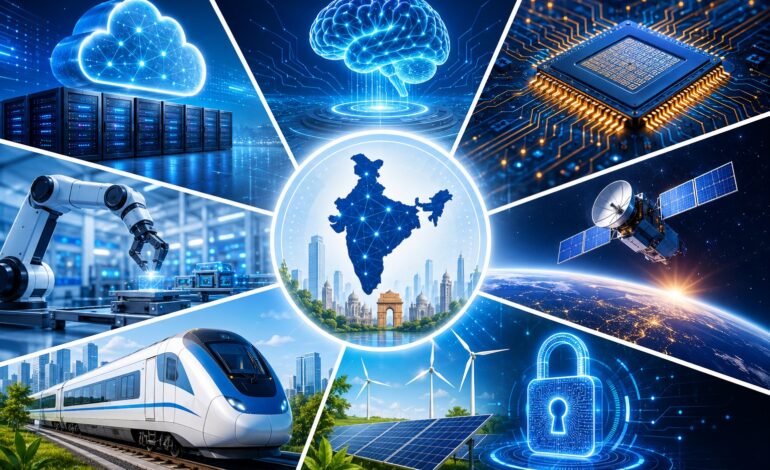
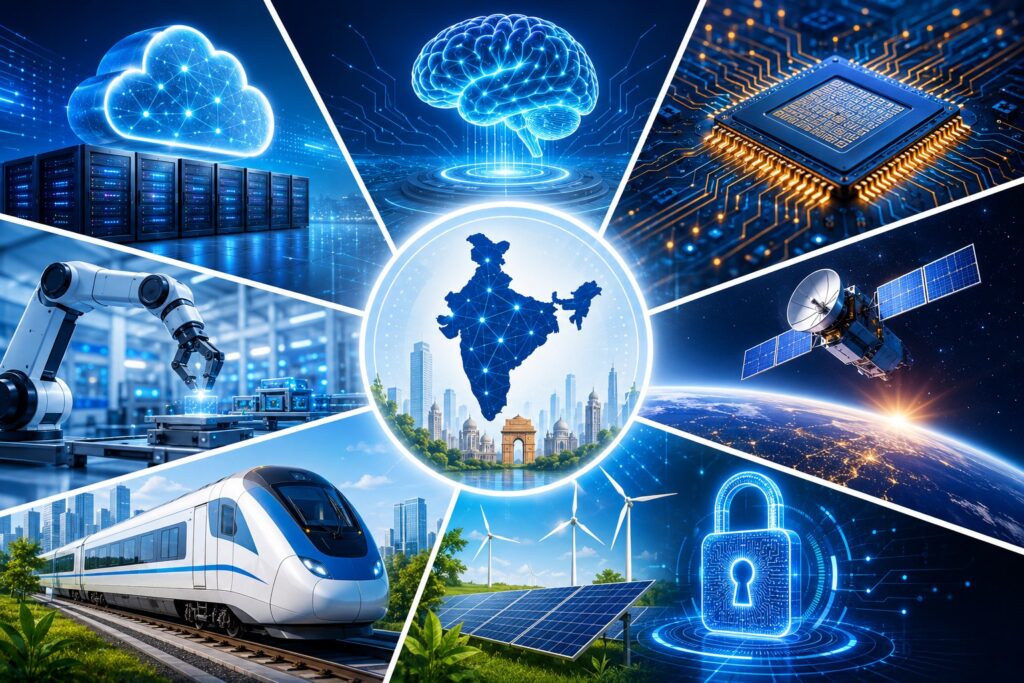
Today, India is not only embracing emerging technologies but is actively building them. Artificial Intelligence, semiconductors, quantum technologies, supercomputing, cloud computing, blockchain, biotechnology, advanced communications, and digital public infrastructure are becoming the pillars of a new technology-led growth model. Together, these initiatives are laying the foundation for Viksit Bharat 2047 while positioning India as a trusted global technology partner.
Digital India: The Foundation of Transformation
Every major technological transformation requires a strong foundation. For India, that foundation has been Digital India.
Launched in 2015, the programme fundamentally changed the country’s digital landscape. Massive investments in connectivity infrastructure created the backbone upon which future technologies could thrive. Optical fibre coverage more than doubled, internet penetration surged, and broadband connectivity reached unprecedented levels across urban and rural India.
The results have been dramatic. Internet connections have crossed the 100-crore mark, while broadband connectivity has expanded to nearly the entire connected population. Affordable data pricing transformed digital access from a privilege into a mass phenomenon. Millions of citizens gained access to online education, telemedicine, digital payments, e-governance services, and e-commerce platforms.
This digital revolution did more than connect people. It created the user base, data ecosystem, and digital confidence necessary for advanced technologies such as AI, cloud computing, fintech, and blockchain to flourish.
India’s globally acclaimed Digital Public Infrastructure ecosystem—powered by Aadhaar, UPI, DigiLocker, CoWIN, UMANG and other platforms—has demonstrated how technology can be deployed at population scale while maintaining affordability, inclusion, and accessibility.
The Rise of India’s AI Ecosystem
Artificial Intelligence has emerged as one of the defining technologies of the 21st century, and India is making an ambitious bid to become a global AI leader.
The IndiaAI Mission represents one of the country’s most significant technology investments. The initiative seeks to democratise access to AI infrastructure, promote indigenous innovation, strengthen research capabilities, and build a responsible AI ecosystem.
What makes India’s AI journey unique is its emphasis on scale and inclusion. Rather than concentrating solely on frontier research, India is focusing on practical applications that can improve governance, healthcare, agriculture, education, and public service delivery.
The establishment of large-scale GPU infrastructure, AI datasets, AI model repositories, and dedicated Centres of Excellence reflects a long-term strategy to build an ecosystem rather than isolated projects.
Even more encouraging is the growing startup participation. AI is rapidly becoming mainstream within India’s startup ecosystem, creating opportunities for innovation across sectors ranging from healthcare diagnostics and climate resilience to financial inclusion and smart governance.
India’s vision is clear: Make AI in India and make AI work for India.
Semiconductors: Building Strategic Sovereignty
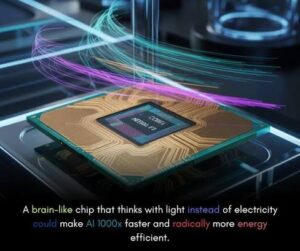
If AI is the brain of the digital economy, semiconductors are its nervous system.
Recognising the strategic importance of chips in modern technology, India has embarked on one of its most ambitious industrial missions. The semiconductor push goes beyond manufacturing. It encompasses chip design, fabrication, packaging, testing, research, talent development, and global supply chain integration.
The Semicon India Programme has already attracted significant investments, while the next phase of the India Semiconductor Mission aims to deepen domestic capabilities and reduce import dependence.
India’s strategy is particularly noteworthy because it seeks to build strength across the entire value chain. Support for fabless chip startups, design-linked incentives, packaging facilities, and advanced semiconductor research is creating a comprehensive ecosystem rather than a fragmented one.
The country’s long-term goal is not merely to assemble chips but to become a globally competitive semiconductor hub capable of contributing meaningfully to international supply chains.
As geopolitical shifts reshape global technology manufacturing, India’s emergence as a trusted semiconductor destination could become one of the most consequential developments of the coming decade.
| Visual | Initiative | Key Focus | Progress Indicator |
|---|---|---|---|
| 🧠 | IndiaAI Mission | AI infrastructure, GPU clusters, AI Kosh datasets, AI startups, responsible AI development |
|
| 🔬 | India Semiconductor Mission | Chip fabrication, design ecosystem, packaging, testing, talent development |
|
| ⚛️ | National Quantum Mission | Quantum computing, communication, sensing, cryptography |
|
| 💻 | National Supercomputing Mission | PARAM supercomputers, HPC infrastructure, scientific research |
|
| ☁️ | MeghRaj Cloud | Government cloud infrastructure, digital governance, data sovereignty |
|
| 📱 | Digital Public Infrastructure | Aadhaar, UPI, DigiLocker, UMANG, CoWIN and digital governance platforms |
|
| 🎓 | FutureSkills PRIME & SIDH | AI, IoT, Cybersecurity, Blockchain, Industry 4.0 workforce development |
|
| 🔒 | Cybersecurity Ecosystem | Digital trust, cyber resilience, secure governance platforms |
|
| 🏢 | Global Capability Centres | AI, software development, analytics, innovation hubs for global enterprises |
|
| 🧬 | Biotechnology & Deep Tech | Genomics, healthtech, precision medicine, bio-manufacturing |
|
India’s Emerging Technology Ecosystem
Quantum Technologies: Investing in Tomorrow
Few technologies hold as much transformative potential as quantum computing and quantum communications.
Although still in their early stages globally, quantum technologies are expected to revolutionise sectors such as healthcare, logistics, finance, cybersecurity, defence, and scientific research.
India has recognised this opportunity early.
The National Quantum Mission is creating the infrastructure, talent, and research ecosystem necessary to compete in this frontier domain. Dedicated thematic hubs, research collaborations, startup support, and secure quantum communication networks are already generating momentum.
The establishment of India’s first Quantum Valley represents a significant milestone. It signals the country’s intent not merely to participate in the quantum revolution but to become one of its leaders.
The importance of this investment cannot be overstated. Nations that develop strong quantum capabilities will enjoy significant advantages in computing power, secure communications, and strategic technologies in the decades ahead.
Supercomputing and High-Performance Computing
Scientific advancement increasingly depends on computational power.
From climate modelling and weather forecasting to drug discovery and artificial intelligence, high-performance computing has become essential infrastructure for modern economies.
India’s National Supercomputing Mission has significantly expanded the country’s computing capabilities. The development of indigenous supercomputers, including the PARAM series, demonstrates growing confidence in domestic design and engineering capabilities.
Beyond scientific research, supercomputing infrastructure is enabling advanced analytics, industrial innovation, and strategic technological development. It also strengthens India’s ability to address complex national challenges through data-driven decision-making.
Cloud, Blockchain and Data Infrastructure
Emerging technologies cannot thrive without robust digital infrastructure.
Cloud computing has become the backbone of digital governance, enterprise innovation, and public service delivery. The expansion of the MeghRaj cloud ecosystem has enabled government departments to securely leverage advanced computing resources while maintaining control over sensitive data.
Similarly, blockchain technologies are being deployed across governance systems, judicial records, property management, and supply-chain verification. These applications are improving transparency, reducing fraud, and strengthening trust in digital systems.
Data centres are another critical component of India’s digital future. Rapid expansion of data centre capacity is creating the infrastructure required to support cloud services, AI workloads, digital governance, and future technologies such as quantum computing.
Together, these capabilities are forming the invisible infrastructure powering India’s digital economy.
Biotechnology: The Next Frontier
While software and digital technologies dominate public attention, biotechnology is quietly emerging as one of India’s most strategic growth sectors.
Advances in genomics, synthetic biology, precision therapeutics, and bio-manufacturing are creating new opportunities for innovation and economic growth.
India’s biotechnology sector has grown rapidly, supported by mission-mode programmes, research institutions, incubators, and startup ecosystems. The convergence of biotechnology with artificial intelligence and digital technologies is expected to unlock entirely new industries over the coming years.
As healthcare, agriculture, sustainability, and industrial manufacturing become increasingly technology-driven, biotechnology is likely to play a central role in India’s innovation story.
Building the Human Capital Advantage
Technology leadership ultimately depends on people.
Recognising this reality, India has invested heavily in skilling, education, research, and innovation.
Programmes such as FutureSkills PRIME, Skill India Digital Hub, Chips-to-Startup, IndiaAI Data Labs, and specialised Centres of Excellence are preparing the workforce for the demands of emerging technologies.
The country’s approach is particularly significant because it extends beyond metropolitan centres. A large proportion of participants in digital skilling programmes come from Tier-2 and Tier-3 cities, helping democratise access to technology careers.
Simultaneously, institutions such as the Anusandhan National Research Foundation are strengthening the bridge between academic research and industrial innovation.
The objective is not merely to create workers but to cultivate researchers, entrepreneurs, innovators, and technology leaders capable of driving India’s next growth cycle.
From Technology User to Technology Creator
Perhaps the most significant aspect of India’s transformation is the change in mindset.
For many years, India was viewed primarily as a market for technologies developed elsewhere. That perception is rapidly changing.
Today, India is increasingly contributing to global conversations on artificial intelligence, digital governance, semiconductor manufacturing, trusted technology partnerships, and inclusive innovation. The country has emerged as a leading advocate of human-centric technology development that balances innovation with accessibility and social impact.
Its rising position in global innovation rankings, expanding network of Global Capability Centres, growing startup ecosystem, and increasing international partnerships all point to a broader shift in global perception.
India is no longer simply adopting technology.
It is building technology, exporting digital public goods, shaping policy frameworks, nurturing innovation ecosystems, and contributing solutions to global challenges.
The Road to Viksit Bharat 2047
The technologies that will define the future are being built today.
India’s investments in AI, semiconductors, quantum technologies, cloud infrastructure, biotechnology, supercomputing, and digital public infrastructure are not isolated initiatives. They are interconnected components of a larger national strategy.
The vision is ambitious: a technologically self-reliant, globally competitive, innovation-driven economy capable of delivering prosperity, inclusion, and sustainability at scale.
The journey is far from complete. Significant challenges remain in research intensity, advanced manufacturing, intellectual property generation, and global technology competitiveness.
Yet the direction is unmistakable.
Twelve years ago, India was primarily a digital market. Today, it is steadily emerging as a global technology power.
The next decade will determine whether that transformation becomes one of the defining development stories of the 21st century.