India’s languages enrich one another, not contradict: Vice President at Bharatiya Languages Conference

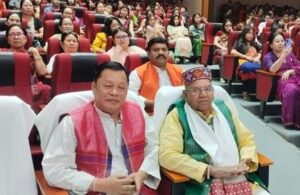
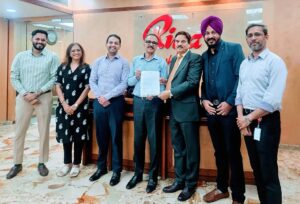
Vice President CP Radhakrishnan and other dignitaries at the inauguration of the Third International Bharatiya Languages Conference – 2026 in New Delhi on Friday.

New Delhi: Vice President CP Radhakrishnan on Friday said India’s linguistic diversity has never been a source of contradiction, but a strength that enables languages to contribute to and enrich one another, sustaining the country’s shared civilisational ethos.
Speaking at the inauguration of the Third International Bharatiya Languages Conference – 2026, the Vice President described languages as the living conscience of civilisation, carrying memory, culture, tradition and values across generations. He said India’s unity has historically rested not on uniformity, but on mutual respect among its many languages, bound together by dharma and a common cultural foundation.
“Bharatiya languages are not contradictory; they constantly contribute to one another, enriching philosophy, knowledge and cultural expression,” he said.
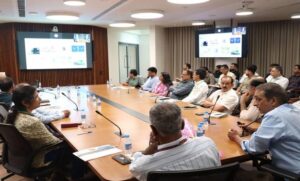
The inaugural session was held at the Indira Gandhi National Centre for the Arts under the joint aegis of IGNCA, the ministry of culture, Antarashtriya Sahyog Parishad, Vaishwik Hindi Parivar, and the department of Indian languages and literary studies, University of Delhi.
Radhakrishnan said Indian languages have travelled beyond borders long before modern diplomacy, shaping thought and preserving knowledge from ancient inscriptions and palm-leaf manuscripts to contemporary digital forms. He stressed the need to protect linguistic diversity, support endangered languages and carry them into the future through education and technology, adding that celebrating every language upholds the dignity of every Indian.
Former Union minister Ramesh Pokhriyal Nishank said Indian languages are not merely tools of communication but carriers of culture, philosophy, social values and collective consciousness. He noted that traditions such as yoga, Ayurveda, literature and philosophy have reached the world through Indian languages, which promote coexistence, equality and harmony rather than conflict.
In his presidential address, Ram Bahadur Rai, president of IGNCA, said the conference provided an opportunity to rethink linguistic frameworks. He challenged the notion that Indian languages belong to four separate families, asserting that they form a single linguistic continuum. Increased dialogue among languages, he said, would generate a wave of linguistic and cultural unity.
Japanese linguist Tomio Mizokami, speaking in Hindi, drew applause when he remarked that people often call him Indian, “though I was mistakenly born in Japan.”
The three-day conference serves as an academic and cultural platform focused on the global dissemination of Indian languages, contemporary challenges and future pathways. More than 100 international delegates from over 70 countries, including the United Kingdom, Canada, Australia, Singapore, Sri Lanka, Nepal, France and Japan, are participating, along with over 100 scholars, writers and language activists from across India.