TRAI extends 1601-series trusted calling numbers to e-commerce, hospitals, airlines and other sectors
The expanded numbering system will help consumers identify verified businesses making service and transactional calls, as TRAI seeks to curb impersonation and fraudulent phone calls.

TRAI has specified that companies in these sectors must have recorded an annual turnover of at least ₹500 crore in at least one of the preceding three financial years to qualify for allocation of numbers from the series.


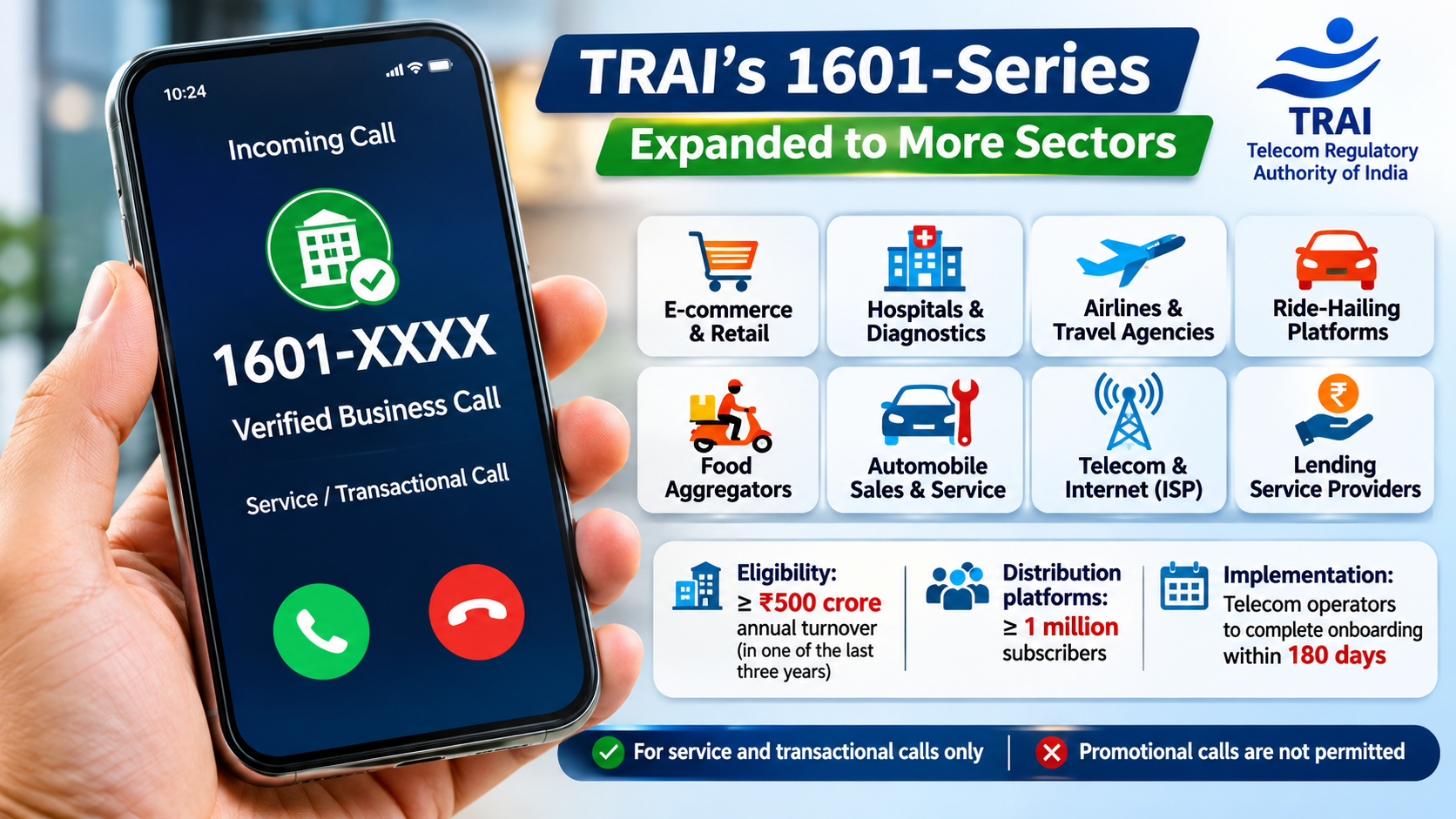
NEW DELHI: The Telecom Regulatory Authority of India (TRAI) has extended the use of its 1601-series telephone numbering system to several additional consumer-facing sectors, including e-commerce, retail, hospitals, airlines, food delivery and ride-hailing platforms, in a move aimed at helping people identify legitimate business calls and combat telephone impersonation fraud.
The expansion forms the second phase of implementation of the 1601-series, which is reserved exclusively for service-related and transactional voice calls by eligible businesses outside the banking, financial services and insurance (BFSI) sector and government entities.
Under the new direction issued on November 27, 2026, the eligible sectors include retail chains, e-commerce companies, hospitals, diagnostic laboratories, telecom service providers, internet service providers, automobile sales and repair businesses, travel agencies, commercial airlines, food aggregators, ride-hailing aggregators and lending service providers.
₹500 crore turnover threshold for businesses
TRAI has specified that companies in these sectors must have recorded an annual turnover of at least ₹500 crore in at least one of the preceding three financial years to qualify for allocation of numbers from the series.
Distribution platform operators, including Direct-to-Home (DTH), Headend-in-the-Sky (HITS), Internet Protocol Television (IPTV) providers and Multi-System Operators (MSOs), will also be eligible if they have a subscriber base of at least one million in any month during the preceding 12 months.
The numbering series will be assigned only to companies registered in India under applicable law.
Promotional calls prohibited
A key feature of the framework is the restriction on how businesses can use these numbers.
The 1601-series is exclusively intended for service and transactional voice calls. Its use for promotional calls is strictly prohibited.
According to TRAI, the numbers will be allocated only to verified entities, enabling consumers to more easily distinguish legitimate service calls from ordinary calls made using standard 10-digit numbers.
The regulator said the measure is intended to address impersonation by fraudsters who use regular mobile numbers while falsely claiming to represent established businesses.
Telecom operators given 180 days
Telecom access providers have been directed to complete the onboarding and migration of eligible entities within 180 days from the date of issuance of the direction.
They must also publicise the availability of the numbering series among eligible businesses and submit implementation status reports to TRAI every 15 days. A final compliance report must be submitted within 15 days after the 180-day implementation period expires.
TRAI may consider extending the framework to additional sectors or eligible entities based on its review of implementation.
Building a trusted business-calling ecosystem
The expansion follows the first phase, initiated in August 2026, when TRAI permitted the allocation of 1601-series numbers to eligible entities in the utilities, courier and logistics sectors.
The broader initiative seeks to establish a distinct numbering identity for legitimate service and transactional calls, making it easier for consumers to recognise communications from businesses they interact with.
For consumers, the expansion could be particularly relevant as phone-based interactions with e-commerce platforms, hospitals, airlines, travel companies and delivery services become increasingly common.
The effectiveness of the initiative will depend on the timely adoption of the numbering system by eligible businesses and telecom operators, as well as public awareness of the new series.