57% of enterprises run GenAI in production, but only 15% have dedicated AI testing frameworks: QualiZeal-HFS study
A QualiZeal-HFS Research study of 101 US enterprise technology leaders finds that AI deployment is advancing faster than quality assurance, with gaps in accountability, fairness and regulatory compliance.
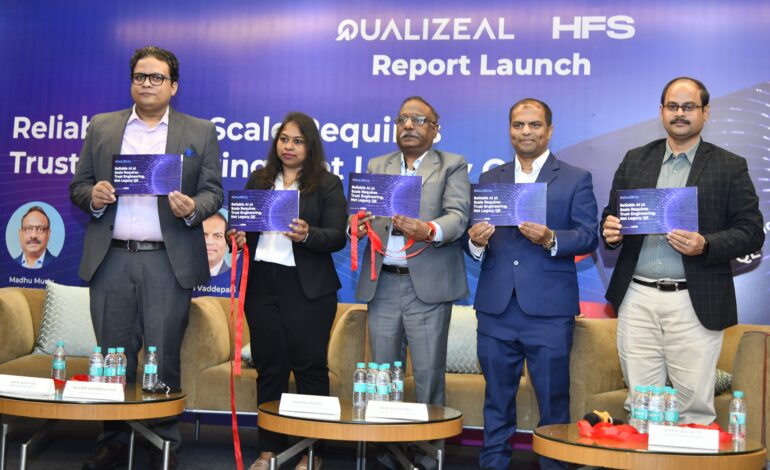
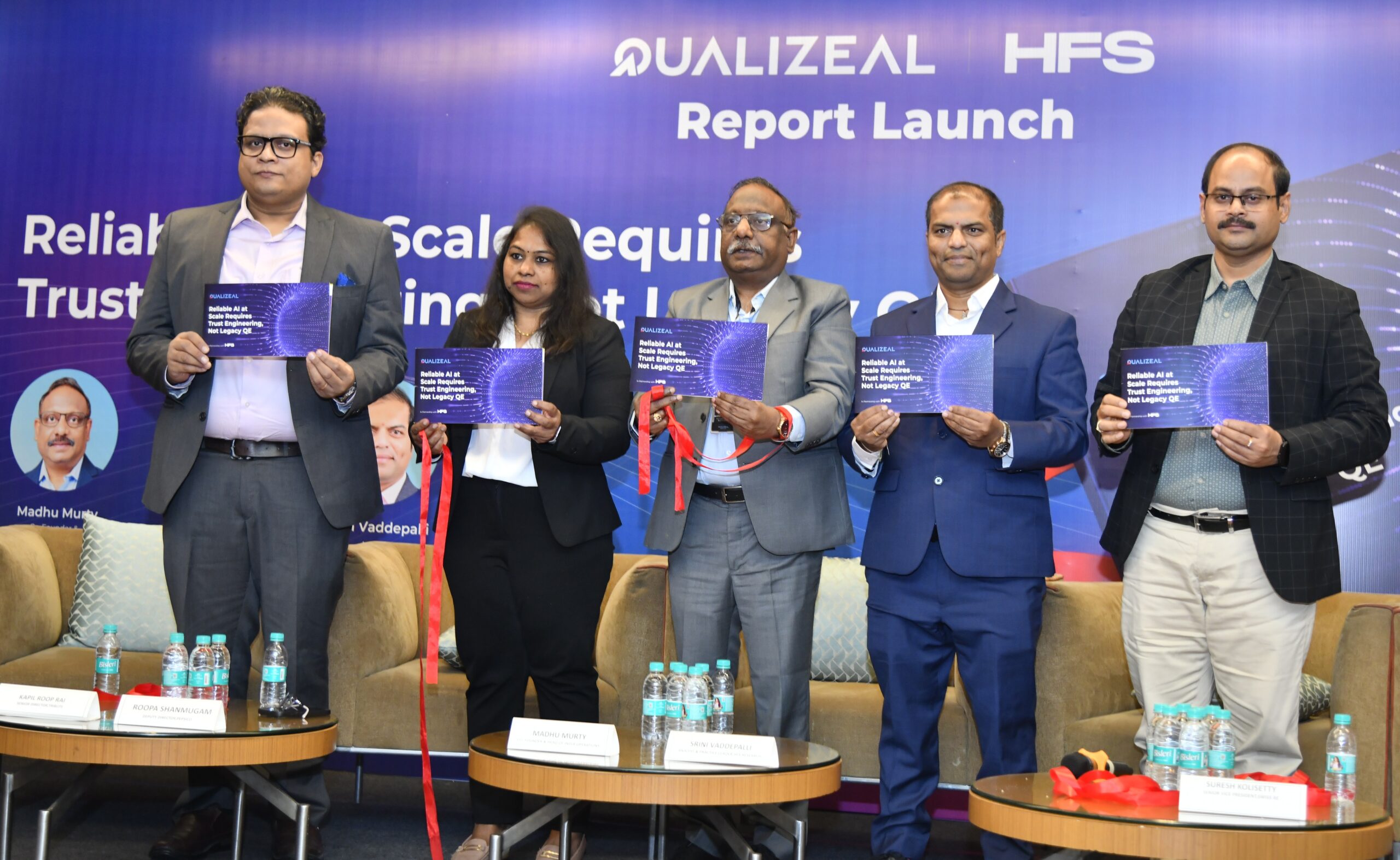
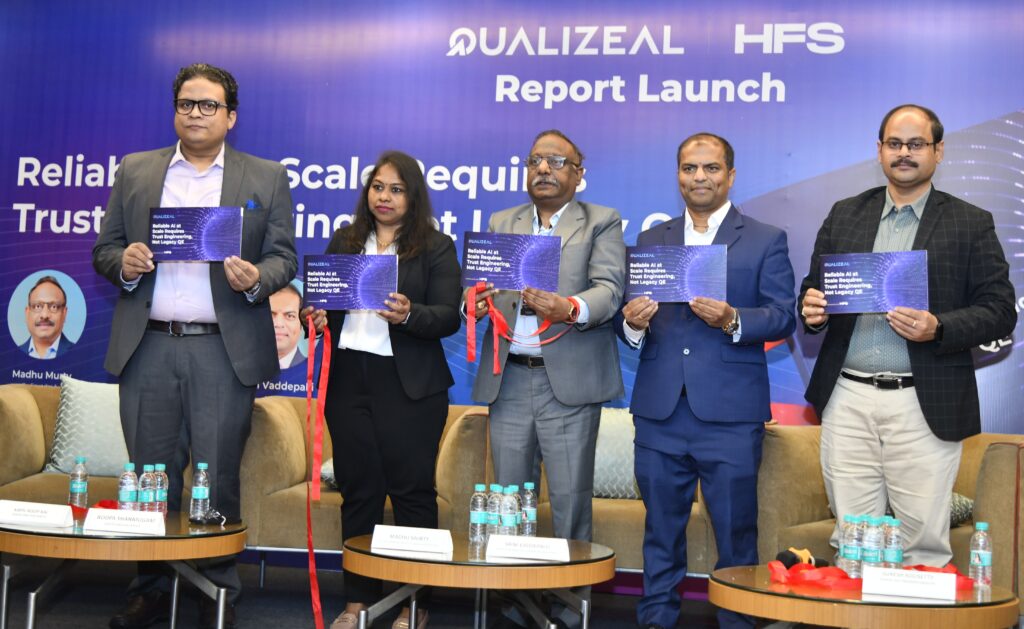
Leaders from QualiZeal and HFS Research at the launch of the HFS Take 5 x QualiZeal report, Reliable AI at Scale Requires Trust Engineering, Not Legacy QE.

NEW DELHI: While 57% of enterprises have deployed generative AI in production, only 15% have a purpose-built approach to testing AI systems, highlighting a widening gap between enterprise AI adoption and the mechanisms required to ensure reliability, accountability and trust.
The findings come from a joint study by QualiZeal and HFS Research, based on a survey of 101 enterprise quality and technology leaders in the United States. The report, titled “HFS Take 5 x QualiZeal”, examines how prepared organisations are to validate AI systems in production and how Quality Engineering (QE) needs to evolve as AI becomes integral to business operations.
The study found that 36% of enterprises already have agentic AI systems in production. However, formal AI validation frameworks remain largely at the pilot stage. As many as 52% of organisations continue to test probabilistic AI systems using frameworks originally designed for conventional, deterministic software.
A further concern is the lack of clear accountability. According to the study, 37% of enterprises running AI in production do not have a named function responsible for AI quality.
QualiZeal CEO and Co-Founder Kalyan Konda said enterprise AI deployment had advanced much faster than the development of governance and quality assurance practices. He described ownership of AI quality as an issue that increasingly requires attention at the boardroom level.
Accuracy is measured, but trust remains a challenge
The research points to a significant difference between measuring model accuracy and establishing broader confidence in AI systems.
While 88% of surveyed enterprises measure model accuracy, only 47% assess bias and fairness, 37% measure explainability and 35% can provide evidence of regulatory compliance.
The findings suggest that organisations are giving greater attention to whether AI systems produce accurate outputs than to whether their decisions can be explained, assessed for bias or demonstrated to comply with regulatory requirements.
Hansa Iyengar, Practice Leader at HFS Research, said enterprises need clear ownership of AI quality, testing approaches suited to probabilistic systems and budgets that reflect the expanding responsibilities of Quality Engineering teams.
Quality engineering roles expected to expand
The study found that 82% of enterprises expect the role of Quality Engineering to grow significantly as AI adoption increases. However, only 24% said they had allocated resources proportionate to the expanded responsibilities.
Madhu Murty, Co-Founder and Head of India Operations at QualiZeal, said AI was changing the nature of quality engineering, shifting its focus from assuring software to assuring the intelligence embedded in enterprise systems.
He said the company expected quality engineers to evolve into trust engineers rather than be replaced by AI and automation.
QualiZeal’s AI ecosystem includes QMentisAI and ValidAIte, which the company says are designed to support AI-led quality engineering and assurance within enterprise delivery and governance processes.
From AI deployment to trust engineering
The study argues that conventional software testing approaches are insufficient for systems whose outputs can vary depending on inputs, context and model behaviour. It calls for dedicated validation methods, clear accountability and investment in the skills and resources needed to assess AI systems throughout their lifecycle.
The findings come as enterprises increasingly move generative and agentic AI applications from experimentation into production environments, raising questions about reliability, transparency, fairness and regulatory oversight.
The report is available on QualiZeal‘s website.