Centre clears revised delimitation and women’s quota plan, proposes 50% increase in Lok Sabha seats
The Union Cabinet has cleared a revised constitutional amendment package proposing a 50% increase in Lok Sabha seats across states, with a 25-year freeze on their relative share and a
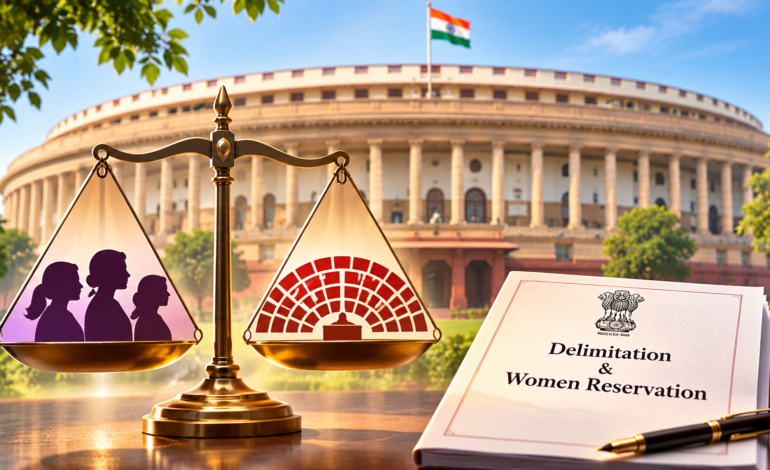
The Union government has cleared a revised legislative package linking the expansion of parliamentary constituencies with the implementation of 33% reservation for women in the Lok Sabha and state legislative assemblies.

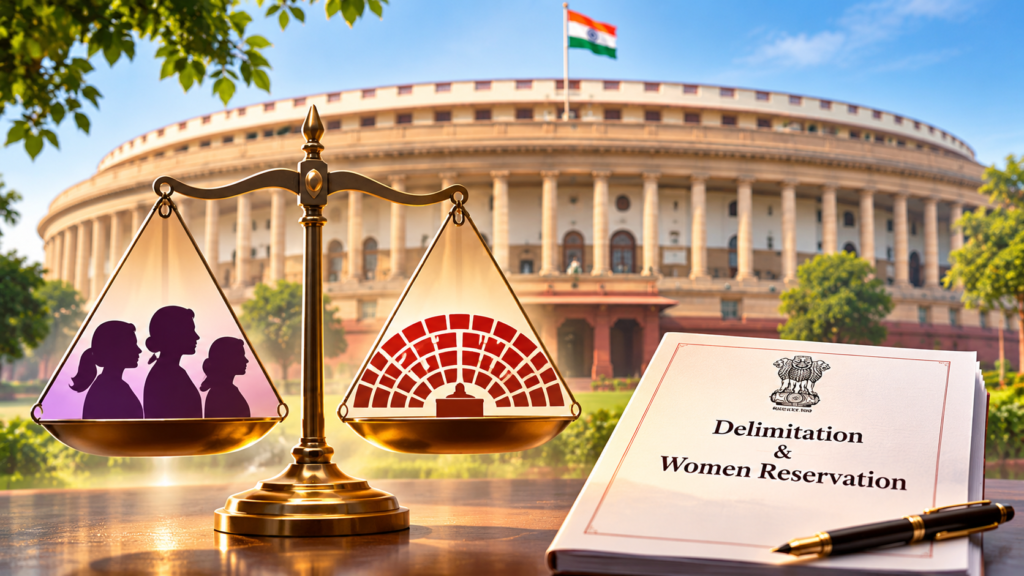
NEW DELHI: The Union government has cleared a revised legislative package linking the expansion of parliamentary constituencies with the implementation of 33% reservation for women in the Lok Sabha and state legislative assemblies, setting the stage for a major constitutional debate during the special sitting of Parliament beginning November 30.
The Union Cabinet, chaired by Prime Minister Narendra Modi, approved the revised proposal on November 27, following concerns raised by opposition parties and several regional parties over the potential impact of delimitation on the relative representation of states, particularly those in southern India.
The revised framework proposes increasing the number of Lok Sabha seats allocated to every state by 50%, while freezing the proportion of parliamentary representation among states for the next 25 years, until 2051.
The government intends to introduce a new Constitution (One Hundred and Thirty-Second Amendment) Bill, 2026, alongside a fresh Delimitation (Second) Bill, 2026, during the upcoming parliamentary sitting. The legislative package also involves provisions concerning Union Territories.
Lok Sabha strength could rise to 850
Under the proposed constitutional amendment, the maximum strength of the Lok Sabha would increase from its present 543 seats to 850, comprising up to 815 representatives from states and 35 from Union Territories.
The proposal also seeks to increase the upper limit on the strength of state legislative assemblies from 500 to 650 members.
The proposed 50% expansion is intended to ensure that every state receives an increase in its parliamentary representation without reducing its existing proportionate share relative to other states.
This provision addresses a central concern raised during the earlier debate: states that have achieved comparatively lower population growth should not see their relative representation diminish because of population-based delimitation.
According to reports on the revised proposal, the inter-state allocation ratio based on the 1971 population figures would remain protected until the relevant figures of the first Census conducted after 2051 are published.
2011 Census proposed as basis for constituency boundaries
The revised framework proposes using the 2011 Census as the basis for redrawing parliamentary constituencies and undertaking the proposed expansion.
This separates two aspects of delimitation: the distribution of seats among states and the demarcation of constituencies within them.
While the relative share of parliamentary seats among states would remain protected under the proposed arrangement, constituency boundaries would be redrawn using the 2011 population data.
The government has indicated that the proposed legislation will establish the constitutional framework for this exercise and provide for the constitution of a Delimitation Commission.
The distinction is significant because delimitation is not merely an administrative exercise involving constituency boundaries. It determines how citizens are geographically grouped for parliamentary and legislative representation.
Women’s reservation targeted for 2029 elections
The principal stated objective of the revised constitutional amendment is to facilitate the implementation of one-third reservation for women in the Lok Sabha and state legislative assemblies ahead of the 2029 general elections.
The Nari Shakti Vandan Adhiniyam, enacted through the 106th Constitutional Amendment in 2023, provides for 33% reservation for women in the Lok Sabha and state assemblies, including seats within the Scheduled Castes and Scheduled Tribes categories.
However, its implementation is linked to the constitutional process involving a subsequent Census and delimitation.
The revised proposal seeks to accelerate this process by establishing a new framework for expanding representation and redrawing constituencies.
The proposed reservation is for a period of 15 years from the commencement of the 106th Constitutional Amendment Act. Seats reserved for women would be rotated in a manner determined by the Delimitation Commission, with the proposed framework providing for rotation after every third term.
Why the government has revised its earlier proposal
The latest move follows the failure of the Constitution (One Hundred and Thirty-First Amendment) Bill, 2026, which was introduced in Parliament earlier this year but did not secure the required two-thirds majority in the Lok Sabha.
The earlier proposal faced objections over the possible consequences of population-based delimitation for the relative representation of states.
The revised package introduces a uniform 50% increase in seats for every state and proposes freezing the inter-state allocation ratio until 2051.
The government has also indicated that the earlier legislative proposals, including the previous delimitation legislation, will be withdrawn and replaced with revised bills.
The Law Minister has described the new constitutional amendment as an effort to establish a clearer framework for delimitation while addressing concerns raised during the earlier parliamentary discussions.
Opposition seeks scrutiny as states raise representation concerns
The revised proposal has already triggered political consultations ahead of the special sitting.
The Congress has questioned the government’s decision to link women’s reservation with delimitation, arguing that the existing women’s reservation law should be implemented without further delay. Congress leaders have also raised concerns about the proposed delimitation process and its implications for parliamentary representation.
The DMK has reiterated its position that Tamil Nadu’s share of Lok Sabha representation must be protected. The party has sought safeguards against any reduction in its relative parliamentary strength.
The Sharad Pawar-led Nationalist Congress Party (NCP-SP) has indicated support for the revised approach, although some of its parliamentary representatives have said they would examine the complete legislative text before taking a final position.
The proposed changes will therefore be examined not only in terms of women’s representation but also through the wider constitutional questions surrounding federal representation, population growth and the balance between states.
Special Parliament sitting begins November 30
The government has convened a special sitting of Parliament from November 30 to December 3, 2026.
The Lok Sabha is scheduled to reconvene on November 30, while the Rajya Sabha is scheduled to meet from December 2. The sittings are an extension of the Monsoon Session, which was adjourned sine die in August.
A constitutional amendment requires a special majority: support from a majority of the total membership of each House and at least two-thirds of members present and voting. The revised proposals will therefore require support beyond the government’s ordinary legislative majority.
The complete text of the proposed legislation and the parliamentary debate will determine the precise scope of the changes.
A constitutional question beyond seat expansion
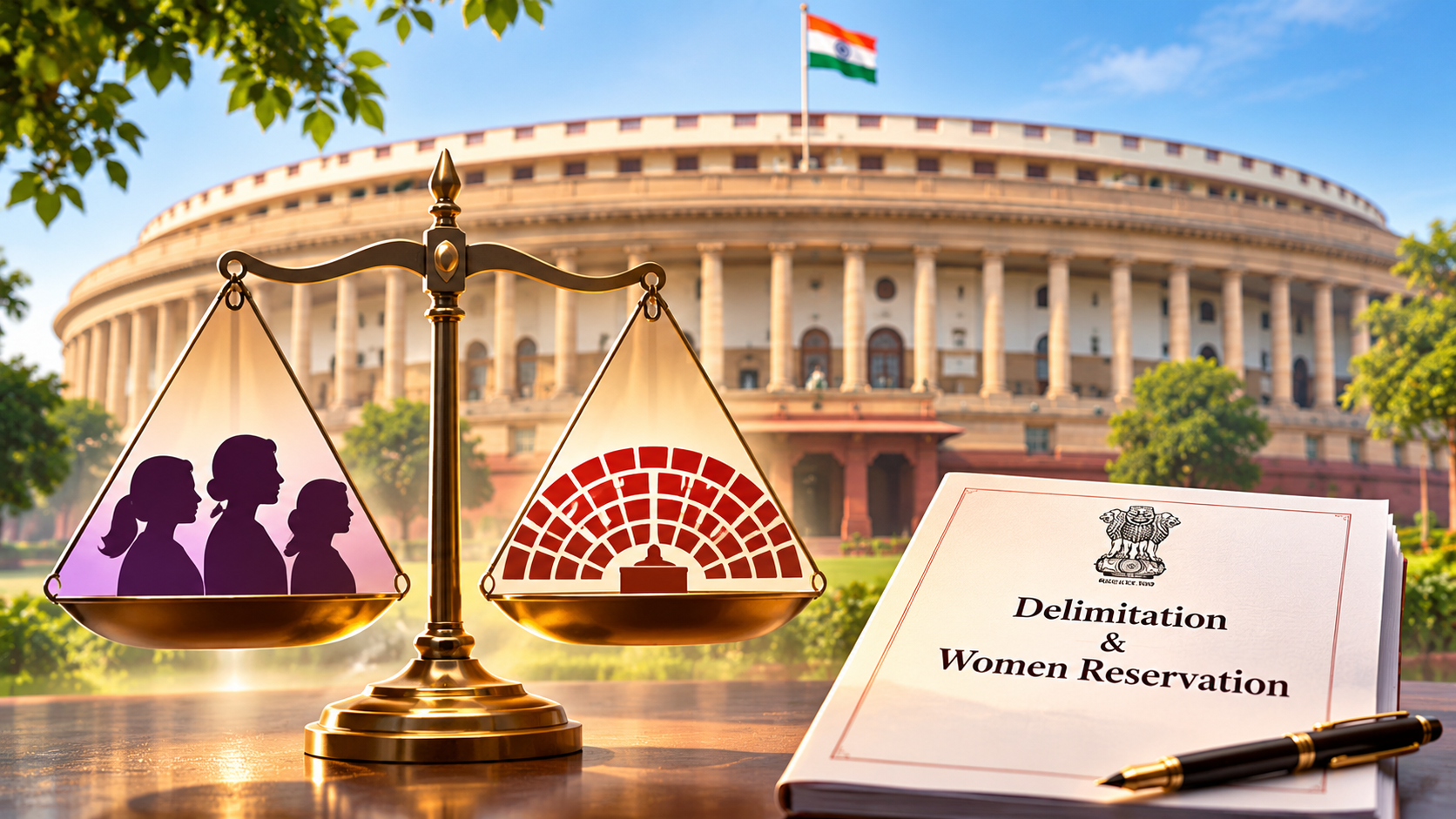
The proposed package brings three major questions into the same legislative debate: how India’s parliamentary constituencies should be redrawn, how the relative representation of states should be protected, and when the constitutional promise of one-third reservation for women should become operational.
The proposed 50% expansion could increase the number of elected representatives across the country, while the 25-year freeze seeks to provide continuity in the relative representation of states.
For women, the stated objective is to make the one-third reservation effective before the 2029 general elections.
However, the outcome will depend on parliamentary approval, the final legislative provisions and the subsequent delimitation process. The coming session is therefore expected to be an important test of how the government intends to reconcile women’s political representation with India’s federal structure.