National Milk Day: India’s dairy economy goes digital as livestock database crosses 39 crore Pashu Aadhaar records
India’s dairy sector combines record milk production with digital livestock identification, direct farmer payments and expanding cooperative networks, according to a government backgrounder.
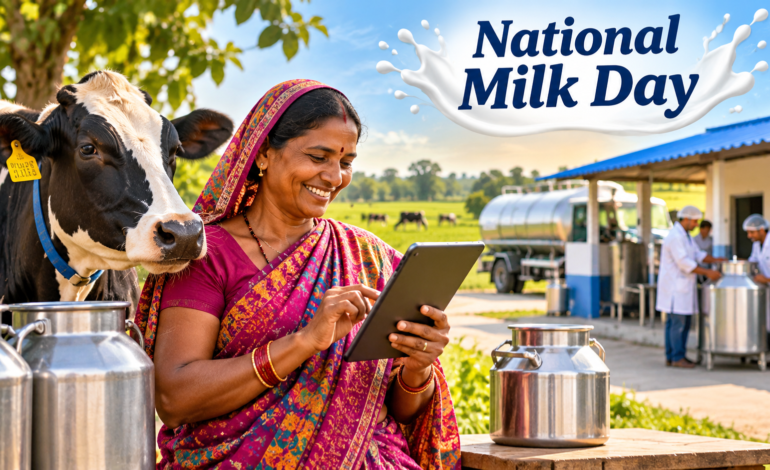
The digital database, developed by the Department of Animal Husbandry and Dairying in collaboration with the National Dairy Development Board (NDDB), assigns a unique 12-digit identification number to registered livestock through ear tags.

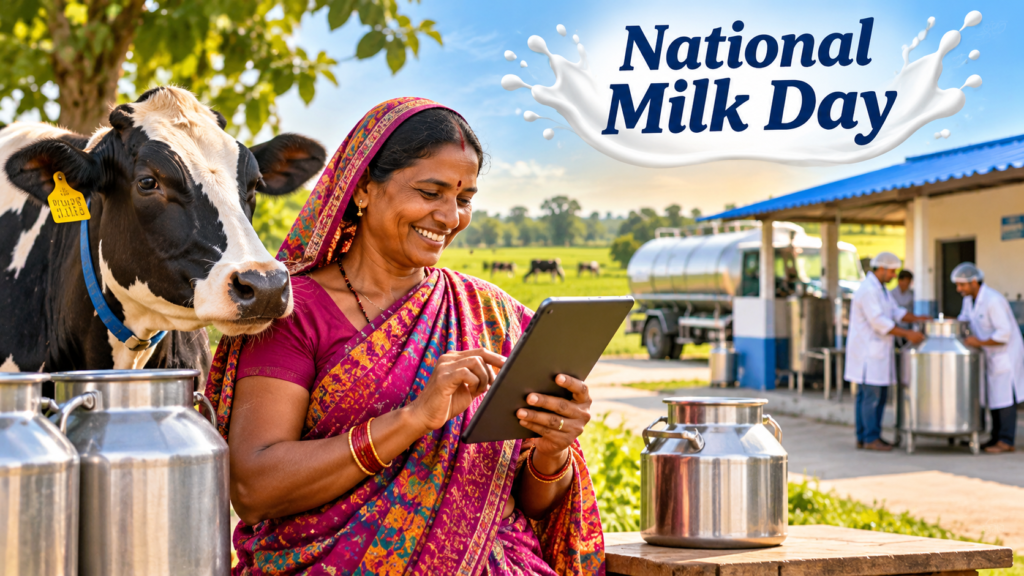
NEW DELHI: India’s dairy sector is increasingly integrating digital infrastructure into its operations, with the Bharat Pashudhan database recording more than 39.42 crore Pashu Aadhaar numbers and registering nearly 9.99 crore livestock owners as of October 31, 2026.
The digital database, developed by the Department of Animal Husbandry and Dairying in collaboration with the National Dairy Development Board (NDDB), assigns a unique 12-digit identification number to registered livestock through ear tags. The identifier serves as a digital reference for recording animal-related transactions, including vaccination, breeding and veterinary treatment.
The initiative is part of a broader effort to strengthen livestock management through digital records, scientific breeding and improved animal healthcare.
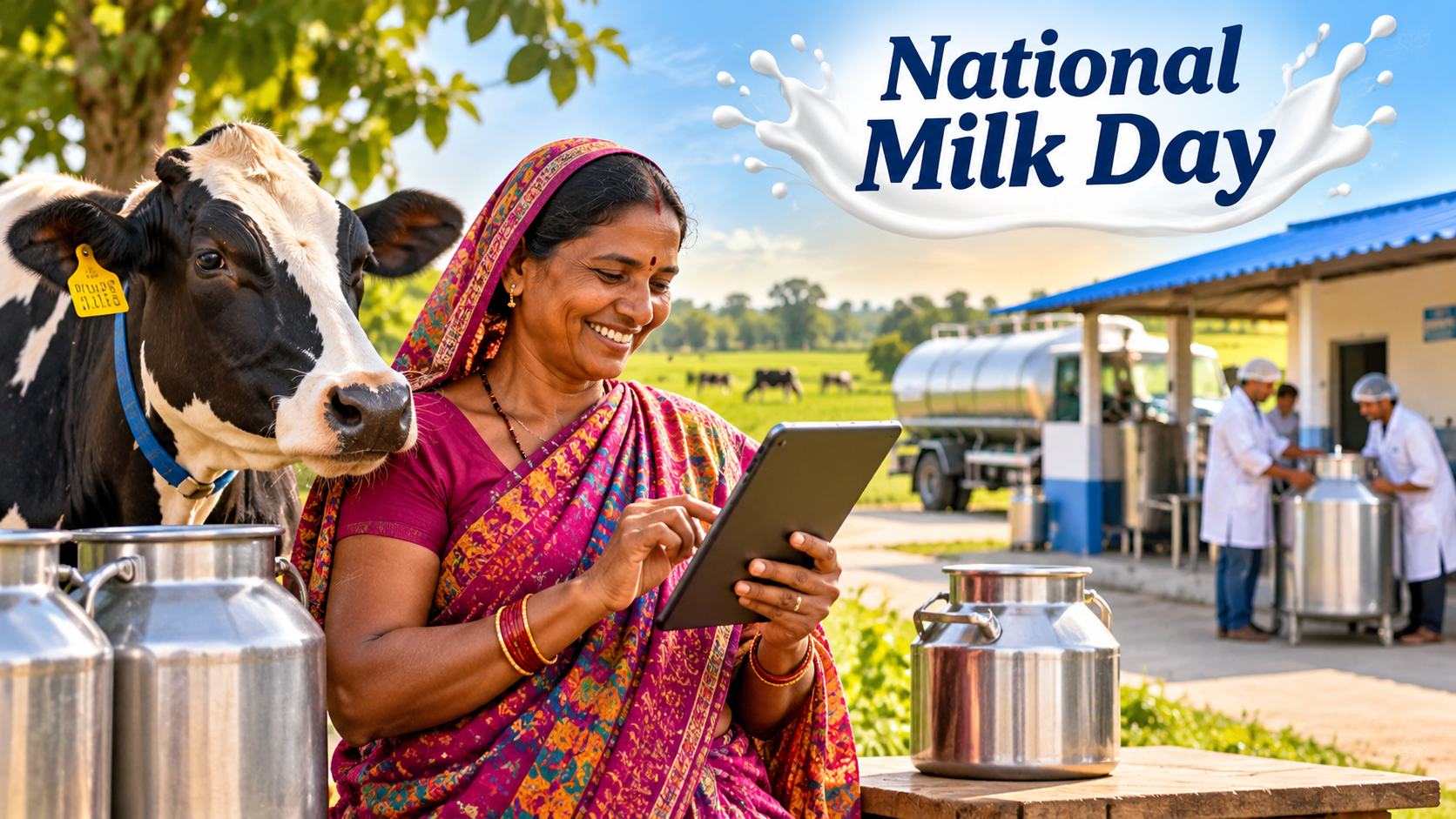
The figures were highlighted in a government backgrounder released ahead of National Milk Day, observed every year on November 26 to commemorate the birth anniversary of Dr Verghese Kurien, widely recognised as the architect of India’s White Revolution.
Digital records and direct payments reshape dairy operations
The Bharat Pashudhan platform provides a digital record of identified animals and supports livestock management. Such records can help strengthen the traceability of animal health interventions and breeding services, while improving the availability of information for farmers and administrators.
Digital systems are also being used in milk procurement and payment operations. Many dairy cooperatives have adopted automated milk collection and payment systems, with payments credited directly to farmers’ bank accounts.
The government backgrounder reports that, as of October 31, 2026, dairy cooperatives procured 690.90 lakh kg of milk per day and recorded daily liquid milk sales of 462.95 lakh litres.
India remains the world’s largest milk producer
India produced 247.87 million tonnes of milk in 2024-25, retaining its position as the world’s largest milk producer and accounting for nearly one-fourth of global production.
Milk production increased by 69.41% from 146.31 million tonnes in 2014-15, registering a compound annual growth rate of 5.41% over the period.
Per capita milk availability rose from 319 grams per person per day in 2014-15 to 485 grams in 2024-25. Average bovine milk productivity also increased from 1,640 kg per animal annually to 2,800 kg.
The dairy sector supports the livelihoods of approximately 8.5 crore rural households. Women account for nearly 70% of India’s dairy farming workforce, underlining the sector’s importance to rural livelihoods and women’s economic participation.
Cooperatives expand their reach
India’s dairy cooperative network comprises 22 milk federations, 241 district cooperative milk unions, 28 marketing dairies and 25 Milk Producer Organisations (MPOs). The network covers approximately 2.45 lakh villages and has 1.65 crore dairy farmers as members.
NDDB Dairy Services has established 25 MPOs, of which 18 have all-women membership and all-women producer directors. These organisations cover more than 13 lakh milk producers across 175 districts in 12 states. Women account for around 78% of producers in these organisations, which collectively procure approximately 70 lakh litres of milk daily.
The government says these farmer-owned organisations facilitate collective procurement, improve market access and provide transparent pricing and direct bank payments.
White Revolution 2.0 targets wider cooperative coverage
The cooperative-led White Revolution 2.0 initiative aims to increase milk procurement by dairy cooperatives by 50% over five years. It targets the establishment of 75,000 new dairy cooperative societies in uncovered villages and Panchayats and the strengthening of 46,422 existing societies by 2028-29.
As of October 31, 2026, 24,097 new societies had been formed and 31,394 existing societies strengthened.
The National Programme for Dairy Development has also supported the organisation or revival of 40,800 dairy cooperative societies, enrolled 25.82 lakh additional farmers and created 168 lakh litres per day of milk chilling capacity. The programme has also supported the distribution of 94,000 milk quality testing devices.
From dairy waste to clean energy
The sector’s modernisation agenda also includes sustainability and circularity. The government is promoting the conversion of cattle dung and agricultural residues into biogas, organic manure and bio-fertilisers under the broader ‘Gold out of Garbage’ approach.
The GOBARdhan National Circular Bioenergy Scheme, launched on October 1, 2026, has an outlay of ₹23,731 crore and is scheduled to run from 2026-27 to 2035-36. It aims to expand domestic compressed biogas production through assured offtake, stable pricing, capital assistance, pipeline connectivity and credit support.
The next challenge: translating digital records into farmer value
The expansion of digital livestock identification and automated payment systems represents an important step in modernising India’s dairy economy. However, the value of these systems will depend on the accuracy and regular updating of records, accessibility for small and marginal farmers, and their integration with reliable veterinary, breeding and market services.
For a sector that supports millions of rural households, technology must do more than create databases. It must help farmers improve animal productivity, access timely healthcare, receive transparent payments and secure better returns from milk production.
As India marks National Milk Day, the country’s dairy achievement is increasingly being measured not only in tonnes of milk produced, but also in the strength of its cooperatives, the reach of its digital infrastructure and the prosperity of its farmers.