Naxal-free India: Government highlights security gains, digital connectivity and tribal development
A PIB backgrounder says no district remains LWE-affected, citing security infrastructure, 889 mobile towers in Bastar and expanded roads, welfare delivery and rehabilitation.
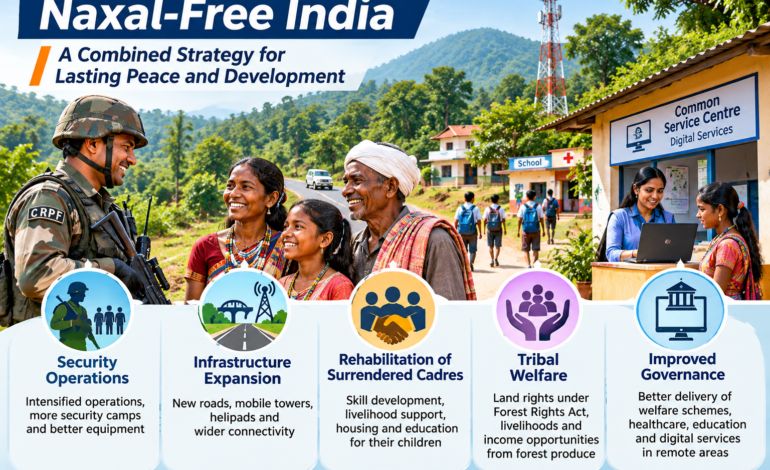
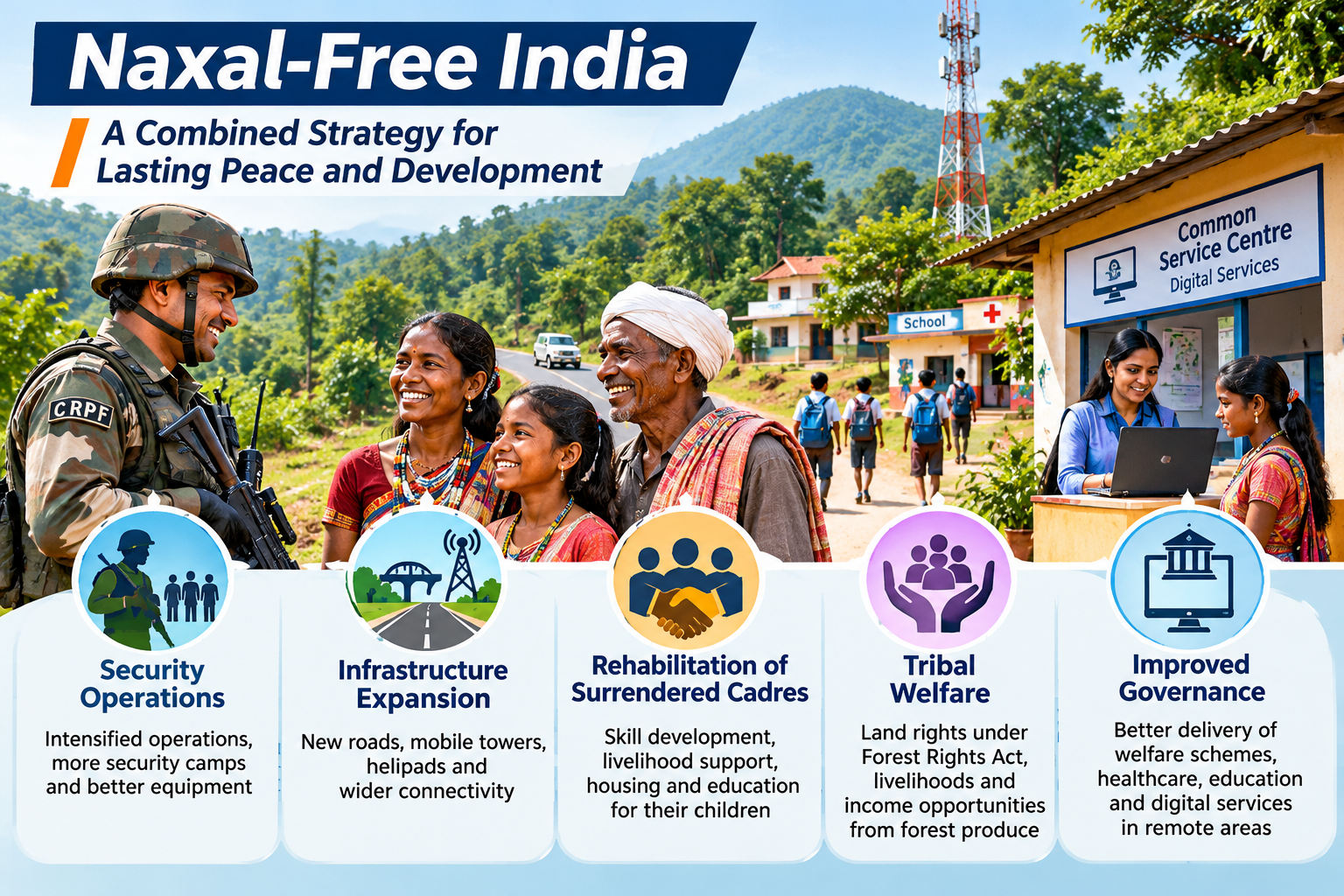
A government backgrounder on Monday attributes the development to a combination of security operations, infrastructure expansion, rehabilitation of surrendered cadres, tribal welfare and improved governance.

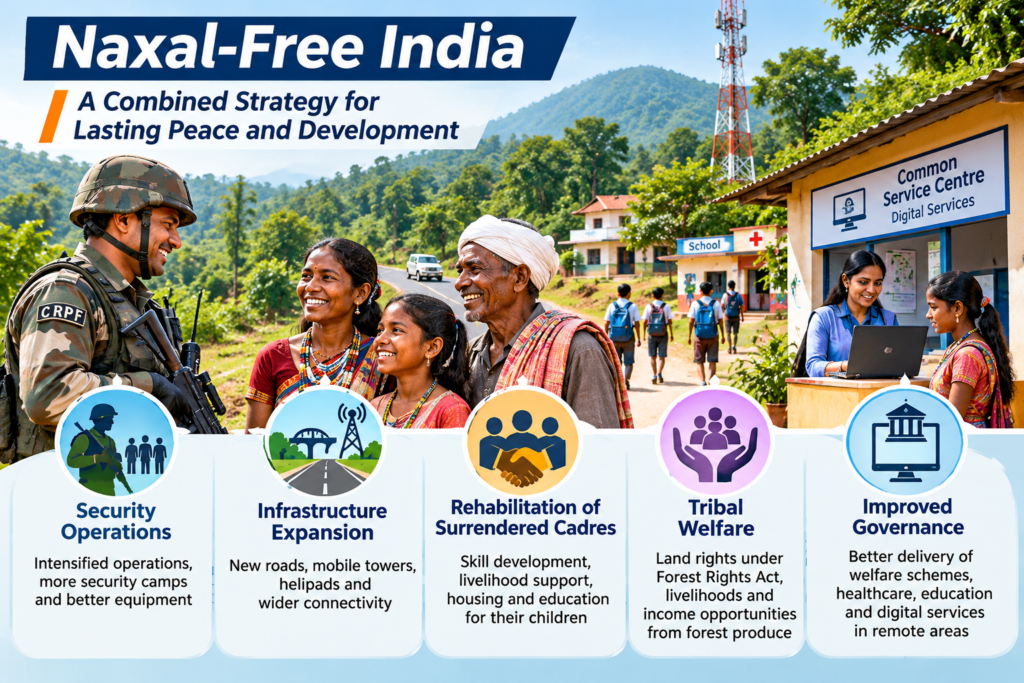
NEW DELHI: The Union government has declared India effectively free from Left-Wing Extremism (LWE), with no district remaining classified as LWE-affected as of March 31, 2026. A government backgrounder on Monday attributes the development to a combination of security operations, infrastructure expansion, rehabilitation of surrendered cadres, tribal welfare and improved governance.
The Press Information Bureau (PIB) backgrounder, titled ‘Naxal-Free India: Integrated Strategies Defeated Left-Wing Extremism’, published on November 24, traces the government’s approach to addressing the Maoist insurgency through a combination of security measures and development interventions.
The government had set March 31, 2026, as the target for making the country Naxal-free in August 2024. According to the backgrounder, the target was achieved through intensified operations, inter-agency coordination and accelerated development outreach.
Security infrastructure expanded in affected regions
The government says it has established 668 new security camps, compared with 169 before 2014, and constructed 615 fortified police stations to strengthen its presence in formerly affected areas.
It has also built 68 night-landing helipads to facilitate troop deployment, casualty evacuation and surveillance in remote locations. Security forces received 400 bullet-proof and blast-proof vehicles, while five hospitals were constructed for their welfare and medical support.
The backgrounder identifies several operations, including Operation Black Forest, Operation Octopus, Operation Double Bull, Operation Thunderstorm, Operation Bhimbandh and Operation Chakrabandha, as significant contributors to the weakening of Maoist networks.
It also states that 41 Polit Bureau and Central Committee members of CPI (Maoist) have been neutralised since 2014.
Roads and mobile connectivity reach remote areas
Beyond security operations, the government’s account places considerable emphasis on infrastructure and digital connectivity in regions that had remained isolated for years.
More than 3,240 kilometres of roads have been constructed across the Bastar region of Chhattisgarh, covering Bastar, Bijapur, Dantewada, Sukma, Narayanpur, Kanker and Kondagaon districts.
The government also reports the installation of 889 mobile towers to improve digital connectivity. The expansion is intended to connect previously isolated villages with markets, schools, healthcare facilities, banking services and government programmes.
Improved telecommunications infrastructure is particularly significant for the delivery of public services in remote tribal regions. Mobile connectivity can facilitate access to digital banking, online education, telemedicine and government benefit platforms, although the actual impact depends on network quality, affordability, digital literacy and the availability of supporting infrastructure.
Tribal rights, rehabilitation and livelihood support
The backgrounder also highlights the distribution of 21,26,273 title deeds under the Forest Rights Act as part of efforts to strengthen the rights and entitlements of tribal communities.
The rehabilitation framework for surrendered cadres includes skill development, livelihood assistance, housing support under the Pradhan Mantri Awas Yojana and financial assistance for self-employment. Children of surrendered cadres are also provided free education up to Class XII, according to the government.
The Bastariya Battalion, established in 2017, is cited as another component of the strategy. It recruited 1,143 personnel, including around 400 local youth from Bijapur, Sukma and Dantewada. The government says local recruitment strengthened intelligence networks and helped improve engagement between security forces and tribal communities.
Economic development initiatives have also focused on processing, branding and marketing agricultural and minor forest produce, including Mahua, tamarind and Tendu leaves, to expand income and employment opportunities.
Welfare delivery and governance remain central to the next phase
The Ministry of Home Affairs has surveyed seven formerly LWE-affected districts in south Chhattisgarh to assess the coverage of government welfare schemes, development initiatives and livelihood opportunities.
The survey examined education levels, health indicators and the availability of basic facilities, including primary schools, anganwadi centres and secondary healthcare infrastructure. The findings are intended to help the Centre and state government identify gaps in service delivery.
Another initiative involves converting five security camps in Bastar into Shaheed Veer Gundadhur Seva Dera Kendras. The National Institute of Design, Ahmedabad, has completed a feasibility study, and work has commenced under the project, with expenditure to be met through the Ministry of Home Affairs’ Special Central Assistance Scheme.
The government has also highlighted support for victims of Naxal violence, including the distribution of assistive devices to persons with disabilities under the Seva Sankalp Abhiyan in October 2026.
The post-conflict development test
The government’s declaration of a Naxal-free India marks a significant claimed change in the country’s internal security landscape. However, the long-term success of the transition will depend on whether improved security translates into sustained development and greater opportunities for communities that experienced decades of conflict and isolation.
The installation of mobile towers and construction of roads are important starting points, but connectivity must lead to reliable access to education, healthcare, banking, livelihoods and public services. Similarly, the distribution of land titles and rehabilitation assistance needs to be accompanied by effective implementation and continued institutional support.
The next challenge, therefore, is not limited to preventing a resurgence of extremism. It is to ensure that peace becomes visible in everyday life through functioning public institutions, economic opportunities, protection of tribal rights and dependable delivery of welfare services.