Barrier-less tolling raises NHAI revenue by 19.84% across seven highway plazas
NHAI reports an additional ₹89.23 crore in net toll revenue from seven barrier-less plazas, while deploying AI tools and e-notices to address toll evasion.
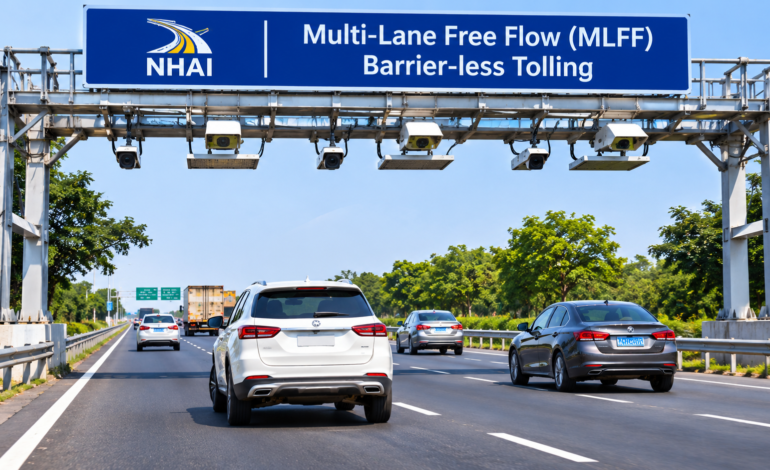
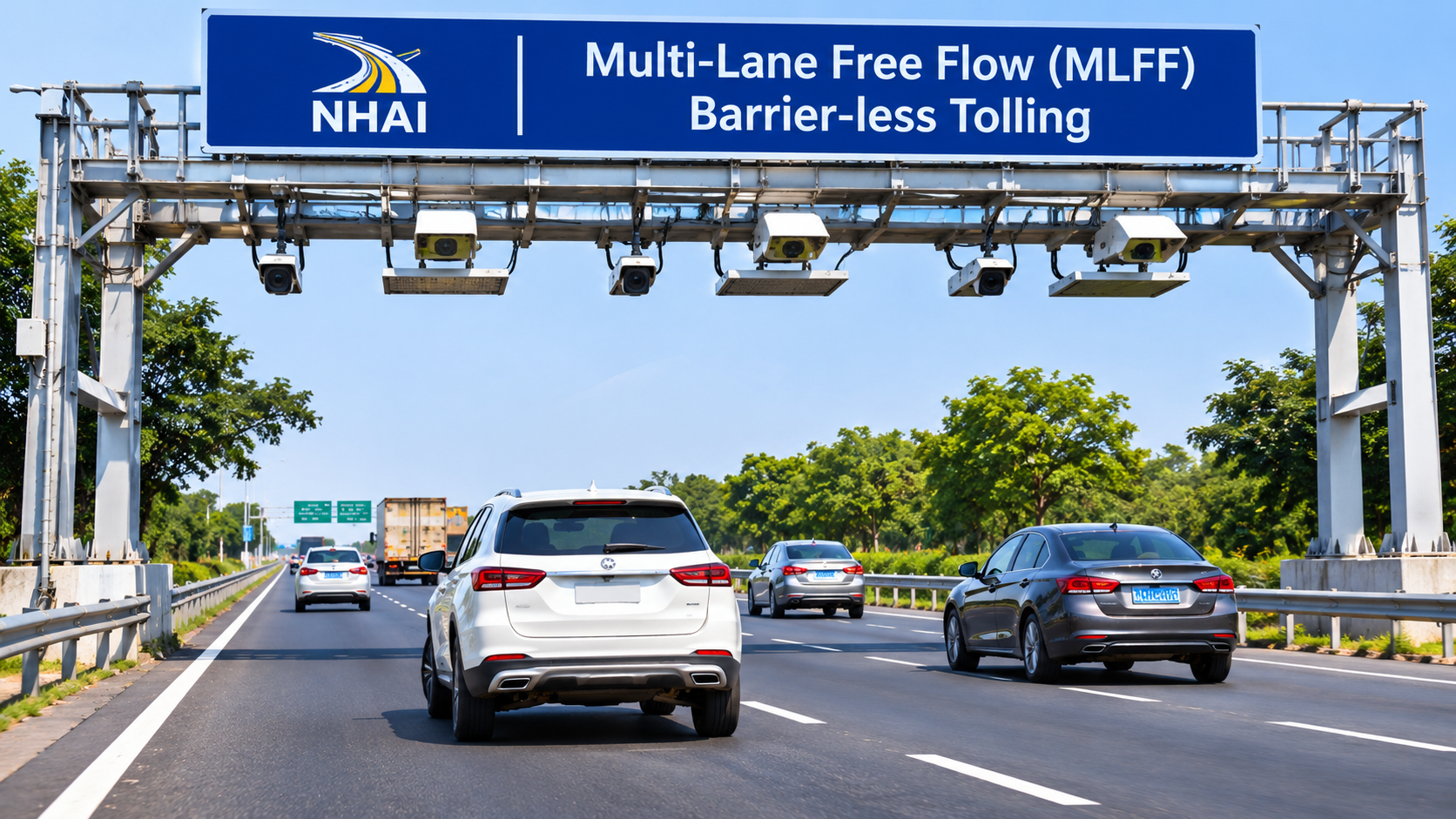
The system uses electronic identification and toll collection mechanisms to facilitate continuous traffic movement, with the stated objectives of reducing congestion, travel time, fuel consumption and vehicular emissions.

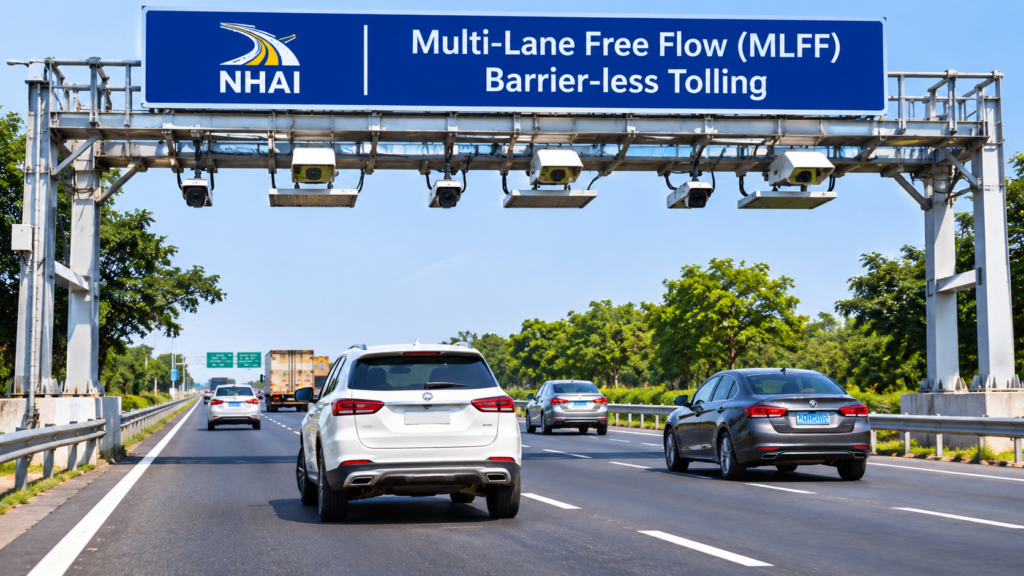
NEW DELHI: The National Highways Authority of India (NHAI) has reported a 19.84% increase in net toll revenue across seven operational barrier-less toll plazas using Multi-Lane Free Flow (MLFF) technology, compared with the corresponding pre-implementation period.
According to the Ministry of Road Transport and Highways, the seven plazas generated cumulative net revenue of approximately ₹538.95 crore, against a pre-MLFF benchmark of ₹449.72 crore, resulting in additional revenue of around ₹89.23 crore.
The performance figures cover the period from the respective commencement dates of the plazas up to November 1, 2026. The assessment excludes Nemili and Chenasamudram, which became operational in November.
MLFF technology enables vehicles to pass through tolling points without stopping at physical barriers. The system uses electronic identification and toll collection mechanisms to facilitate continuous traffic movement, with the stated objectives of reducing congestion, travel time, fuel consumption and vehicular emissions.
Revenue gains across seven plazas
The first barrier-less tolling system was launched at Choryasi Fee Plaza in Gujarat on May 1, 2026. The system was subsequently introduced at other locations, including Mundka in Delhi, Daulatpura and Manoharpura in Rajasthan, Gharaunda in Haryana, Shahjahanpur in Uttar Pradesh and Paranur in Tamil Nadu.
NHAI’s figures show that Paranur recorded the highest individual net revenue increase among the seven assessed plazas at 26.95%, followed by Manoharpura at 24.51% and Mundka at 23.55%.
The average increase across the seven plazas was 21.10%, while the combined weighted increase stood at 19.84%.
The authority said the revenue improvement was accompanied by higher transaction volumes and a reduction in collection costs. It attributed the gains to improved collection efficiency and coverage, including the reduction of revenue leakage.
AI-based systems to identify toll evaders
The transition to barrierless tolling has also presented enforcement challenges. NHAI has reported instances of vehicle owners masking, concealing or tampering with registration number plates to avoid paying toll charges.
To address the issue, the authority is deploying AI-based technologies, including Vehicle Fingerprinting and integration with the VAHAN database, to identify vehicles and trace their registered owners.
E-notices are being issued to recover unpaid user fees. NHAI said approximately 60% of the value of e-notices issued across the assessed plazas had already been realised.
Police check posts have also been established at selected locations, including Gharaunda Fee Plaza, where vehicles suspected of toll evasion are being intercepted and challaned under relevant provisions of the Motor Vehicles Act, 1988.
The authority further stated that applicable VAHAN services may be restricted in cases where e-notices remain unpaid, in accordance with the prescribed enforcement framework.
Technology, compliance and the road ahead
The reported revenue increase points to the potential of automated toll collection to improve operational efficiency. However, the long-term performance of barrier-less tolling will depend not only on technology deployment but also on the reliability of vehicle identification, transparent notice and payment procedures, and effective mechanisms for resolving disputed charges.
As NHAI expands MLFF across the National Highway network, motorists will also need clear information on how toll charges are calculated, how unpaid fees are communicated and how errors can be challenged.
The shift from physical toll barriers to automated collection is therefore not merely an infrastructure upgrade. It represents a wider transition towards technology-led enforcement, in which accuracy, accountability and public trust will be as important as collection efficiency.