Union Cabinet approves ₹14500-crore funding scheme to support 92 GWh of grid-scale energy storage
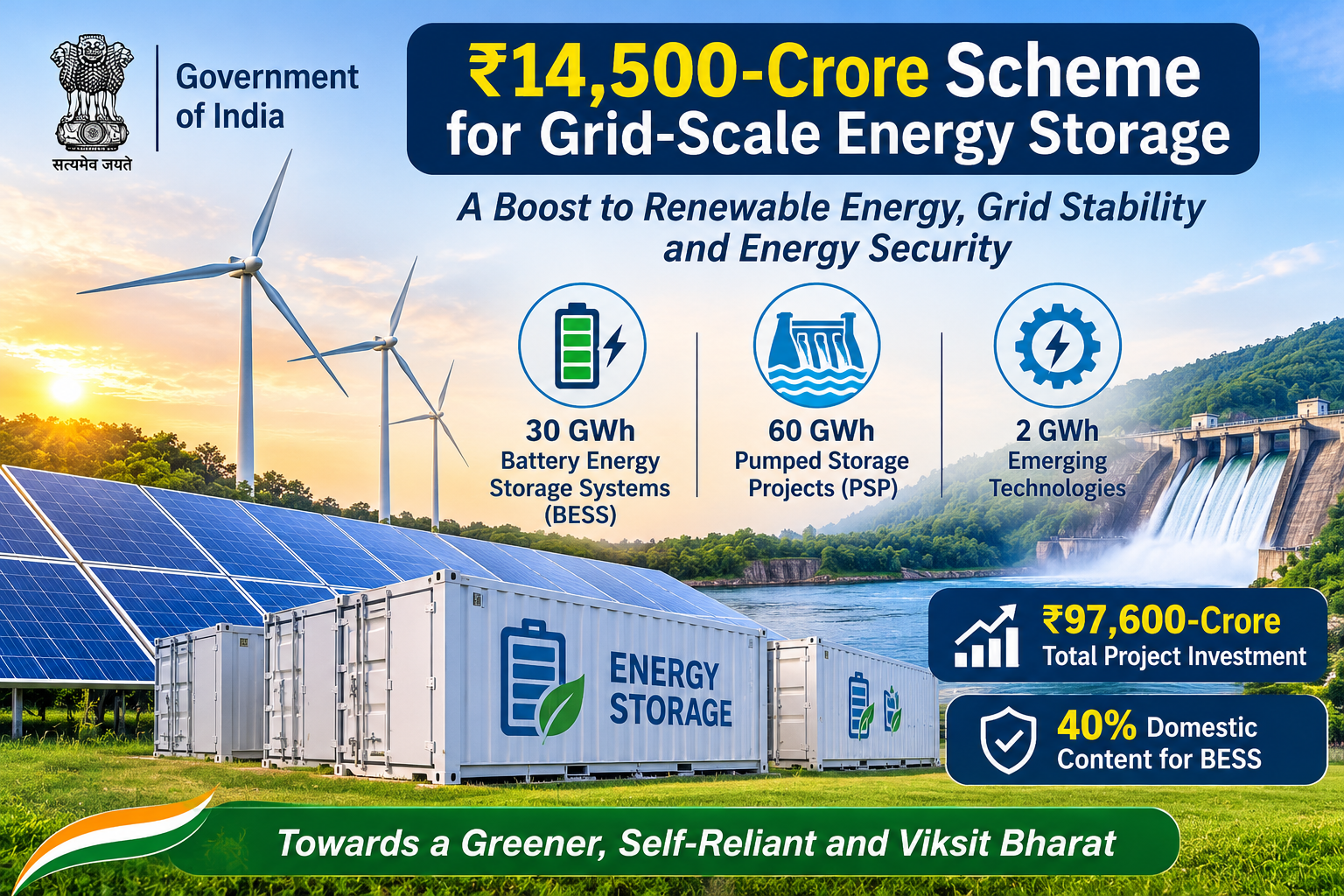
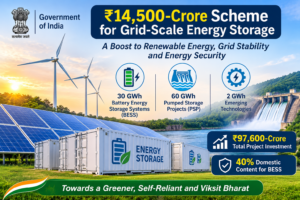
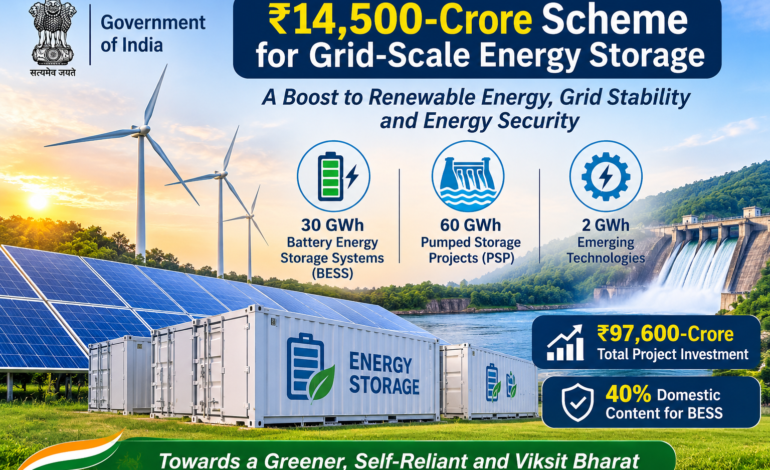
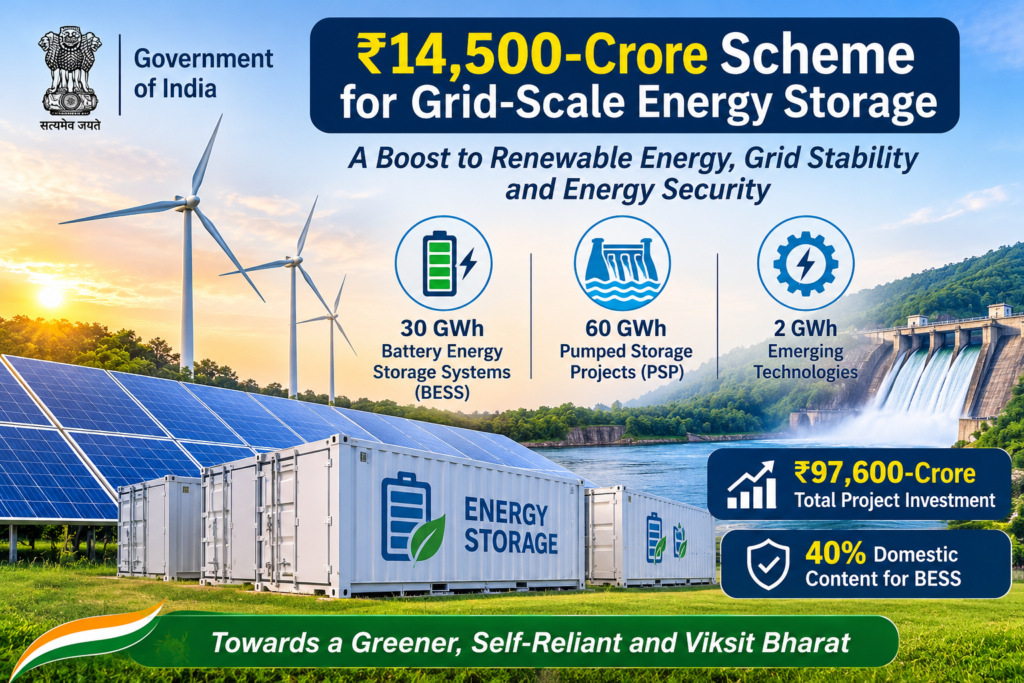
The five-year scheme will support 60 GWh of pumped storage, 30 GWh of battery storage and 2 GWh of emerging technologies, with a 40% domestic content requirement for battery projects.
he scheme is designed to improve the financial viability of large-scale energy storage projects, support renewable energy integration and strengthen grid stability.

NEW DELHI: The Union Cabinet has approved a ₹14,500-crore Viability Gap Funding (VGF) scheme to support the development of 92 GWh of new grid-scale energy storage capacity across India between FY 2026-27 and FY 2030-31.
The scheme is designed to improve the financial viability of large-scale energy storage projects, support renewable energy integration and strengthen grid stability. It is expected to facilitate the creation of new capacity equivalent to 170% of India’s existing grid-scale energy storage capacity and contribute towards meeting the country’s projected requirement of 411 GWh by 2031-32.
The approved capacity comprises 60 GWh of Hydro Pumped Storage Plant (PSP) projects, 30 GWh of Battery Energy Storage Systems (BESS) and 2 GWh through alternative energy storage technologies. The projects are expected to involve a total investment of ₹97,600 crore.
Energy storage capacity will be allocated through a tariff-based competitive bidding process. Public and private sector electricity distribution companies will be eligible for VGF support for battery and pumped storage projects. Projects based on alternative storage technologies may be implemented by public and private sector entities.
A key feature of the scheme is the requirement for battery storage projects to meet a minimum Domestic Content Requirement (DCR) of 40%. The provision is intended to encourage indigenous manufacturing of battery storage systems, create opportunities for Indian industry and reduce dependence on imported components.
The government expects the expansion of storage infrastructure to help manage variations in renewable energy generation, improve the utilisation of renewable power and reduce reliance on conventional generation for balancing electricity supply.
By supporting both established storage technologies and emerging alternatives, the scheme seeks to build a more flexible and resilient electricity system capable of meeting growing demand for reliable and affordable round-the-clock power.
The initiative is also intended to strengthen India’s domestic energy storage manufacturing ecosystem and advance the country’s energy security objectives under the Atmanirbhar Bharat and Viksit Bharat programmes.