Indian Cyber Crime Coordination Centre blocked 3718 fraudulent mobile apps: Govt
The government says its cyber-fraud system helped save more than ₹11,158 crore across 32.80 lakh complaints, while over 15.75 lakh SIM cards and 5.77 lakh IMEIs have been blocked.
The Ministry of Home Affairs has established I4C as an attached office to deal with different forms of cybercrime through a coordinated and comprehensive approach.

NEW DELHI: The Indian Cyber Crime Coordination Centre (I4C) has blocked 3,718 mobile applications, including fraudulent loan apps, as the Government of India steps up its efforts to tackle misleading and malicious digital applications and prevent cyber fraud.
The apps were blocked under Section 69(A) and Section 79(3)(b) of the Information Technology Act, 2000, with action being taken through I4C’s coordinated cybercrime-response mechanisms.
The Ministry of Home Affairs has established I4C as an attached office to deal with different forms of cybercrime through a coordinated and comprehensive approach.
A key component of this framework is the National Cyber Crime Reporting Portal (NCRP), which enables citizens to report different types of cybercrime, with particular emphasis on offences against women and children.
The government has also created the Sahyog Portal to speed up the process of issuing notices to internet intermediaries for removal or disabling of access to information, data or communication links being used to commit unlawful acts.
According to the government, 3,718 mobile applications, including fraudulent loan applications, had been blocked by I4C as of June 30, 2026.
The scale of financial cybercrime has prompted the government to build a separate mechanism for immediate reporting and intervention.
The Citizen Financial Cyber Fraud Reporting and Management System (CFCFRMS), launched in 2021 under I4C, is intended to enable victims to report financial fraud quickly and help prevent fraudsters from siphoning away the money.
As of June 30, 2026, the system had received more than 32.80 lakh complaints, involving financial amounts exceeding ₹11,158 crore that the government says had been saved from being siphoned off by fraudsters.
The government’s cyber-fraud response is also increasingly using financial and digital identifiers to identify suspected criminals and prevent further transactions.
I4C launched its Suspect Registry on September 10, 2024, in collaboration with banks and financial institutions. The registry contains identifiers associated with suspected cyber criminals and is intended to help participating entities detect and stop potentially fraudulent transactions.
As of June 30, 2026, more than 30.48 lakh suspect-identifier records received from banks had been shared with participating entities.
The government also said 32.08 lakh Layer 1 mule accounts had been shared through the Suspect Registry, while transactions worth ₹25,698 crore had been declined.
The action extends beyond bank accounts.
More than 15.75 lakh SIM cards and 5.77 lakh International Mobile Equipment Identities (IMEIs), as reported by police authorities, had been blocked by the Government of India as of June 30, 2026.
The objective is to disrupt the digital infrastructure used by cyber criminals by targeting not only suspicious applications and financial transactions but also the communication and device identifiers associated with reported cybercrime.
The government has also sought to standardise the way cyber-fraud complaints are handled across the country.
The Ministry of Home Affairs has issued a comprehensive Standard Operating Procedure for the NCRP-CFCFRMS system covering complaint processing, coordination with banks, grievance redressal, removal of lien markings and restoration of defrauded funds to rightful claimants.
Two modules have been made functional from April 2026 to strengthen this process.
The Money Restoration Module is intended to facilitate faster restoration of defrauded money to victims, while the Grievance Redressal Module deals with complaints relating to frozen bank accounts and lien marking of amounts.
The government’s approach therefore extends beyond blocking fraudulent apps after they are identified.
It is building a connected system covering reporting, investigation, financial intervention, identification of suspicious accounts, blocking of digital identifiers, coordination with banks and restoration of money to victims.
At the same time, the government is expanding public awareness campaigns to reduce the vulnerability of citizens to cybercrime.
These include caller-tune campaigns, SMS alerts, television and radio campaigns, school awareness programmes, advertisements in cinema halls, celebrity endorsements and campaigns during the Indian Premier League.
The government is also using social media platforms and MyGov for awareness campaigns, while Cyber Safety and Security Awareness Weeks are being organised in association with states and union territories.
Cyber-awareness material is also being distributed through handbooks for adolescents and students, as well as digital displays at railway stations and airports.
I4C’s CyberDost initiative is being used across social media platforms including X, Facebook, Instagram and Telegram to disseminate cyber-safety information.
The government’s response reflects the changing nature of digital fraud, where malicious applications, stolen credentials, mule accounts, fraudulent transactions, compromised SIM cards and devices can form interconnected parts of the same criminal ecosystem.
Blocking an individual application therefore addresses only one part of the problem.
The broader architecture being developed by I4C seeks to intervene at multiple points — from the moment a citizen reports a cybercrime to the point where suspicious accounts, applications, phone numbers or devices are identified and blocked, and ultimately where efforts are made to restore money to victims.
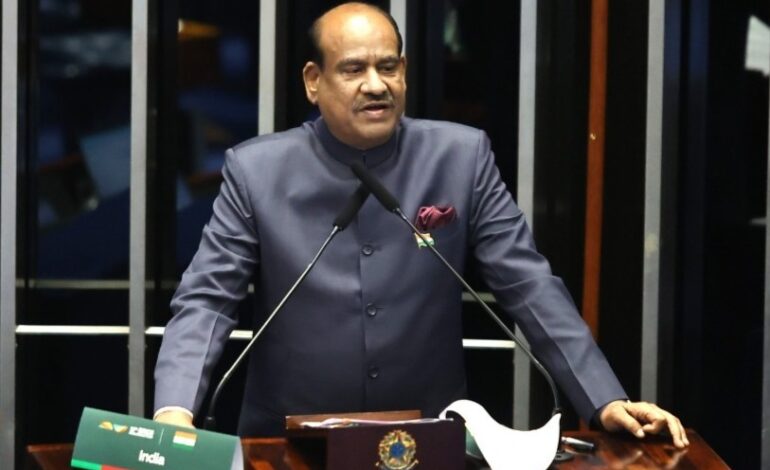
The information was provided by Minister of State in the Ministry of Home Affairs Bandi Sanjay Kumar in a written reply to a question in the Lok Sabha.