Could we one day ‘vaccinate’ against hair loss? New research explores immune system’s role in hair regrowth
Scientific review examines immune regulation, regenerative medicine and emerging technologies as potential future approaches to hair-loss treatment
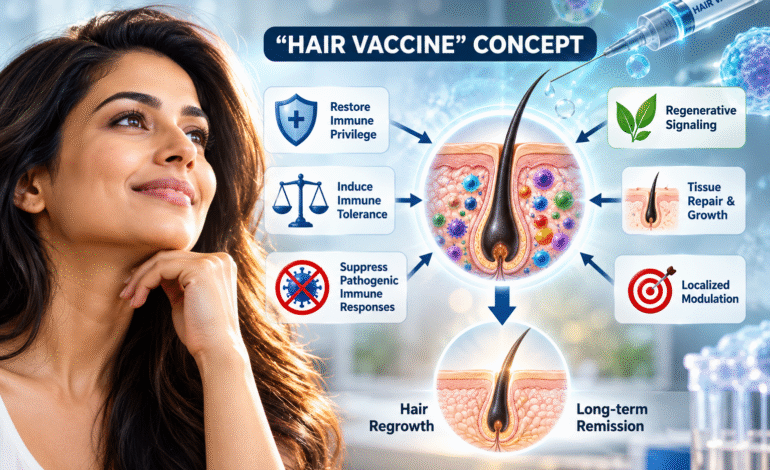
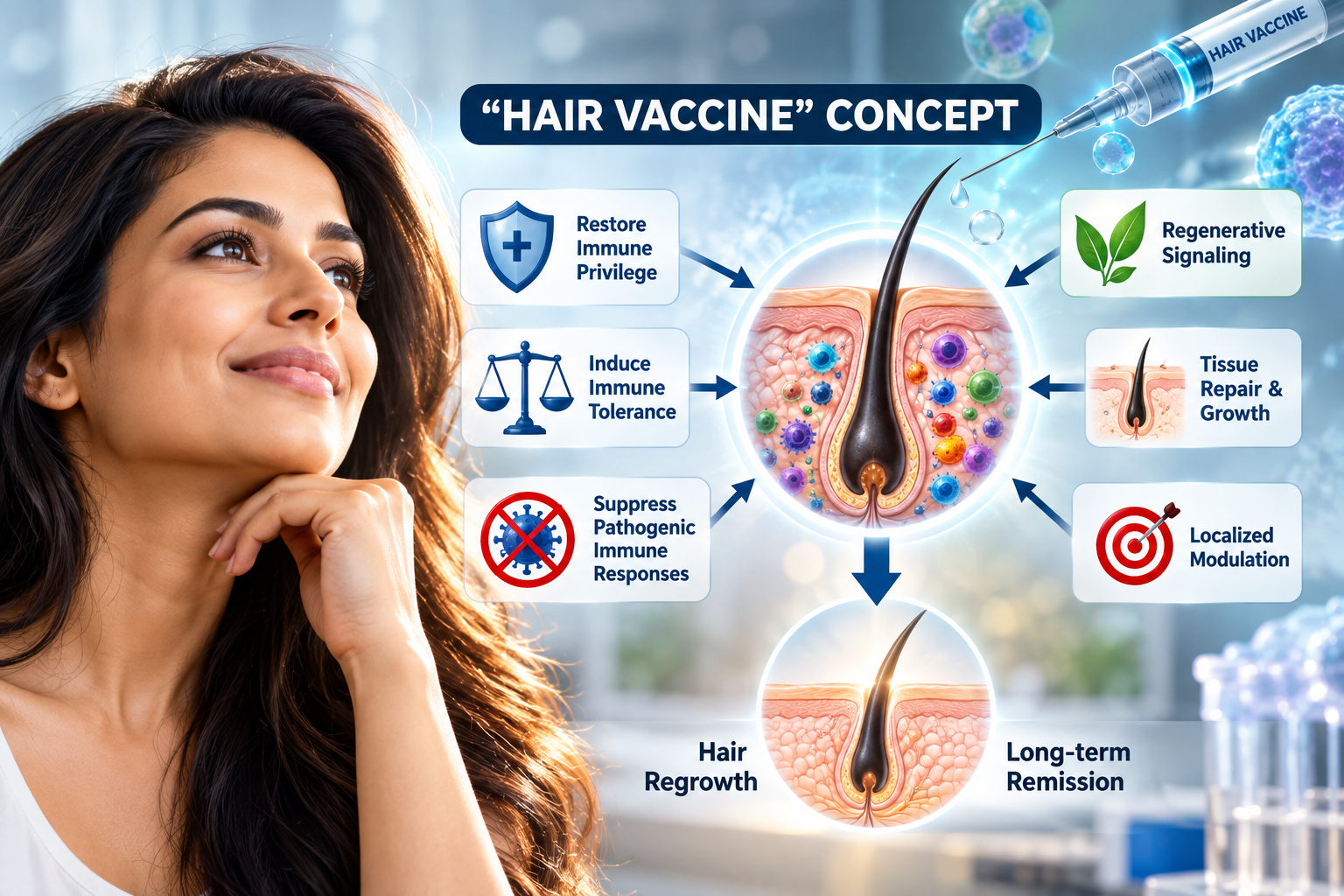
A newly published scientific review in the European Journal of Pharmacology explores that possibility through the emerging concept popularly described as a “hair vaccine”.

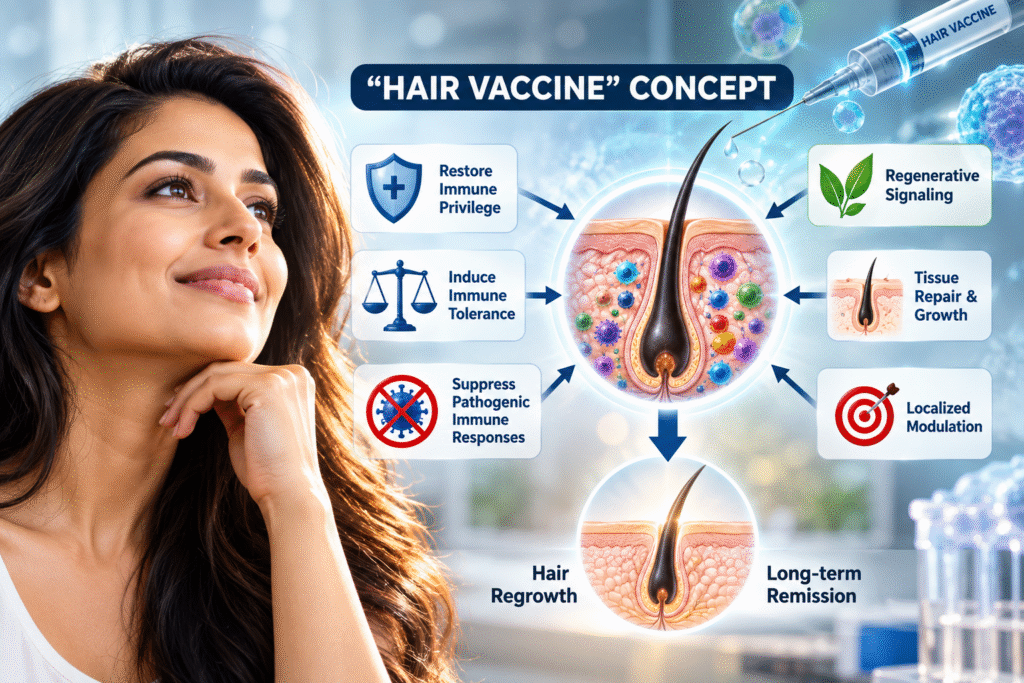
MUMBAI: What if the future of hair-loss treatment lies not simply in stimulating hair growth, but in changing the biological environment that determines whether a hair follicle survives, regenerates or comes under immune attack?
A newly published scientific review in the European Journal of Pharmacology explores that possibility through the emerging concept popularly described as a “hair vaccine”. The researchers, however, stress that there is currently no clinically validated vaccine that can prevent or cure hair loss.
The paper, titled “Hair vaccine: Myth or future therapeutic reality? Immunopharmacological perspectives on immune-regenerative strategies for hair loss,” is authored by Dr Debraj Shome, Dr Mamata Mishra, Dr Rinky Kapoor, Dr Khushbu Kumari and Dr Raji Patil.
Rather than proposing a conventional vaccine against baldness, the review examines whether future therapies could potentially “re-educate” the immune and regenerative environment around hair follicles, reducing damaging immune signals while supporting regeneration.
Could the immune system help hair regrow?
A central concept examined in the review is hair follicle immune privilege – a specialised protective environment that helps shield healthy follicles from inappropriate immune attack.
In conditions such as alopecia areata, this protection can break down, allowing immune activity to interfere with normal hair growth. At the same time, emerging research indicates that certain immune cells and signalling pathways may participate in tissue repair, stem-cell activation and normal hair-follicle cycling.
Dr Debraj Shome, clinician-scientist and research mentor at QR678, said the term “hair vaccine” makes the concept easy to understand, but the underlying research is focused on whether the biological environment around the follicle could eventually be modified to reduce harmful immune signalling and restore regenerative signalling.
Why hair loss may require precision treatment
The researchers emphasise that hair loss is not a single disease. Alopecia areata has a significant autoimmune component, while androgenetic alopecia involves factors including genetics, hormonal signalling, follicular miniaturisation and ageing.
Dr Rinky Kapoor, dermatologist, clinician-scientist and research mentor at QR678®, said the biological mechanisms behind apparently similar cases of hair loss can differ significantly.
The review therefore points towards precision treatment, in which the biological factors affecting an individual patient’s follicles are identified before selecting an intervention.
From peptides to mRNA and exosomes
The review examines several emerging technologies that could contribute to future immune-regenerative approaches, including:
- JAK-STAT pathway modulation
- Biomimetic peptides
- mRNA-based therapeutics
- Gene therapy
- Exosomes
- Nanomedicine
- Biomaterials
- Targeted drug-delivery technologies
According to the researchers, these approaches could potentially enable regenerative or immune-modulating signals to be delivered more precisely to the follicular environment.
Dr Mamata Mishra, scientist and researcher at QR678®, said research is increasingly bringing immunology and regenerative medicine together, with immune cells and their signals being studied not only for their potential role in damaging follicles but also for their possible participation in repair and regeneration.
Dr Raji Patil, Head of Medical Affairs at QR678® and co-author of the paper, said the next phase of hair restoration could increasingly focus on precision, with treatments designed around immune environments, regenerative signalling and individual follicular biology.
A future possibility, not a vaccine today
The researchers caution that the “hair vaccine” concept remains experimental. The evidence spans established immunomodulatory treatments for specific forms of alopecia, preclinical research, early clinical studies and emerging technologies whose long-term effectiveness and safety have yet to be established.
Unlike infectious diseases, hair loss does not have one clearly defined foreign antigen against which the immune system can simply be vaccinated. Different forms of hair loss also arise through different biological mechanisms.
The review therefore suggests that “vaccine-inspired immune-regenerative therapy” may be a more scientifically accurate description of the direction the field could take.
Future research could combine immunology, regenerative medicine, biomarkers, advanced drug delivery and AI-assisted target discovery to develop increasingly personalised approaches to hair restoration.
About the research
The review was published in the European Journal of Pharmacology as Article 179264. The DOI provided in the release is 10.1016/j.ejphar.2026.179264.
QR678 describes itself as a translational hair-science research platform focused on hair-follicle biology and regenerative approaches to hair loss. The platform says its research has examined biomimetic peptide signalling and clinical and translational patented products in hair restoration.