Centre unveils ₹2814-crore scheme to build domestic lithium and nickel processing capacity
The five-year CAPEX support programme offers a 30% capital subsidy for four processing plants and aims to attract ₹10,000 crore in investment, strengthen critical mineral supply chains and reduce import
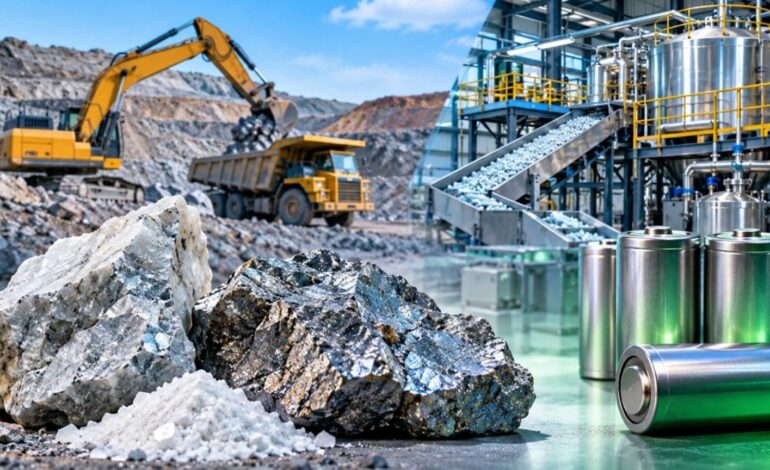
The initiative seeks to address a critical gap in India's mineral value chain, where requirements for refined intermediates and high-purity materials are largely met through imports.

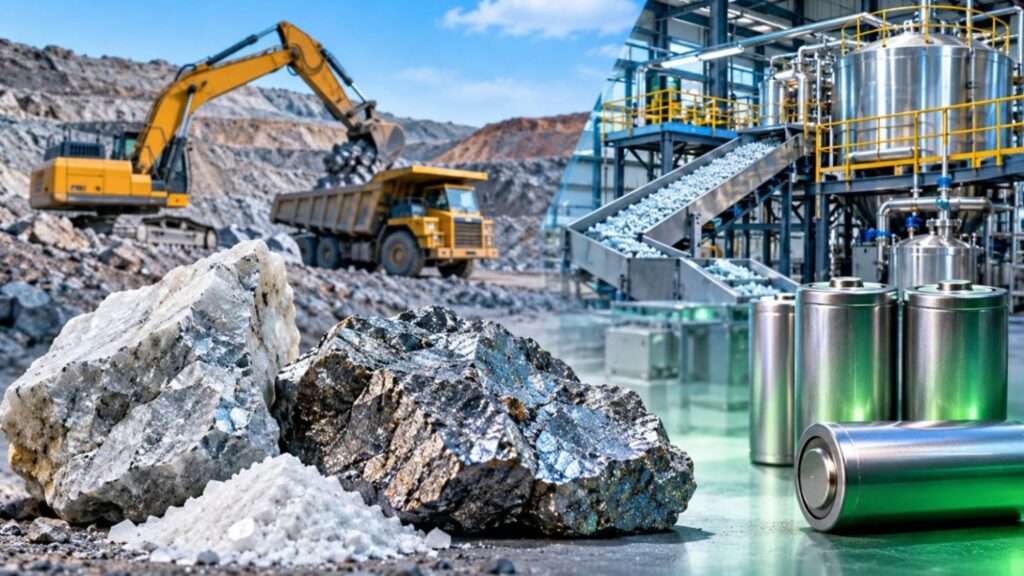
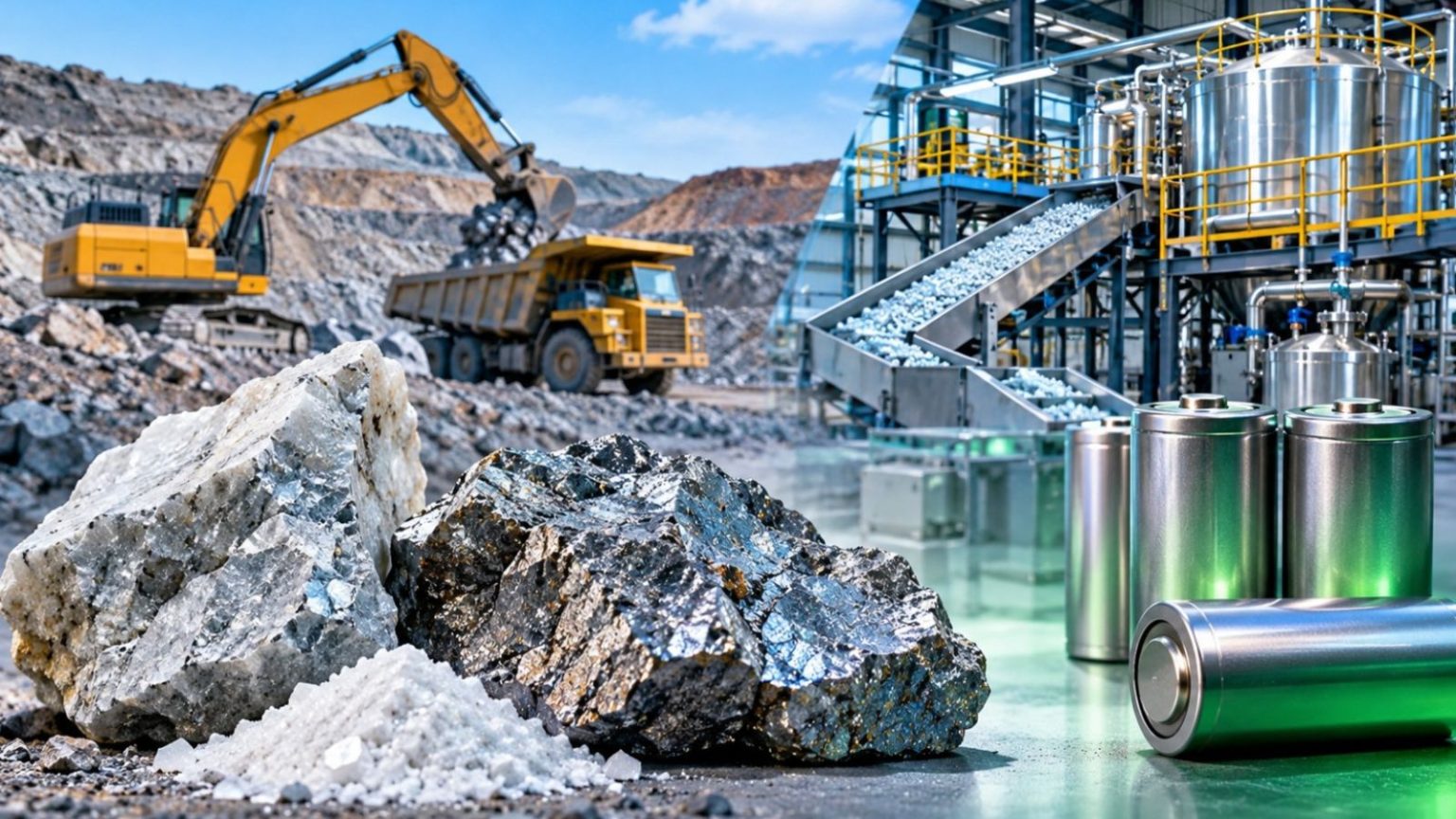
NEW DELHI: The Union Cabinet has approved a ₹2,814-crore capital expenditure support scheme to establish domestic processing capacity for lithium and nickel, targeting two plants for each mineral and an estimated ₹10,000 crore in investment over five years.
The CAPEX Support Scheme to Promote Critical Mineral Processing will run from FY 2026–27 to FY 2030–31. It offers a capital subsidy of 30% of eligible investment to encourage the setting up of high-purity mineral processing facilities in India.
The initiative seeks to address a critical gap in India’s mineral value chain, where requirements for refined intermediates and high-purity materials are largely met through imports. Domestic processing capacity is expected to strengthen supply security for industries including electric mobility, battery storage, electronics, defence and speciality steel.
The Union Cabinet approved the scheme on November 4, 2026.
Four processing plants to receive capital support
The scheme provides for the establishment of four processing plants, comprising two lithium facilities with a minimum capacity of 30,000 tonnes each and two nickel facilities with a minimum capacity of 50,000 tonnes each.
Lithium plants will process ores and concentrates, excluding brines, into battery-grade products. Nickel facilities will produce Class-1 nickel or battery-grade nickel sulphate, with cobalt recovery.
The total financial outlay of ₹2,814 crore includes ₹1,000 crore earmarked for lithium processing and ₹1,800 crore for nickel processing. The remaining ₹14 crore, equivalent to 0.5% of the outlay, is allocated for administrative expenses. The scheme will be fully funded through the Union government’s budgetary support.
The maximum support is capped at ₹500 crore per lithium beneficiary and ₹900 crore per nickel beneficiary.
Competitive selection and milestone-linked incentives
Beneficiaries will be selected through a two-stage competitive process. Applications will first undergo technical evaluation, with only qualified applicants progressing to financial bidding.
Selection at the second stage will follow the least-cost criterion, based on the lowest capital expenditure support sought. Two beneficiaries will be selected for each mineral.
The release of incentives will be linked to investment and equity contribution milestones in three tranches:
- First tranche: 25% of the quoted bid amount will be released when 25% of committed capital expenditure has been spent and at least 15% of the minimum required equity has been contributed.
- Second tranche: Cumulative support will reach 50% when 50% of committed capital expenditure has been spent and at least 50% of the minimum required equity has been contributed.
- Final tranche: The full eligible subsidy will be released after the plant is commissioned and 100% of the minimum required equity has been contributed.
Beneficiaries are required to commission their plants within three years of receiving the Letter of Award. The maximum permissible period is five years. Projects delayed beyond three years will face a tapering mechanism for the remaining undisbursed capital support.
A three-tier governance structure will oversee implementation. The Governing Council, chaired by the Secretary, Ministry of Mines, will provide strategic guidance, review progress and make final beneficiary selections. A Techno-Financial Committee will evaluate applications and recommend beneficiaries, while a Project Management Agency will provide implementation and administrative support.
Critical mineral security and domestic value addition
India has identified 24 critical minerals, including lithium, nickel, cobalt, graphite and rare earth elements. These minerals are essential for clean energy technologies, high-tech electronics, transport, telecommunications and defence.
However, processing capacity for several critical minerals remains concentrated in a limited number of countries, exposing supply chains to geopolitical disruptions, price volatility and potential export restrictions.
The new scheme is designed to strengthen India’s position in the processing segment by supporting the conversion of ores, concentrates and intermediates into high-purity products within the country.
The backgrounder projects that the programme will create processing capacity of 60,000 tonnes of lithium and 100,000 tonnes of nickel, helping meet projected demand by 2030. It also expects the scheme to reduce imports of high-purity intermediates, lower foreign exchange outgo and enable greater domestic value addition.
The availability of refined materials is expected to support downstream battery material and battery cell manufacturing, as well as speciality steel production. The programme is also expected to generate direct and indirect employment in mineral processing and related manufacturing activities.
Complements National Critical Mineral Mission
The CAPEX support programme forms part of a broader effort to develop an integrated domestic critical mineral ecosystem covering exploration, mining, recycling and processing.
It complements the National Critical Mineral Mission (NCMM), launched in January 2025 to secure long-term supplies and strengthen the country’s critical mineral value chain.
Under the Mission, the Union Cabinet approved a ₹1,500-crore recycling scheme in September 2025 to promote the recovery of critical minerals from secondary sources, including electronic waste, spent lithium-ion batteries and other scrap.
The Central Government has also auctioned 64 critical and strategic mineral blocks and 11 Exploration Licence blocks, according to the backgrounder.
By adding dedicated financial support for lithium and nickel processing, the new scheme seeks to bridge a key gap between mineral extraction and downstream manufacturing. Its implementation is expected to strengthen supply-chain resilience, support strategic industries and advance India’s objective of building a more self-reliant critical mineral ecosystem.