Telecom conclave spotlights indigenous startups and homegrown technology solutions
The Telecom Startups and MSME Conclave 2026 showcased Indian innovations across 5G security, fibre connectivity, chipsets and drone communications, with 11 startup exhibition stalls.
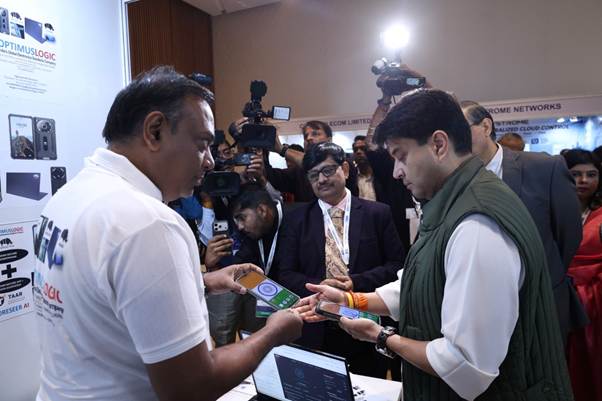
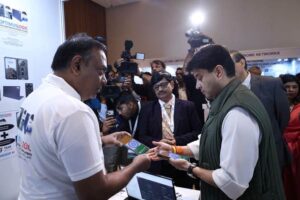
Union Minister for Communications and Development of North Eastern Region Jyotiraditya M. Scindia chaired the conclave, organised by the Department of Telecommunications (DoT) at Bharat Mandapam in New Delhi.

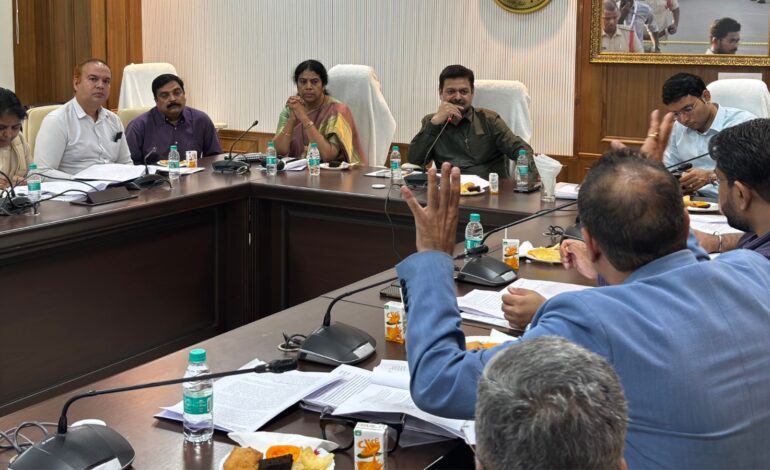
NEW DELHI: India’s push to build an indigenous telecom technology ecosystem received fresh attention at the Telecom Startups and MSME Conclave 2026, where startups, micro, small and medium enterprises (MSMEs), investors, industry leaders and government representatives discussed ways to accelerate the development and commercialisation of homegrown technologies.
Union Minister for Communications and Development of North Eastern Region Jyotiraditya M. Scindia chaired the conclave, organised by the Department of Telecommunications (DoT) at Bharat Mandapam in New Delhi.
The discussions covered five critical areas of the telecom technology stack: Radio Access Network (RAN) and Core, Applications, Chipsets, Security and Standards. Department officials outlined government initiatives, policy interventions and support mechanisms intended to help domestic innovators develop and scale their solutions.
Eleven exhibition stalls provided startups and MSMEs an opportunity to demonstrate indigenous products and technologies to policymakers, investors and industry stakeholders.
Emerging Technologies Hackathon recognises four innovations
A key highlight was the felicitation of winners of the Emerging Technologies Hackathon 2026 (ETH 2026), organised by TCoE India. The hackathon received more than 2,870 registrations and 620 applications across nine technology domains, with participation from students, startups, companies and academic institutions.
Entra Innovations LLP won the first prize for VAAYU, an indigenously designed tyre-pressure sensor system-on-chip.
Dawniens International Private Limited secured the second prize for Cablesmith, a robotic optical patch panel solution designed to enable remote provisioning of fibre connections.
The joint third prize went to IIT Bombay’s Team DRISTI for KAVACH, a security engine for private 5G networks, and Team RUDRA of the Military College of Telecommunication Engineering for VajraLink, an anti-jamming communication solution for drones.
Policy support and testing frameworks
The Department of Telecommunications is implementing several initiatives to strengthen the domestic telecom innovation ecosystem. These include the Telecom Technology Development Fund (TTDF), the Technology Development and Investment Promotion (TDIP) Scheme and 100 5G Use Case Labs. The initiatives support research and development, global standardisation, product validation and deployment.
The Telecommunications Act, 2023, also provides frameworks for Captive Non-Public Networks (CNPNs) and a Regulatory Sandbox, intended to facilitate enterprise networks and live testing of innovative telecom technologies.
Dedicated sessions at the conclave examined Captive Telecommunication Services and the Regulatory Sandbox. Ericsson shared international perspectives and industry experience, while participants discussed potential applications, implementation requirements and opportunities arising from the frameworks.
The commercialisation challenge
The conclave reflects a wider policy ambition to strengthen India’s role in telecom technology development rather than remain primarily a market for imported equipment and solutions. However, showcasing prototypes and recognising hackathon winners are only early steps in that transition.
For indigenous telecom innovation to become commercially sustainable, startups and MSMEs will need access to testing infrastructure, funding, procurement opportunities, industry partnerships and predictable pathways from pilot projects to large-scale deployment.
The effectiveness of initiatives such as TTDF, 5G Use Case Labs and regulatory sandboxes will ultimately be measured by the number of solutions that move beyond demonstrations and achieve adoption in commercial and public-sector networks.