India updates GDP, inflation and industrial output measurement as MoSPI outlines next phase of statistical reforms
MoSPI and RBI reviewed India's revised GDP, CPI and IIP series, while outlining plans for district-level economic estimates, digital economy accounts and greater use of administrative data.
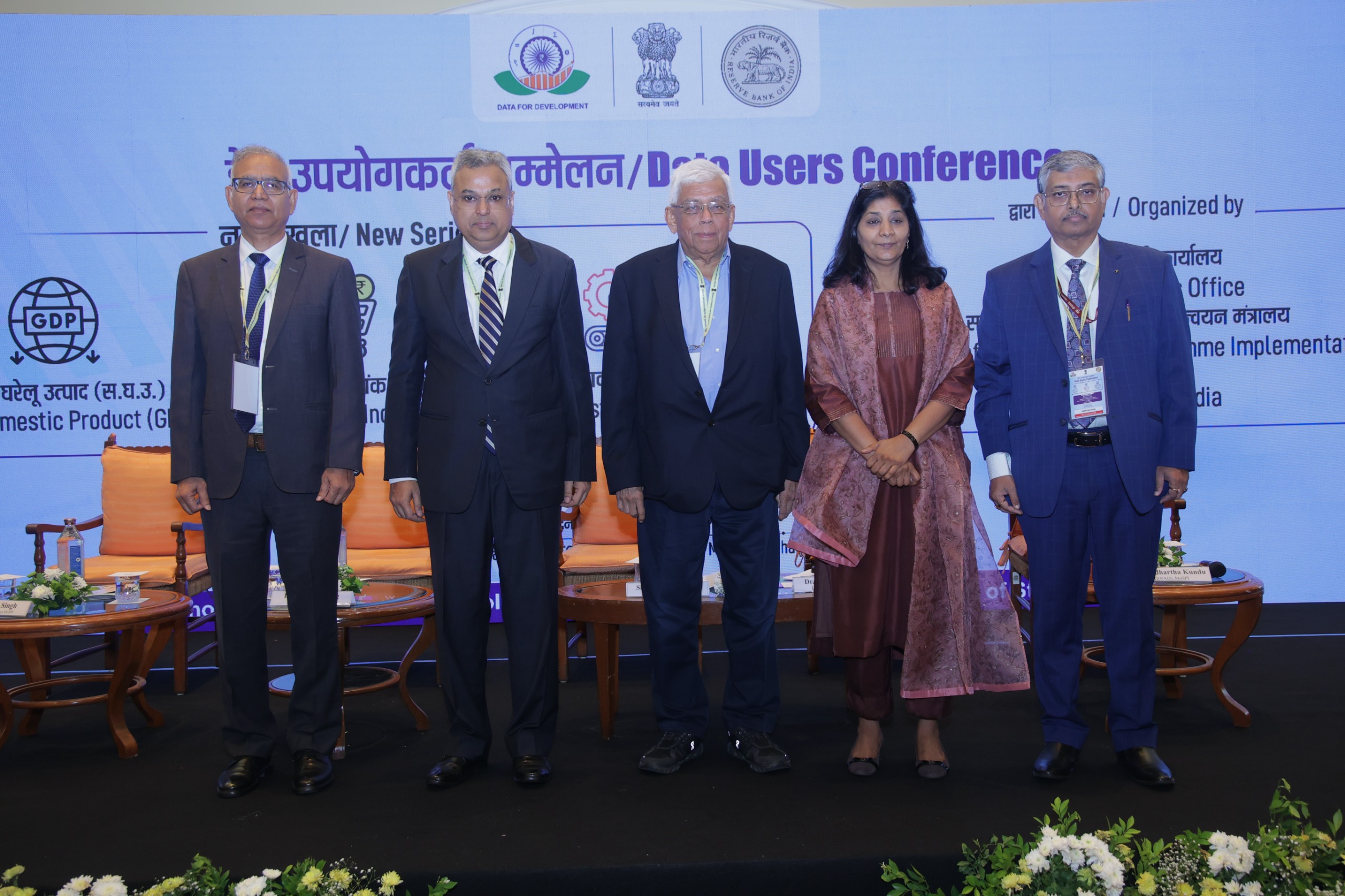
The Ministry of Statistics and Programme Implementation (MoSPI), with the Reserve Bank of India (RBI) as its knowledge partner, organised a Data Users Conference in Mumbai on November 23.

MUMBAI: India’s statistical framework is undergoing a broader transformation, extending beyond the revision of base years for key economic indicators to include district-level economic estimates, digital economy accounts and greater use of administrative data and technology.
The Ministry of Statistics and Programme Implementation (MoSPI), with the Reserve Bank of India (RBI) as its knowledge partner, organised a Data Users Conference in Mumbai on November 23 to explain the methodological changes and data sources incorporated into the revised series of Gross Domestic Product (GDP), Consumer Price Index (CPI) and Index of Industrial Production (IIP).
The conference brought together economists, financial institutions, credit rating agencies, industry representatives, researchers, government officials and users of official statistics. The discussions focused on the implications of the revised methodologies for economic measurement, policy formulation, inflation forecasting and investment decisions.
The revised GDP, CPI and IIP series were introduced during 2026 with updated base years, broader coverage and greater use of administrative and survey-based information.
GDP estimates to incorporate wider data sources
The new GDP series uses 2022-23 as its base year. Among the key methodological changes is the direct annual measurement of the unincorporated sector using data from the Annual Survey of Unincorporated Sector Enterprises (ASUSE) and the Periodic Labour Force Survey (PLFS).
The revised methodology also uses MCA-21 corporate filings to allocate gross value added (GVA) across economic activities, introduces double deflation for manufacturing GVA estimation at constant prices, and incorporates changes in the treatment of food subsidies, government pension contributions and imputed rent on government housing.
The expanded Supply-Use Table framework is intended to improve the alignment of demand-side and supply-side GDP estimates. The compilation of quarterly national accounts has also been updated through proportional benchmarking, revised price indices and greater use of administrative data from GST, e-VAHAN and the Public Financial Management System (PFMS).
The RBI presented its model-based nowcasting framework for estimating current-quarter real GDP and non-agricultural GVA growth. The model draws on approximately 120 high-frequency indicators and uses techniques including dynamic factor models, machine-learning models and ridge regression. The dynamic factor model was reported to have performed best among the approaches discussed.
CPI revision reflects changing consumption patterns
The revised Consumer Price Index series uses 2024 as its base year and draws expenditure weights from the Household Consumption Expenditure Survey 2023-24.
The updated series incorporates a revised consumption basket, expanded geographical and market coverage, the COICOP 2018 classification and improved price-collection and index-compilation methods. MoSPI also highlighted the increased use of administrative and e-commerce data in compiling the new CPI series.
These changes are intended to make retail inflation measurement more representative of contemporary household consumption patterns and evolving market structures.
RBI Deputy Governor Dr Poonam Gupta said the improvements in the revised series, including updated weights and more precise measurement of core inflation, were important for monetary policy. She also emphasised the need for predictable revisions and continued engagement between the statistical agency and data users.
IIP expands coverage of industrial activity
The revised Index of Industrial Production series has moved its base year from 2011-12 to 2022-23, with changes to sectoral coverage, weights and compilation methods.
Two new sectors — Water Supply, Sewerage and Waste Management, and Gas Supply — have been introduced. The Mining and Quarrying sector now includes minor and rare earth minerals and provides separate indices for metallic minerals, non-metallic minerals and fuel minerals.
The electricity index has also been divided into two sub-indices covering renewable and non-renewable electricity generation.
An additional provision allows factories that have closed, discontinued production or changed their product lines to be replaced, helping maintain the representativeness of the industrial sample. The revised series also uses the Output Producer Price Index for deflation, while the feasibility of compiling a chain-linked IIP will be examined on a trial basis.
MoSPI outlines next phase of statistical modernisation
Beyond the revised economic indicators, MoSPI Secretary Dr Saurabh Garg outlined several priorities for the next phase of statistical development.
These include rebasing Gross State Domestic Product to 2022-23 and developing District Domestic Product estimates to support more granular economic analysis and decision-making.
The Ministry is also preparing for implementation of the System of National Accounts (SNA) 2025, which places greater emphasis on well-being and distributional accounts, recognition of data as an asset and the valuation of natural resources.
Other priorities include developing satellite accounts for the space, culture, digital and city economies, stabilising the Index of Services Production and updating national industrial and product classifications.
The proposed satellite accounts are particularly relevant as conventional national accounting frameworks seek to better capture economic activities that are not always adequately represented by traditional sectoral classifications.
Technology in official statistics needs safeguards
Former HDFC Chairman Deepak Parekh, delivering the keynote address, underlined the importance of accurate and independent statistical institutions in shaping market expectations, investor sentiment and policy decisions.
He welcomed the use of high-frequency indicators and emerging data sources such as night-time lights and online search trends, but cautioned that technology and artificial intelligence must operate with appropriate safeguards and cannot replace human judgement. He also called attention to the need for better official housing statistics, given the sector’s extensive links with other industries.
The conference also highlighted the RBI’s Database on Indian Economy and its RBIDATA mobile application as platforms intended to improve access to economic information.
The challenge of making economic data more representative
The revisions to GDP, CPI and IIP mark an important effort to bring official economic measurement closer to changes in India’s production structure, consumption behaviour and industrial activity. However, the credibility of the revised indicators will depend on the quality, consistency and transparency of the underlying data and the ability of statistical systems to capture the economy’s changing structure.
The proposed District Domestic Product estimates and satellite accounts could provide a more detailed picture of economic activity, particularly in emerging areas such as the digital economy. Their usefulness will depend on consistent methodologies, reliable data collection and regular publication.
As India moves towards its Viksit Bharat 2047 goal, the modernisation of official statistics is not merely a technical exercise. It will shape how economic performance is measured, how public resources are allocated and how policymakers assess the impact of development programmes.