MeitY revises Make in India norms for six IT hardware products to boost domestic manufacturing
The revised framework introduces a Bill of Materials-based methodology for calculating domestic value addition, with additional weightage for Indian R&D, product design and intellectual property rights.
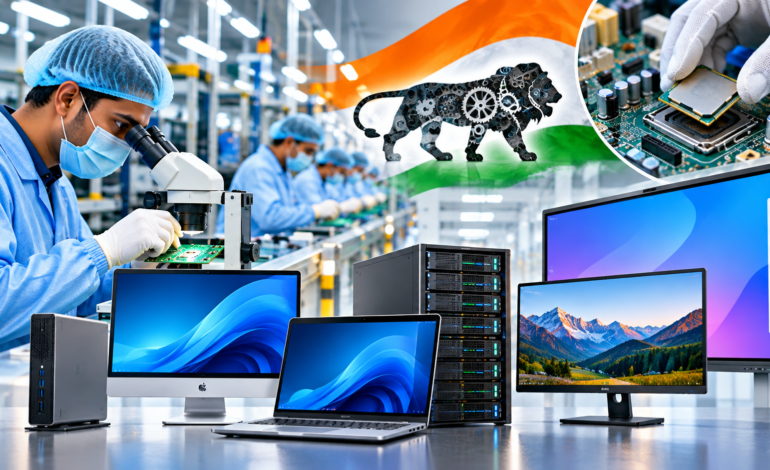
The revision aims to promote domestic manufacturing, strengthen indigenous capabilities and generate employment by providing a more detailed framework for assessing the contribution of Indian manufacturing activities to IT hardware products.

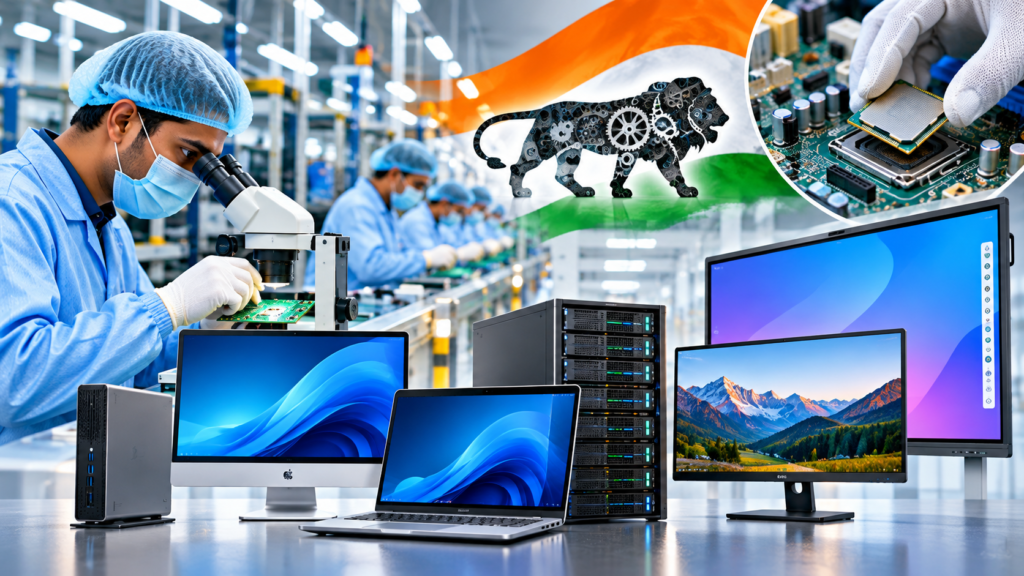
NEW DELHI: The Ministry of Electronics and Information Technology (MeitY) has revised the methodology for calculating Local Content and Domestic Value Addition (DVA) for six categories of IT hardware products under the Public Procurement (Preference to Make in India) Order, 2017.
The revision aims to promote domestic manufacturing, strengthen indigenous capabilities and generate employment by providing a more detailed framework for assessing the contribution of Indian manufacturing activities to IT hardware products.
The revised methodology updates MeitY’s notification dated September 7, 2020, and covers the following six product categories:
- Desktop PCs and All-in-One PCs (AIO-PCs)
- Laptop PCs
- Thin Clients
- Servers
- Computer Monitors
- Interactive Flat Panel Displays (IFPDs)
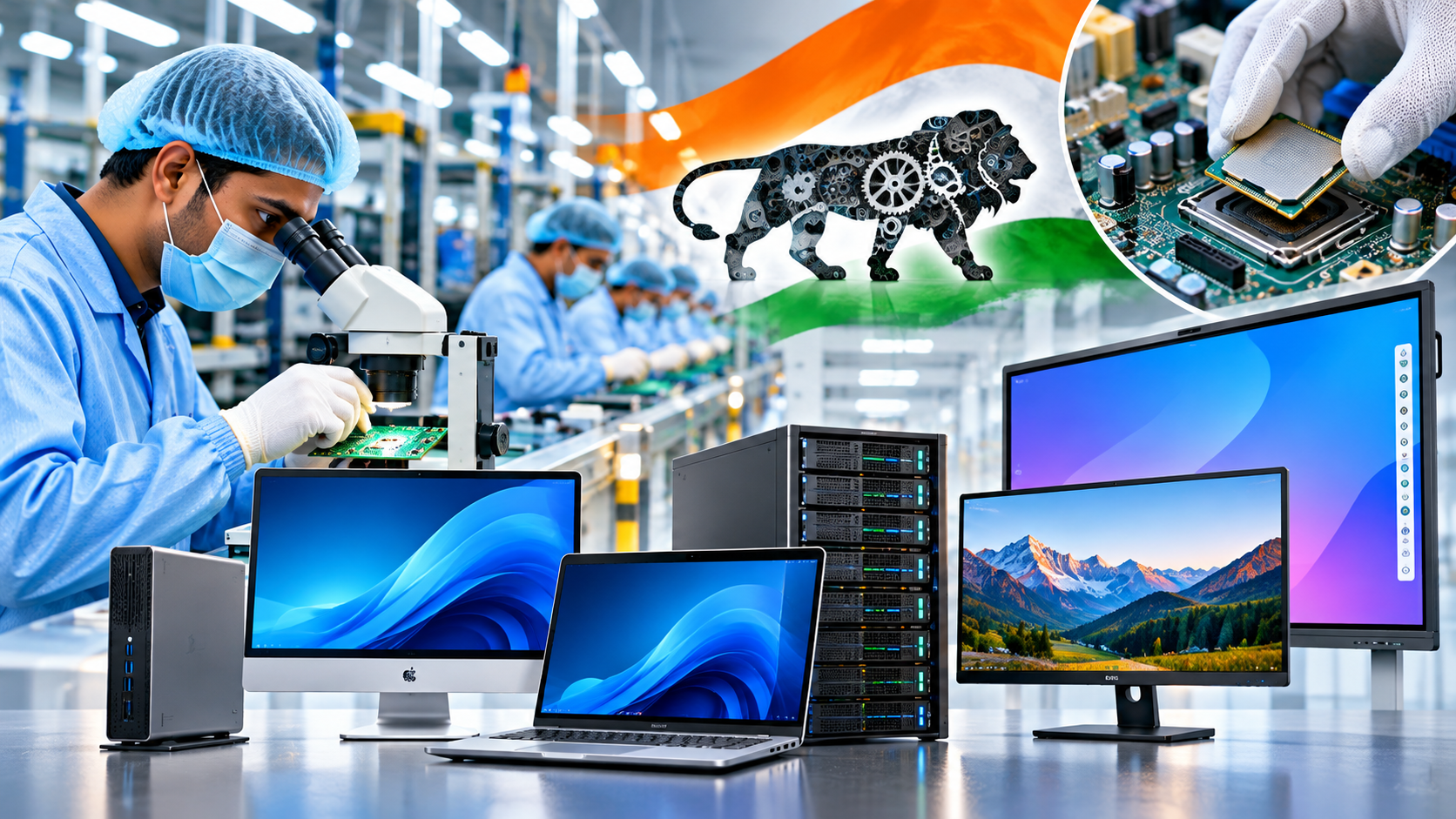
A key feature of the revised framework is the introduction of a process-oriented, Bill of Materials (BoM)-based mechanism for calculating domestic value addition.
The methodology recognises eligible manufacturing activities and processes undertaken in India, including mainboard and motherboard assembly through Surface Mount Technology (SMT), domestic sourcing of bare printed circuit boards (PCBs), and assembly, testing and packaging of memory (RAM) and storage (SSD).
It also recognises display assembly processes, domestic sourcing of chassis and power modules, and final assembly and testing as eligible activities contributing to domestic value addition.
The revised framework provides additional weightage to eligible in-house research and development (R&D) undertaken in India, with the objective of encouraging indigenous technology development and innovation.
Further, to promote domestic design capabilities and the creation of intellectual property, additional weightage has been assigned to Indian product design and intellectual property rights (IPR) associated with the covered IT hardware products.
The Ministry has also introduced a standardised format for DVA calculation and self-certification to improve objectivity and transparency in the assessment process.
The standardised framework is expected to facilitate more consistent evaluation of manufacturers’ domestic value addition claims and enable objective verification of self-declared DVA wherever required.
The revised methodology will come into effect six months from the date of its publication in the Official Gazette. It will supersede the corresponding provisions of MeitY’s September 7, 2020 notification relating to the six specified IT hardware product categories.
The revision is part of the government’s broader efforts to strengthen India’s electronics manufacturing ecosystem by encouraging domestic sourcing, indigenous research, product design and intellectual property creation.