IAF launches indigenous AI applications to strengthen operations, administration and aerospace safety
Indian Air Force unveils in-house AI applications on its secure network as Rajnath Singh calls for technology-driven preparedness against emerging warfare threats.
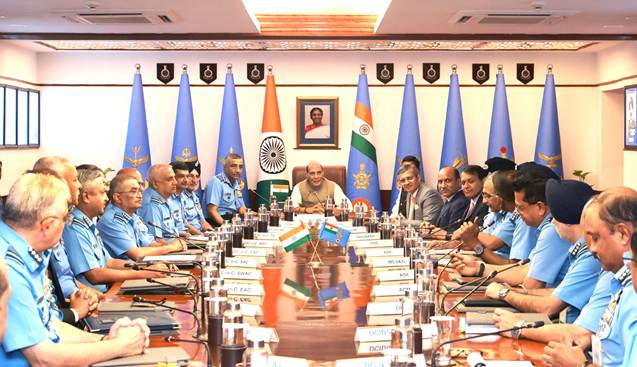
Defence Minister Rajnath Singh launched the applications, developed in-house by the IAF's AI Centre of Excellence under the Unit for Digitisation, Automation, Artificial Intelligence and Application Networking (UDAAN), at the Air Force Commanders' Conference in New Delhi on November 12.

NEW DELHI: The Indian Air Force (IAF) has launched a suite of indigenous Artificial Intelligence (AI) applications to automate and accelerate operations, administration and aerospace safety, marking a significant step in its technology-driven transformation and operational modernisation.
Defence Minister Rajnath Singh launched the applications, developed in-house by the IAF’s AI Centre of Excellence under the Unit for Digitisation, Automation, Artificial Intelligence and Application Networking (UDAAN), at the Air Force Commanders’ Conference in New Delhi on November 12.
The applications have been deployed on the IAF’s secure network and are designed to improve operational efficiency by automating tasks across critical functional areas.
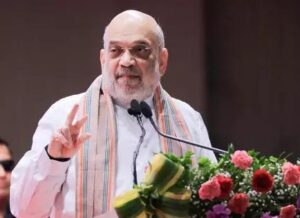
Addressing senior Air Force commanders at the conference, Rajnath Singh emphasised that technological superiority, intelligence and surveillance capabilities, and the ability to anticipate emerging threats would be critical to maintaining military readiness.
He called upon the Defence Forces to strengthen both offensive and defensive dimensions of the element of surprise, ensuring that adversaries have limited time to react while India’s own forces remain prepared to respond to unexpected developments.
Highlighting the changing nature of modern warfare, the Defence Minister said contemporary conflicts were increasingly extending beyond conventional battlefields into non-contact domains involving missiles, drones and advanced weapon systems.
Referring to the Russia-Ukraine and Israel-Hamas conflicts, he highlighted the growing importance of drones and air defence systems in modern military operations. He urged the IAF to strengthen its preparedness for emerging challenges involving kamikaze drones, surveillance systems and counter-drone operations.
Rajnath Singh also called for dedicated doctrines and operational architectures for emerging warfare domains, including electronic warfare, cyber operations and space. He stressed that future military victories would depend not merely on the number of aircraft but also on technological sophistication, speed of response and precision in preparation.
The Defence Minister underlined the importance of integrating emerging technologies into institutional planning, operational processes and military decision-making.
He commended the IAF for implementing its doctrines and operational methods effectively during and after Operation Sindoor, appreciating the professionalism, restraint and judgement demonstrated by air warriors.
The lessons from the operation, he noted, were shaping the evolving operational procedures of the IAF, particularly through greater emphasis on drones and air defence systems. He also highlighted the coordinated contributions of all three Services during the operation and called for continued jointness and integration in military planning and execution.
Emphasising the importance of developing technology capabilities among personnel, Rajnath Singh urged the IAF leadership to continue training air warriors in emerging technologies. He said the technological knowledge and expertise of younger recruits could contribute significantly to better decision-making and organisational development.
The Minister also referred to the government’s decision on the Second Tour of Duty for Agniveers, stating that it had been taken after considering feedback from the Defence Forces.
The two-day Air Force Commanders’ Conference is being held under the theme ‘The Year of Empowerment: Maximising Efficiency Through Decentralisation’. It provides a platform for senior IAF leadership to deliberate on operational, maintenance and administrative priorities.
The inaugural session was attended by Raksha Rajya Mantri Sanjay Seth, Chief of the Air Staff Air Chief Marshal Ashutosh Dixit, Defence Secretary Rajesh Kumar Singh and other senior defence officials, along with Air Officers Commanding-in-Chief of IAF commands and senior officers.
The launch of the in-house AI applications highlights the growing role of indigenous artificial intelligence in India’s defence modernisation, particularly in strengthening operational efficiency, aerospace safety and technology-enabled military preparedness.