One Nation One Ration Card records 233 crore transactions, transforms food security access across India
One Nation One Ration Card has enabled over 233 crore portability transactions, giving beneficiaries access to subsidised foodgrains across all 36 States and Union Territories.
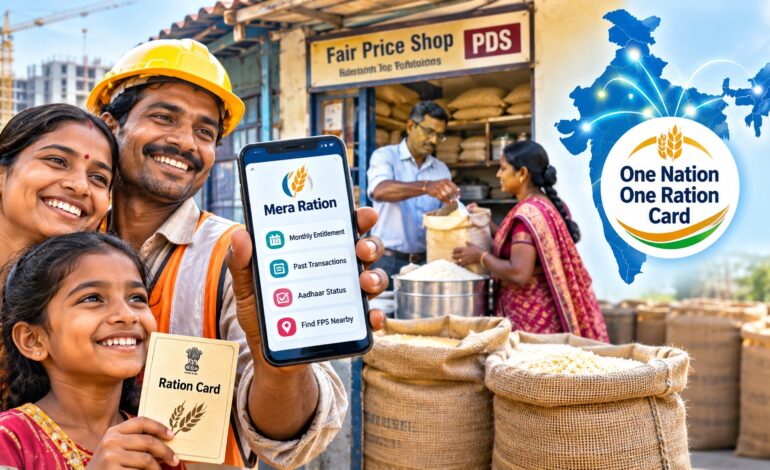
Implemented by the Department of Food and Public Distribution, ONORC is a major reform of the Public Distribution System (PDS), enabling nationwide portability of ration cards and foodgrain entitlements under the National Food Security Act (NFSA).

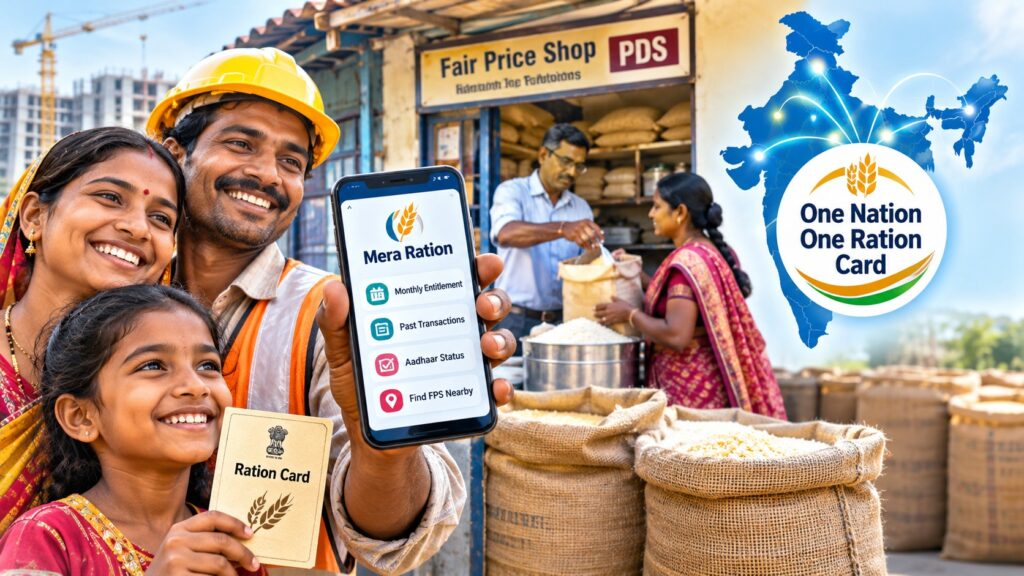
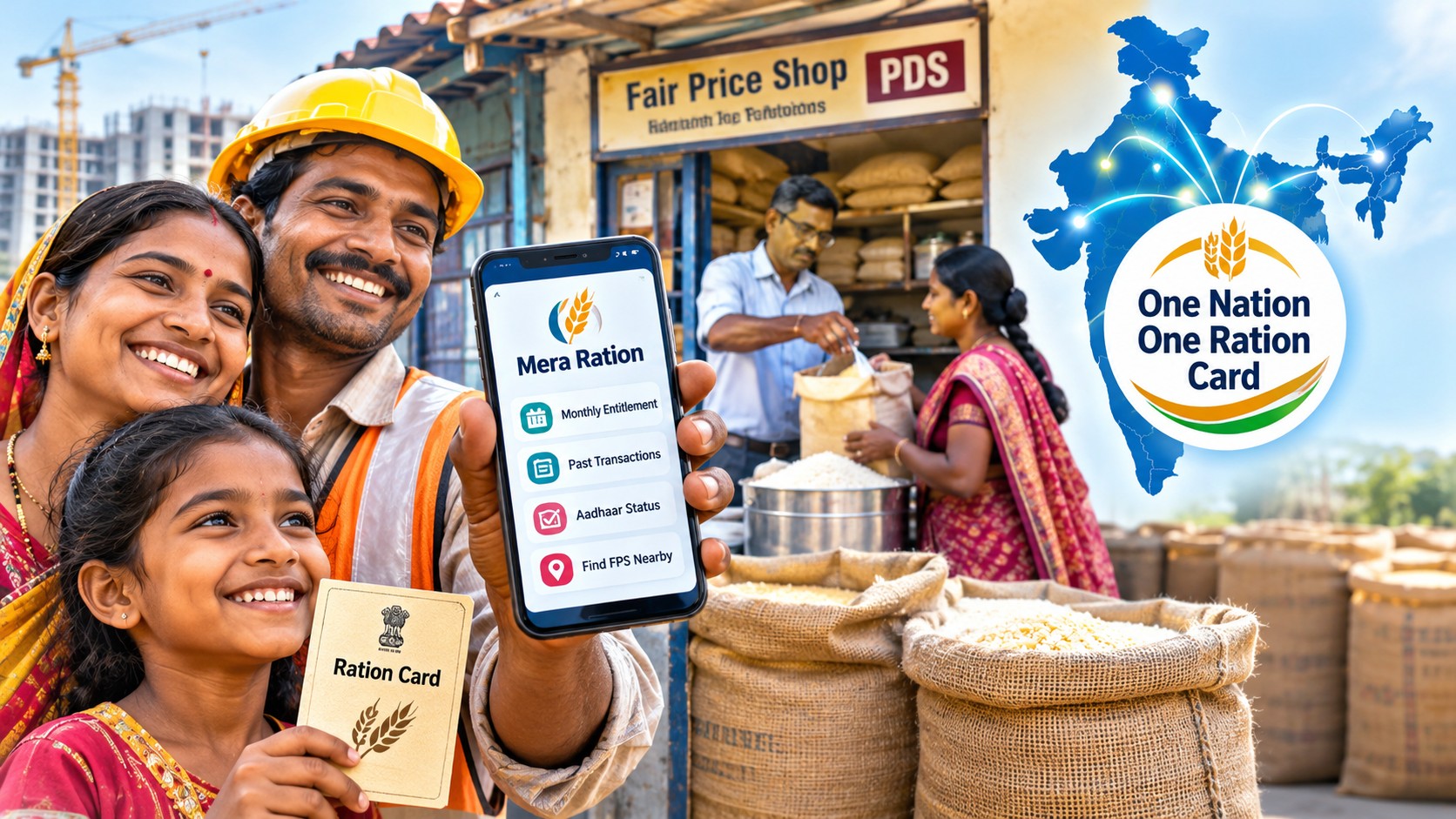
NEW DELHI: India’s One Nation One Ration Card (ONORC) initiative has transformed access to subsidised foodgrains by enabling beneficiaries to collect their entitlements from any Fair Price Shop across the country, irrespective of their place of residence. Since its launch in 2019, the technology-driven initiative has recorded more than 233 crore inter-state and intra-state portability transactions, facilitating the distribution of over 614 lakh metric tonnes (LMT) of foodgrains.
Implemented by the Department of Food and Public Distribution, ONORC is a major reform of the Public Distribution System (PDS), enabling nationwide portability of ration cards and foodgrain entitlements under the National Food Security Act (NFSA).
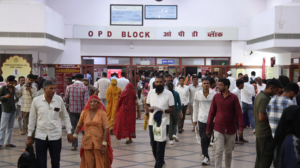
The initiative is particularly beneficial for migrant workers and their families, who can access subsidised foodgrains after relocating to another state without having to obtain a new ration card.
The scheme has been implemented across all 36 States and Union Territories, covering 100% of Pradhan Mantri Garib Kalyan Anna Yojana (PMGKAY) beneficiaries. It currently facilitates approximately 3.27 crore portability transactions every month.
Digital infrastructure strengthens food distribution
The government has complemented nationwide ration portability with extensive digitisation, Aadhaar-based authentication and technology-enabled supply chain management to improve transparency and ensure effective delivery of foodgrain entitlements.
As of October 2026, ration card and beneficiary databases have been fully digitised across all States and Union Territories, covering approximately 78.65 crore beneficiaries. These databases are accessible through the respective state and Union Territory transparency portals.
Of the 20.51 crore ration cards available in the Central System, 20.27 crore, representing 98.8%, have been seeded with Aadhaar. The number of beneficiaries with Aadhaar seeding stands at 76.97 crore. Electronic Know Your Customer (e-KYC) verification has been completed for 71.52 crore beneficiaries as of September 30, 2026, accounting for 91% of the total beneficiary base.
Technology adoption has also expanded at the Fair Price Shop level. Out of 5.51 lakh Fair Price Shops across the country, approximately 5.50 lakh, or 99.8%, are operational with electronic Point of Sale (ePoS) devices.
Online foodgrain allocation has been implemented nationwide, while supply chain operations have been computerised in 31 States and Union Territories. Transparency portals, online grievance redressal systems and toll-free helplines are also operational across all States and Union Territories.
Data analytics improve beneficiary targeting
The government is using Aadhaar integration and Public Distribution System data analytics to identify suspicious, duplicate and ineligible beneficiary records and improve the targeting of food subsidies.
Under the Rightful Targeting initiative, advanced data analytics flagged 5.95 crore suspicious records, leading to the deletion of 2.58 crore duplicate or ineligible entries under Version 1.
The government has also introduced technology-driven initiatives under the Scheme for Assistance in Ration Transport and Handling-Income with Automation in PDS (SARTHAK-PDS).
Its NIRMAL initiative focuses on strengthening data architecture and analytics, while SAKSHAM supports real-time data integration, including Vehicle Location Tracking Systems, to monitor foodgrain movement from procurement to distribution.
The SARTHAK-PDS framework also provides financial support for intra-state foodgrain transportation, handling and Fair Price Shop dealer margins. It aims to strengthen last-mile delivery, minimise leakages and establish an integrated, citizen-centric and interoperable PDS architecture through March 31, 2031.
Mera Ration app brings services to smartphones
The Department of Food and Public Distribution has also introduced the Mera Ration mobile application as part of technology-driven reforms under ONORC.
Available in 13 languages, the application enables beneficiaries to check their monthly foodgrain entitlements, view previous transactions, verify Aadhaar-seeding status and check their eligibility for national portability.
The app also allows users to register voluntarily for ONORC and locate nearby Fair Price Shops using GPS-based services, with map navigation to help them reach the nearest outlet.
The application is particularly useful for migrant workers and families who need to identify Fair Price Shops in unfamiliar locations after changing their place of residence.
By combining nationwide portability with digitised beneficiary databases, Aadhaar authentication, ePoS-enabled distribution and mobile-based services, ONORC is strengthening India’s food security delivery system and making access to subsidised foodgrains more inclusive, transparent and convenient.