ICMR takes health research to school students across 83 locations through S.H.I.N.E.
The nationwide program has also launched a student research competition, inviting young learners to frame questions and propose solutions to real-world public health challenges.
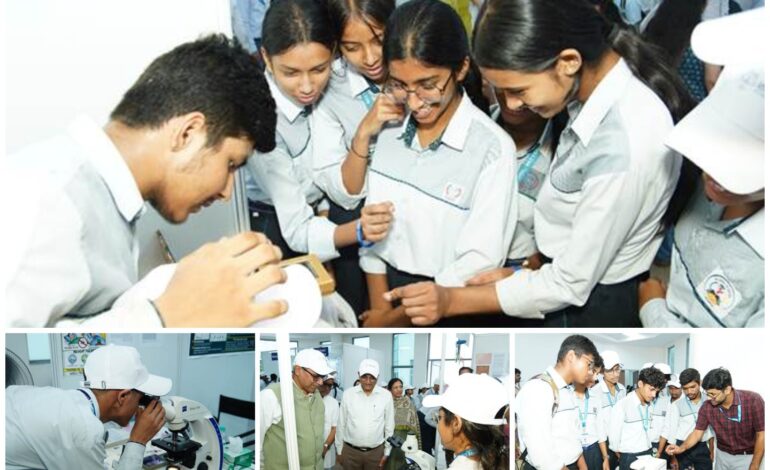
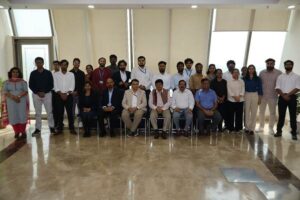
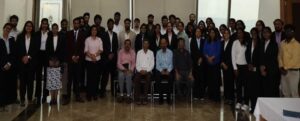
The two-day program began today and is being held on August 11 and 12 across 83 locations, including ICMR institutes, Model Rural Health Research Units and affiliated field units.

NEW DELHI: What if a school laboratory lesson could begin with a real research question rather than a textbook?
The Indian Council of Medical Research (ICMR) is taking that idea to schools across India through the second edition of S.H.I.N.E. — Science and Health Innovation for NextGen Explorers — a nationwide initiative that is bringing students face-to-face with scientists and health research.
The two-day program began today and is being held on August 11 and 12 across 83 locations, including ICMR institutes, Model Rural Health Research Units and affiliated field units.
Around 30,000 students from Grades 9 to 12 are expected to participate, with government and private schools being invited by ICMR laboratories in their respective regions.
The geographical spread is as significant as the scale.
From Keylong in Himachal Pradesh, located at an altitude of nearly 10,000 feet, to Kerala in the south and from Diu in the west to Nagaland in the east, SHINE 2026 is taking health research beyond the country’s major urban centres and closer to students in different parts of India.
The initiative has been inspired by Prime Minister Narendra Modi’s call for students to “spend one day as a scientist”.
But ICMR is attempting to make that day more than a ceremonial laboratory visit.
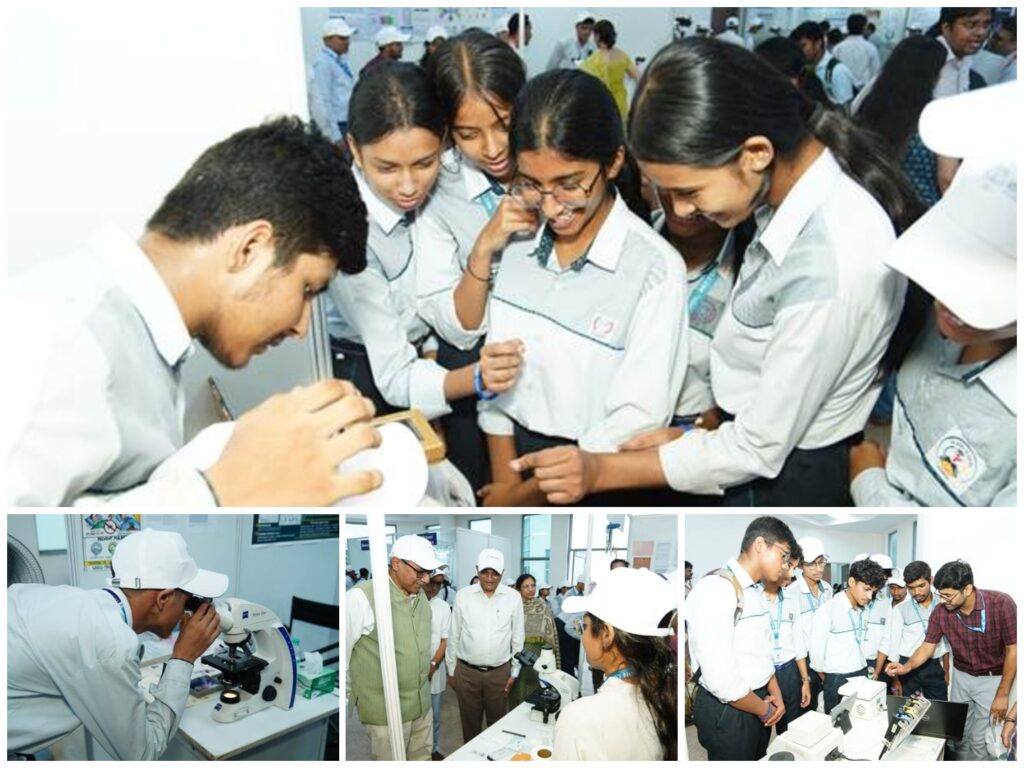
Students are being taken through guided laboratory tours, research exhibitions, poster walks, video presentations and live demonstrations of ongoing scientific work. They are also interacting directly with ICMR scientists to understand their research journeys, areas of expertise and the everyday work involved in public health.
For students accustomed to encountering science primarily through textbooks, the programme offers a different perspective — seeing how a scientific question becomes an experiment and how research eventually becomes a solution to a health problem.
Curiosity takes center stage
Dr Rajiv Bahl, Secretary, Department of Health Research and Director General, ICMR, urged participating students to remain curious, ask questions and explore science as a possible career.
During his interaction with students, Dr Bahl responded to their questions on science, health and research through relatable examples and encouraged them to think beyond textbooks.
He also inaugurated an exhibition showcasing ICMR’s research work and innovations, allowing students to see how scientific discoveries can be translated into solutions for real-world health challenges.
The message is deliberately broader than simply encouraging students to pursue science as an academic discipline.
The programme seeks to present scientific research as a career through which young people can contribute directly to solving problems affecting people’s lives.
From laboratory visit to research question
SHINE 2026 is also adding a new dimension to the initiative through a nationwide school research competition.
ICMR has launched the official SHINE website and announced a competition inviting students to frame their own research questions and propose potential solutions to real-world public health challenges.
That changes the role of students from observers to potential young researchers.
Instead of simply watching scientists conduct experiments, participants are being encouraged to identify problems, formulate questions and think about possible solutions.
The official SHINE website will serve as a dedicated platform for resources, programme updates and opportunities for students interested in health research.
A mascot for scientific curiosity
The initiative also has its own mascot — Dr Curio.
The mascot features across SHINE’s outreach material, posters and social media communication and serves as the narrator of interactive videos explaining ICMR’s work.
The use of Dr Curio reflects the programme’s effort to make scientific research approachable for younger audiences without reducing its focus on serious health and research challenges.
Making health research tangible
The central idea behind SHINE is simple: science becomes more meaningful when students can see where it happens and meet the people who do it.
By opening its laboratories and research units to school students, ICMR is giving young learners an opportunity to see the connection between scientific enquiry and the health challenges experienced by communities.
The inclusion of Model Rural Health Research Units and field units is particularly significant because it allows the programme to demonstrate that health research is not confined to sophisticated laboratories in major cities.
Research also happens where communities live, where health problems emerge and where solutions ultimately need to work.
The initiative is aligned with the government’s Viksit Bharat 2047 vision and forms part of ICMR’s effort to nurture scientific temper among India’s youth.
The larger objective is to build an early connection between young learners and scientific enquiry — at a stage when many students are beginning to consider their future education and careers.
From Keylong to Nagaland, and from Diu to Kerala, SHINE 2026 is therefore attempting to make the scientist’s world a little less distant for India’s school students.
And with the new research competition asking them not merely to learn questions but to frame their own, ICMR is taking the next step — encouraging students to begin thinking like researchers themselves.