India adds 11 more ports for e-visa holders, taking total to 88
The move is aimed at making India's electronic visa regime more accessible and useful for international travellers while strengthening the country's broader effort to liberalise, streamline and simplify its visa
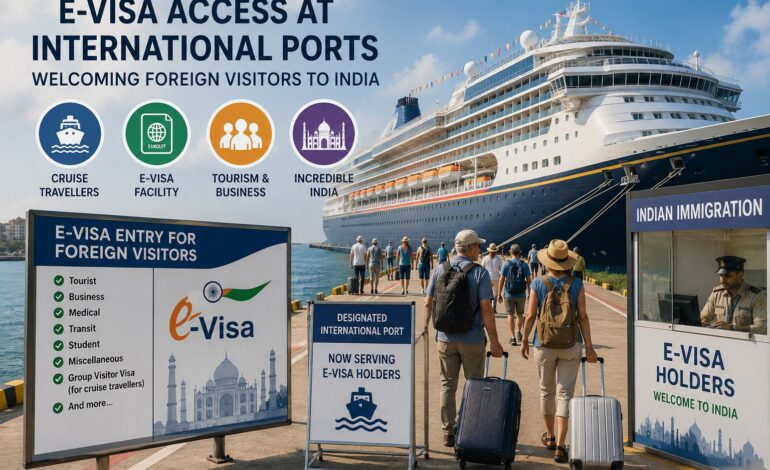
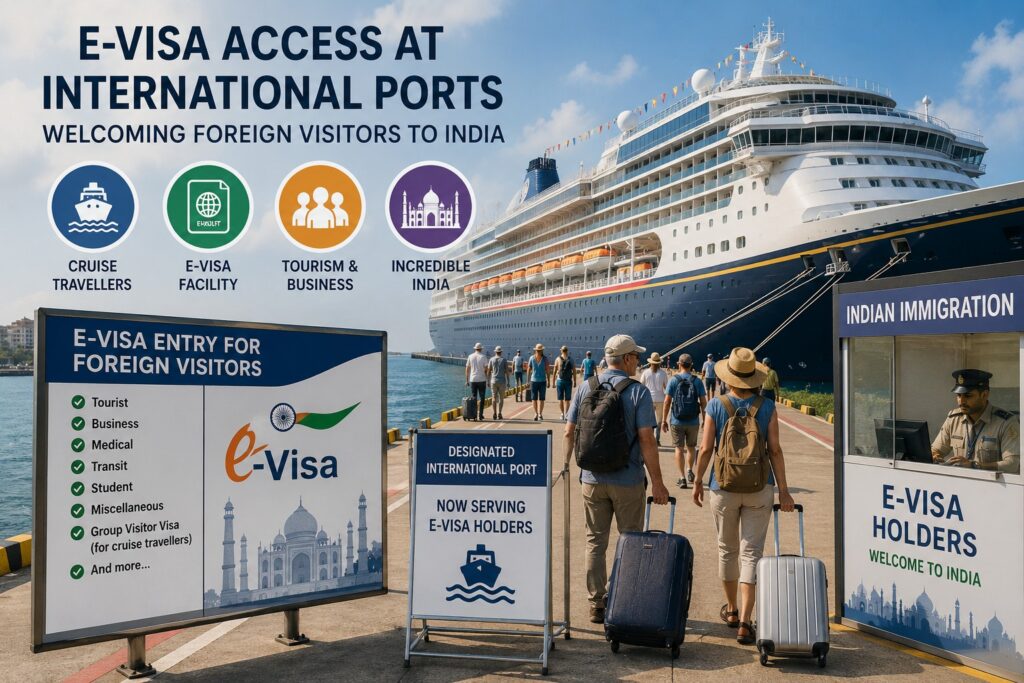
The e-visa system currently covers 17 sub-categories, including Tourist, Mountaineering, Business, Medical, Student, Transit, Miscellaneous and Group Visitor Visa for cruise travellers.

NEW DELHI: Foreign visitors holding Indian e-visas will now have more entry options, as the Government of India has notified 11 additional international ports for their arrival into the country. The Ministry of Home Affairs notified the latest expansion on Monday.
The latest expansion takes the number of international ports where e-visa-holding foreigners can enter India to 88, comprising 37 airports, 38 seaports and 13 land ports. The newly added entry points include two airports and nine land ports.
The move is aimed at making India’s electronic visa regime more accessible and useful for international travellers while strengthening the country’s broader effort to liberalise, streamline and simplify its visa system.
The two newly added airports are Bhopal and Tirupati.
The nine new land ports are Agartala, Darranga, Gede, Ghojadanga, Haridaspur, Jaigaon, Dawki, Moreh and Attari (Road). The additions extend e-visa access to several border entry points, particularly across India’s eastern and northeastern regions.
The expansion comes as India’s e-visa programme has grown substantially since its introduction.
India introduced the e-visa facility, along with Electronic Travel Authorisation, in 2014 for nationals of 43 countries. The facility is now available to nationals of 172 countries.
The government said approximately 95% of e-visa applications are processed in less than 72 hours, highlighting the increasing role of digital processing in India’s visa regime.
The e-visa system currently covers 17 sub-categories, including Tourist, Mountaineering, Business, Medical, Student, Transit, Miscellaneous and Group Visitor Visa for cruise travellers.
The business visa category includes B-1 to B-6, while medical visas include M-1 to M-4 and student visas include S-1 and S-2.
India now issues roughly 78% of its visas in electronic form, according to the Ministry of Home Affairs.
The expansion of entry points is therefore part of a broader digital transformation of India’s visa system, where the application process is increasingly being separated from the traditional dependence on physical visa documentation and limited entry locations.
The newly notified ports also widen the practical utility of the e-visa facility. Travellers entering India by land, for instance, can now use nine additional designated international land ports, while Bhopal and Tirupati join the network of airports authorised for e-visa entry.
The government said its visa reforms are intended to facilitate legitimate foreign travellers while simultaneously strengthening technological infrastructure to enhance internal security.
The latest notification follows several measures taken over recent years to liberalise and simplify India’s visa regime under the guidance of Prime Minister Narendra Modi and the leadership of Union Home Minister Amit Shah.
The expansion is significant not merely because 11 more entry points have been added but because it reflects a larger shift in how India manages international mobility.
A visa regime that can process applications electronically, provide approvals rapidly and allow travellers to enter through a wider network of airports, seaports and land borders reduces friction for legitimate visitors while giving the country greater flexibility in managing international arrivals.
With 172 countries now covered by the e-visa facility, approximately 95% of applications being processed within 72 hours and 78% of all visas being issued electronically, India’s visa architecture is increasingly becoming a digital-first system.