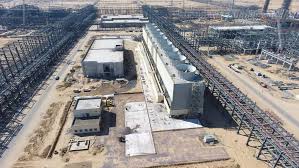
India enters elite league in solar metrology with new national facility at CSIR-NPL
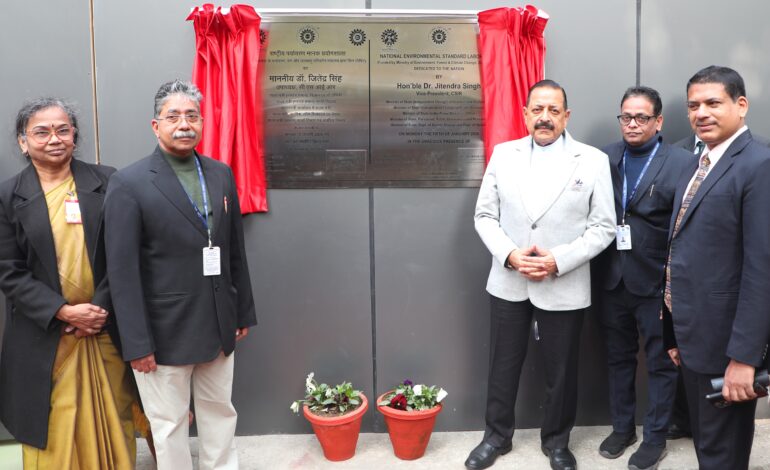
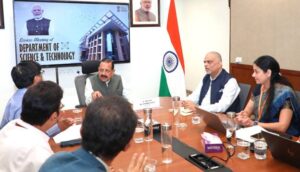
Union minister Jitendra Singh inaugurates the world’s second National Environmental Standard Laboratory and the world’s fifth National Primary Standard Facility for Solar Cell Calibration during the 80th Foundation Day celebrations of CSIR–NPL on Monday.

New Delhi: India on Monday strengthened its environmental governance and renewable energy measurement infrastructure with the inauguration of two apex national facilities at the CSIR–National Physical Laboratory (NPL), marking a major milestone in the country’s scientific and standards ecosystem.
Union minister Jitendra Singh inaugurated the world’s second National Environmental Standard Laboratory and the world’s fifth National Primary Standard Facility for Solar Cell Calibration during the 80th Foundation Day celebrations of CSIR–NPL. He said the new facilities place India among a small group of global leaders in environmental and solar metrology.
The National Environmental Standard Laboratory is expected to significantly improve the accuracy and credibility of air pollution monitoring across the country. The facility will provide India-specific calibration and certification of monitoring instruments under local climatic conditions, supporting regulators, industries and startups, and strengthening enforcement under programmes such as the National Clean Air Programme.
Singh said the laboratory addresses a long-standing gap in India’s environmental governance framework by enabling transparent, traceable and reliable environmental data.
The National Primary Standard Facility for Solar Cell Calibration positions India in the elite global league of photovoltaic measurement standards. Developed in collaboration with Germany’s PTB, the facility houses a laser-based Differential Spectral Responsivity system with a global-best uncertainty level of 0.35% for reference solar cell calibration. The facility is expected to reduce dependence on overseas certification agencies, cut costs and turnaround time, and boost investor confidence in India’s fast-growing solar sector.
Addressing the event, Singh described institutions such as CSIR–NPL as monuments of New India that reflect the country’s scientific journey from the pre-Independence era to global technological relevance. He recalled that for decades, Indian Standard Time was maintained through the atomic clock at NPL, a contribution that quietly shaped everyday life across the country.
He said science and technology reforms will be key drivers of India’s socio-economic future and stressed the need for closer collaboration between scientific institutions, industry, MSMEs and the private sector to convert intellectual strength into economic growth.
CSIR Director General N. Kalaiselvi said NPL now hosts one of the world’s largest environmental calibration facilities and one of the top solar cell calibration facilities. She underlined the strategic importance of NPL’s atomic clocks, particularly in scenarios where GPS signals may be unavailable.
The event also saw the release of 14 phytochemical Bharatiya Nirdeshak Dravya reference materials jointly developed by CSIR-CIMAP and CSIR-NPL, along with two gas reference materials and one silica fume reference material. Several memoranda of understanding and technology transfer agreements were signed to support indigenous manufacturing, startups and MSMEs.
Singh said Indian scientists are now central to national aspirations and expressed confidence that CSIR–NPL will continue to play a defining role in India’s journey towards technological leadership as the country moves towards 2047.