How Social Media Platforms Hook Young Minds: What India Can Learn from US Verdict Against Addictive Algorithms
A landmark jury verdict in the United States holding social media companies liable for harm to young users is expected to have global implications, with policymakers in India and other countries closely watching its impact.

New Delhi: A landmark jury verdict in the United States holding social media companies liable for harm to young users is expected to have global implications, with policymakers in India and other countries closely watching its impact.
According to a report by The New York Times, a US jury found major technology platforms responsible for designing products that contributed to addiction and mental health issues among young users. The case marks one of the first instances where courts have held platforms – in this case Meta, which owns Instagram and Facebook, and Google’s YouTube, accountable not just for content, but for the way their systems are built.
Design, Not Just Content, Under Scrutiny
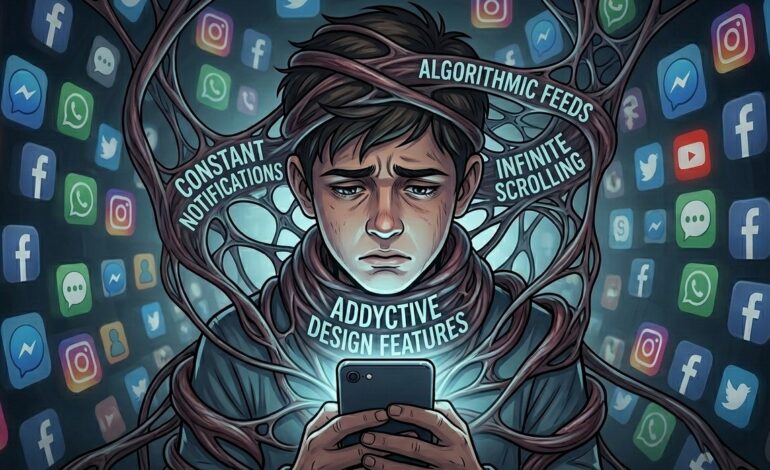
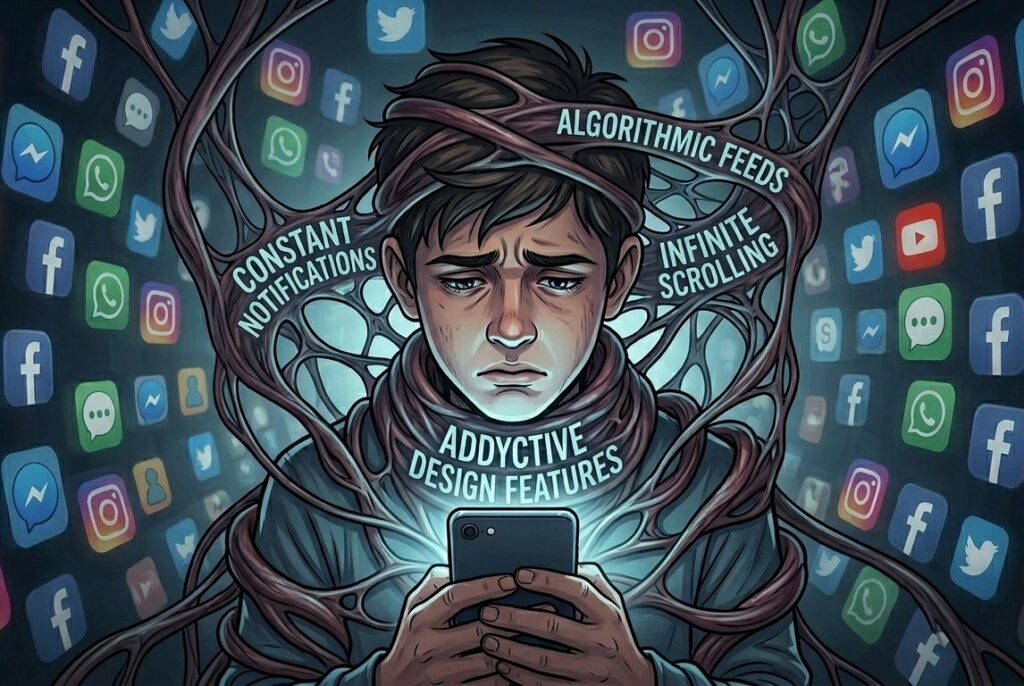
The NYT report highlights that the case focused on how features such as infinite scrolling, algorithm-driven feeds and notifications may encourage excessive use.
Courts examined whether these design elements can be treated as harmful products rather than neutral platforms.
Separate reporting indicates that juries have already begun awarding damages, including millions of dollars in one case involving a young user who alleged mental health harm linked to prolonged platform use.
A Turning Point for Big Tech Regulation
Legal experts cited in the NYT report suggest the verdict could become a “bellwether” for thousands of similar lawsuits.
More than 2,000 cases are already pending in US courts, many alleging that social media companies knowingly designed addictive features targeting young users.
The verdict also challenges the long-standing legal shield under Section 230, which protects platforms from liability for user-generated content. Courts are now examining whether this protection applies to platform design.
India Angle: Growing Regulatory Focus
The developments are significant for India, one of the largest social media markets globally.
India has already taken steps to regulate digital platforms through IT Rules and data protection frameworks. However, the US verdict could push regulators to go further.
Key areas of concern in India include:
- Rising screen time among children and teenagers
- Mental health impact of social media use
- Algorithm-driven content amplification
- Lack of transparency in platform design
Policy experts say India may begin examining whether platform design features should come under regulatory oversight.
Potential Impact on Indian Platforms and Users
India has over 800 million internet users, with a large share accessing social media daily.
If similar legal principles are adopted:
- Platforms may face stricter compliance requirements
- Design features could be subject to safety audits
- Companies may need to introduce stronger parental controls
- Liability risks for harm caused to users could increase
Industry Response and Next Steps
Technology companies have indicated they will appeal the verdicts.
However, the NYT report notes that the case has already shifted the conversation from content moderation to product accountability.
More trials are expected in the coming months, which could further define the legal boundaries for social media companies.
The Bigger Picture
The ruling signals a possible shift in how governments and courts view Big Tech.
Instead of treating platforms as passive intermediaries, regulators may increasingly see them as product designers responsible for user outcomes.
For India, the case could become a reference point as it shapes its next phase of digital regulation.