C-DOT, Delhi Police Partner for AI, Quantum-Powered Smart Policing Push
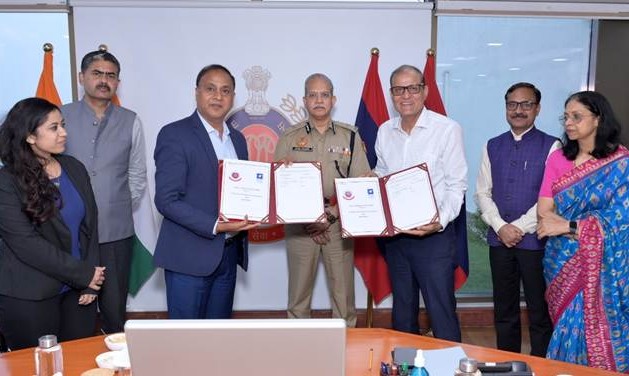
Satish Golchha, Commissioner of Police, Delhi and Dr Rajkumar Upadhyay, CEO, C-DOT, along with senior officials from both organizations during MoU signing ceremony in New Delhi on Saturday.

New Delhi: The Centre for Development of Telematics has signed a memorandum of understanding (MoU) with Delhi Police to deploy a suite of indigenous, technology-driven solutions aimed at transforming policing capabilities in the national capital.
The collaboration marks a significant step towards building a secure, smart, and future-ready policing ecosystem, aligned with the government’s Atmanirbhar Bharat vision. Officials said the initiative will enhance operational efficiency, strengthen surveillance, improve emergency response, and secure communication networks across police units.
Under the agreement, C-DOT will roll out nine advanced solutions tailored for modern law enforcement requirements, covering areas such as artificial intelligence, cybersecurity, and quantum-safe communications.
A key component is the Facial Recognition System (FRS)/FraudPro, designed to identify suspects, missing persons, and repeat offenders through database-driven image matching, aiding investigations and crowd monitoring.
To strengthen internal coordination, SAMVAD, a unified communication platform, will enable secure messaging, voice and video calls, and real-time data sharing across departments. Its advanced version, SAMVAD Prime, will provide encrypted, device-based communication for senior officers and field teams during sensitive operations.
The deployment also includes C-DOT Meet, a secure video conferencing platform for briefings and training, and Mission Critical Services (MCX), which ensures low-latency, secure communication during emergencies, large gatherings, and law-and-order situations.
In the administrative domain, an AI-powered Intelligent Attendance System will streamline workforce management using facial recognition, improving accuracy and access control at sensitive installations.
For public communication, the Cell Broadcast Solution will enable geo-targeted alerts for emergencies, traffic updates, and public advisories, directly reaching citizens through mobile networks and display systems.
Cybersecurity forms a core pillar of the initiative. Platforms such as Trinetra ESOC and Trinetra 360 will provide AI-driven threat detection, vulnerability assessment, and digital risk monitoring, safeguarding the police’s IT infrastructure.
Adding a future-ready layer, C-DOT will also deploy quantum-based security solutions, including Quantum Key Distribution and secure communication devices, ensuring resilience against next-generation cyber threats.
Speaking on the occasion, Rajkumar Upadhyay, CEO, C-DOT, said the partnership reflects a commitment to translating indigenous innovation into real-world impact. “By deploying advanced solutions across secure communications, AI-driven surveillance, cybersecurity, and quantum security, we are contributing to building a safer, smarter, and more resilient ecosystem,” he said.
The MoU signing ceremony was attended by senior officials from both organisations, including Satish Golchha, who underscored the importance of technology adoption in modern policing.
Officials said the collaboration is expected to serve as a national model for technology-enabled law enforcement, with potential replication across other states as India accelerates its transition towards digital and intelligent policing systems.