ICAR-IIOR’s smart seed coating technology records up to 30% higher yields in groundnut, soybean
Hyderabad-based ICAR-IIOR has developed a patented biopolymer-based seed coating that improves germination, crop establishment and resilience to environmental stresses, with field demonstrations reporting significant yield gains.
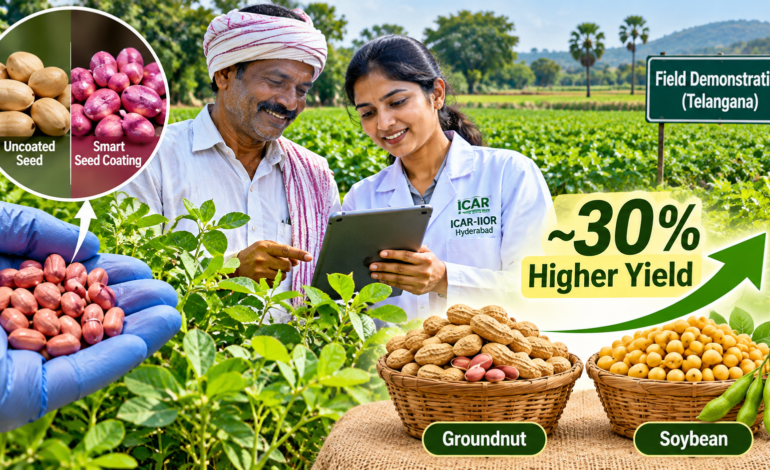
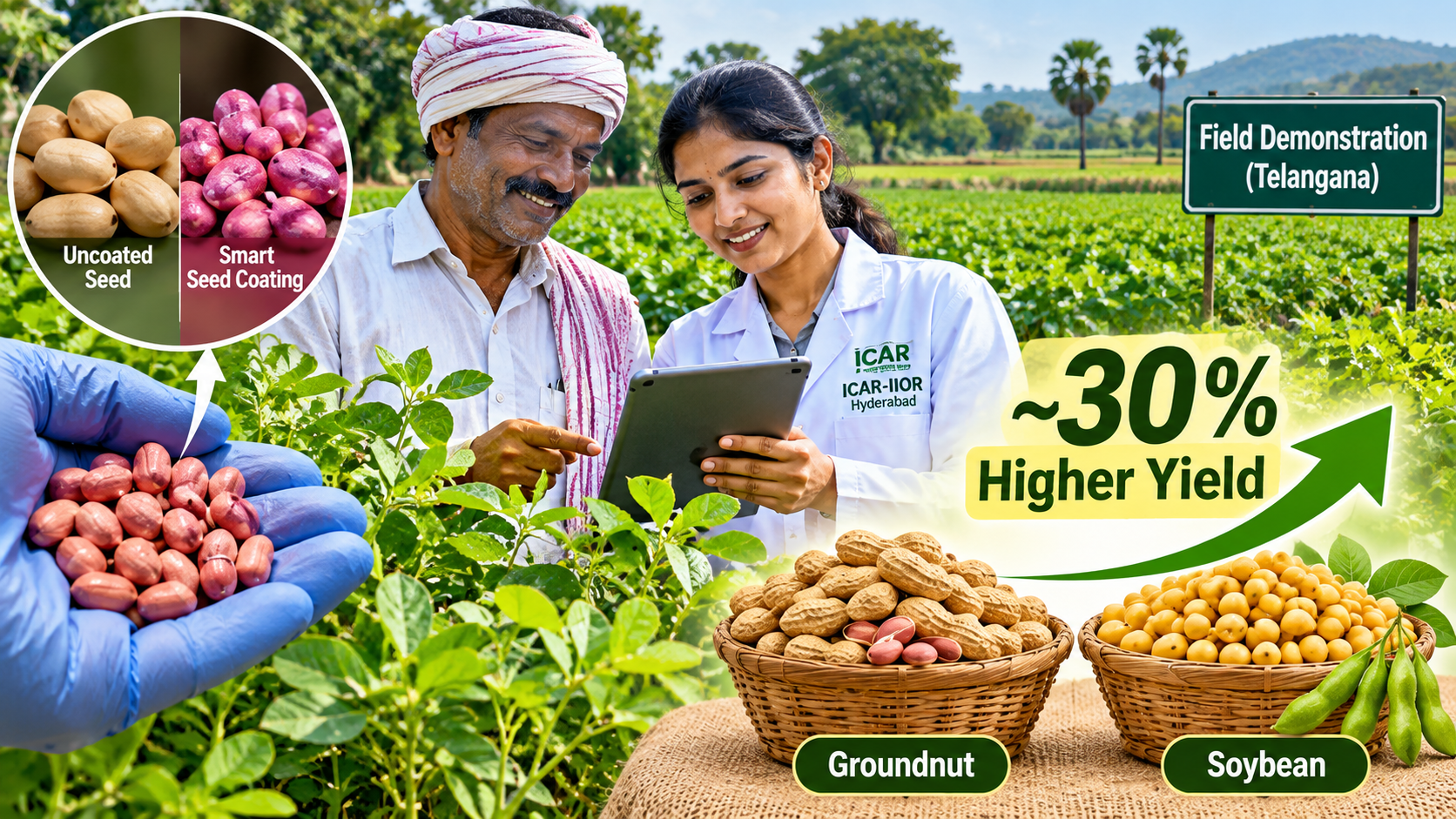
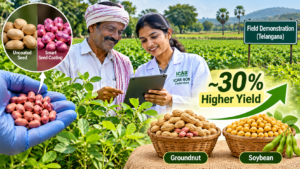
Field demonstrations conducted under farmer conditions in Telangana recorded yield improvements of nearly 30% in groundnut and soybean.

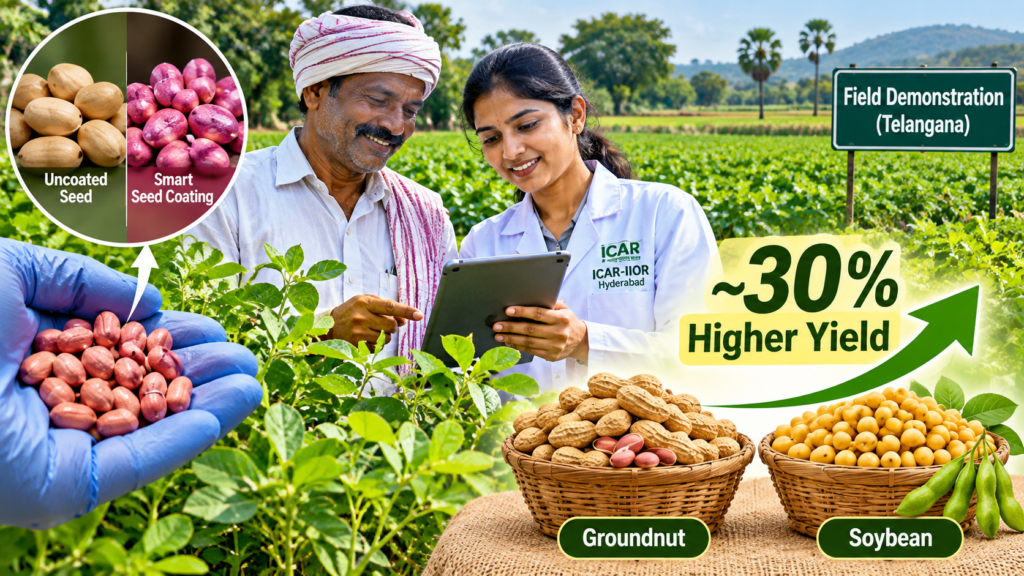
HYDERABAD: The ICAR-Indian Institute of Oilseeds Research (ICAR-IIOR), Hyderabad, has developed a patented biopolymer-based Smart Seed Coating Technology designed to improve seed quality, crop establishment and crop resilience, with field demonstrations in Telangana recording nearly 30% higher yields in groundnut and soybean compared with conventional farmer practices.
The technology uses biodegradable biopolymeric materials to create a multifunctional protective layer around seeds. The coating acts as a carrier for beneficial microorganisms, nutrients, micronutrients, crop protection agents and plant growth-promoting compounds, delivering these inputs directly at the seed-soil interface.
According to the institute, the protective layer creates a favourable microenvironment that supports faster germination, stronger seedling growth, improved root development and greater tolerance to environmental stresses during the early stages of crop growth.
Yield gains across multiple crops
Field demonstrations conducted under farmer conditions in Telangana recorded yield improvements of nearly 30% in groundnut and soybean.
Multi-location trials under the All India Coordinated Research Project (AICRP)-Seed, covering soybean, maize, groundnut, chickpea, cotton, mustard and pigeon pea, reported productivity gains ranging from 12% to 37% over untreated controls. The trials also showed improvements in seedling vigour and crop establishment.
The institute said the technology could be particularly relevant to rainfed agriculture, where delayed monsoons, intermittent droughts, moisture stress, poor soil conditions and pest and disease pressures can affect seedling emergence and reduce crop productivity.
A multi-input seed treatment system
Unlike conventional seed treatments that generally address a single requirement, the ICAR-IIOR technology integrates several beneficial inputs into one application. It can be customised for cereals, millets, pulses, oilseeds, fibre crops, fodder crops, vegetables, spices and horticultural crops.
By improving the performance of seeds during the critical establishment phase, the technology aims to reduce early-stage crop losses and improve the efficiency of agricultural inputs.
Focus on wider adoption
ICAR-IIOR is promoting partnerships with public and private seed systems to facilitate wider dissemination. State seed development corporations, the National Seed Corporation, cooperative seed federations, Farmer Producer Organisations (FPOs), seed processing units, seed hubs, custom seed treatment centres, seed entrepreneurs and private seed companies have been identified as potential partners.
The institute is also pursuing research on next-generation seed enhancement technologies involving biopolymers, beneficial microbes, nutrient delivery systems and environmentally sustainable formulations.
The development comes amid growing efforts to strengthen climate-resilient agriculture and improve productivity through better seed systems and more efficient use of farm inputs.