National Quantum Mission Achieves 1,000-km Secure Communication Milestone Ahead of Schedule
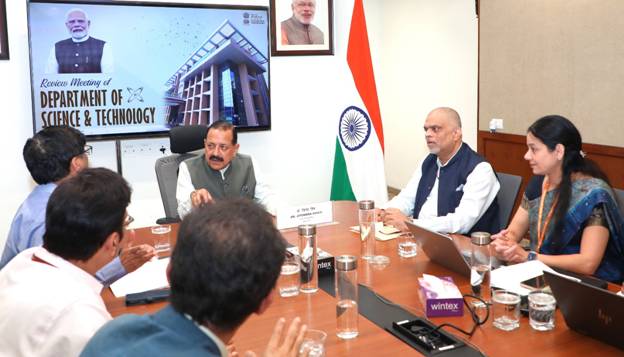
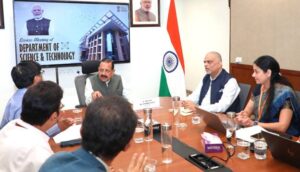
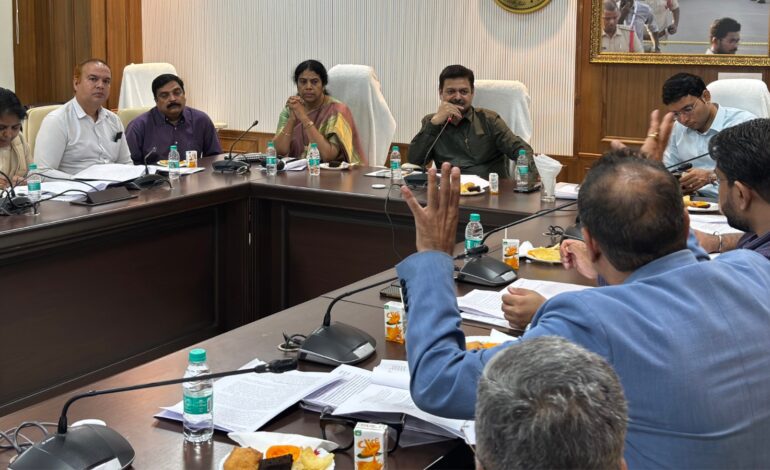
Union Minister of State (Independent Charge) for Science & Technology Dr Jitendra Singh reviews the progress of the National Quantum Mission in New Delhi on Wednesday.

Startup ecosystem expands to 17 ventures; deep-tech funding gathers momentum
New Delhi: Union Minister of State (Independent Charge) for Science & Technology Dr Jitendra Singh on Wednesday reviewed the progress of the National Quantum Mission, highlighting the successful demonstration of a 1,000-km quantum communication network – one of the longest in the world – within less than two years of its launch.
The milestone marks rapid progress towards the mission’s target of achieving a 2,000-km secure quantum communication network over eight years. The development has been achieved using indigenous technology developed by QNu Labs, supported under the mission.
Secretary, Department of Science and Technology Abhay Karandikar described the achievement as a landmark advancement in secure quantum communication, noting that it reflects progress ahead of planned timelines.
The quantum key distribution-based network is expected to significantly enhance secure communication capabilities across defence, financial systems and critical infrastructure. Officials said the technology is designed to operate across challenging terrains, including underwater and underground environments, expanding both strategic and civilian applications.
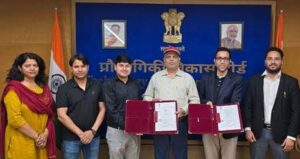
In a parallel push to strengthen the quantum ecosystem, the government has extended support to nine additional startups, taking the total number of supported ventures under the mission to 17. These startups are working across key domains such as quantum computing, communication, sensing and materials, including applications in biosensors, photon detection, positioning systems and atomic memory.
The review also highlighted growing traction in research and development funding under the government’s innovation framework. The Technology Development Board has received around 100 proposals within two months of issuing calls for funding, while the Biotechnology Industry Research Assistance Council has received nearly 200 applications across areas such as cancer research, gene therapy and bio-manufacturing.
Officials noted that new financial instruments, including optionally convertible debt, are being deployed to support startups without immediate equity dilution, while encouraging private sector participation in deep-tech innovation.
During the review, Jitendra Singh emphasised the need for transparent evaluation processes, wider outreach and coordinated communication to strengthen participation in government-backed R&D programmes and showcase India’s technological achievements globally.
Senior officials, including Secretary, Technology Development Board Rajesh Kumar Pathak and Managing Director, Biotechnology Industry Research Assistance Council Jitendra Kumar, were present at the meeting.
The developments reflect India’s accelerating push in deep-tech sectors, with quantum technologies emerging as a strategic frontier alongside biotechnology, advanced manufacturing and next-generation communication systems.