MeitY, DSCI Felicitate Winners of Cyber Security Grand Challenge 2.0; ₹6.85 Cr Prize Pool Awarded
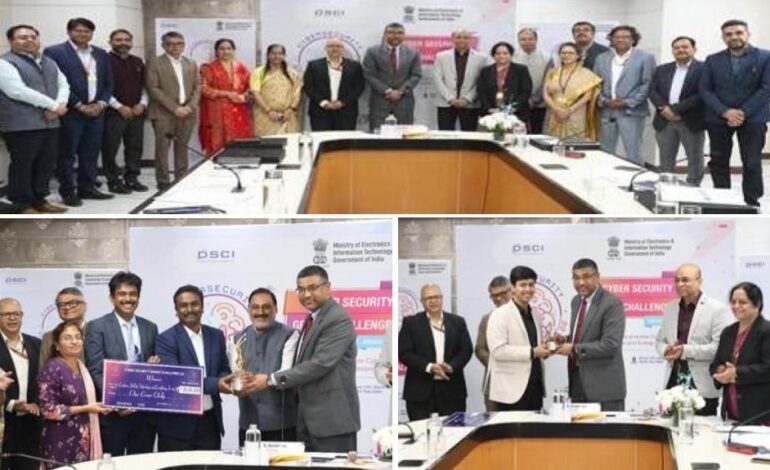
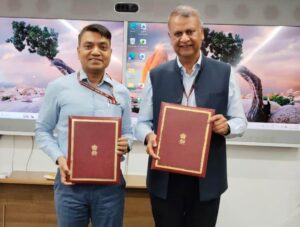
S. Krishnan, Secretary, MeitY, presented the awards to the winning start-ups under the flagship initiative, which was launched in January 2025 and hosted on the MyGov platform.

New Delhi: The Ministry of Electronics & Information Technology (MeitY), in association with the Data Security Council of India (DSCI), on Thursday felicitated the winners of the ‘Cyber Security Grand Challenge 2.0’ (CSGC 2.0), with a total prize pool of ₹6.85 crore aimed at strengthening India’s cyber security capabilities.
S. Krishnan, Secretary, MeitY, presented the awards to the winning start-ups under the flagship initiative, which was launched in January 2025 and hosted on the MyGov platform. The challenge focused on fostering innovation across six critical domains: API security, data security, wearable device security and privacy, clone and fake app mitigation, AI for threat detection and incident response, and securing next-generation biometric systems.
The overall winner, Cambrian Skillsda Technologies and Consultancy Services LLP (CSTCS), was awarded ₹1 crore for its solution addressing “Securing Next-Gen Biometrics Systems.”
Crypsis was declared first runner-up for its work on “Clone & Fake Apps Mitigation” and received ₹50 lakh. Ziriz.ai secured the second runner-up position for its “API Security” solution and was awarded ₹25 lakh.
The challenge followed a four-stage evaluation framework with structured financial support at each level. At the idea stage, 36 start-ups — six under each problem statement — were shortlisted and awarded ₹5 lakh each to refine their solutions. During the minimum viable product stage, participants received technical and business mentorship to build prototypes. Eighteen start-ups advanced to the final product stage and were granted ₹10 lakh each, with five progressing further to receive ₹25 lakh awards. The final go-to-market stage evaluated commercial readiness, scalability and market potential, culminating in the selection of three grand winners.
A distinctive feature of the initiative was that intellectual property rights of the developed solutions remain with the respective start-ups, encouraging innovation ownership and commercialisation.
Addressing the gathering, Krishnan said the challenge marked an important step towards building strong indigenous cyber security capacity in the country. He emphasised that indigenisation in cyber security is critical, given the evolving nature of digital threats and the need for domestically developed solutions.
He noted that the problem statements were curated to reflect the demands of a data-driven economy, where increasing reliance on APIs and digital platforms must be matched with robust data security and privacy safeguards. He also highlighted the participation of student-led teams, start-ups and women-led enterprises as a positive indicator of ecosystem growth.
MeitY reiterated its commitment to advancing domestic capability in cyber security and strengthening institutional and ecosystem capacity through sustained collaboration.