GeM Crosses ₹18.4 Lakh Crore GMV, Strengthens Role in Digital Public Procurement
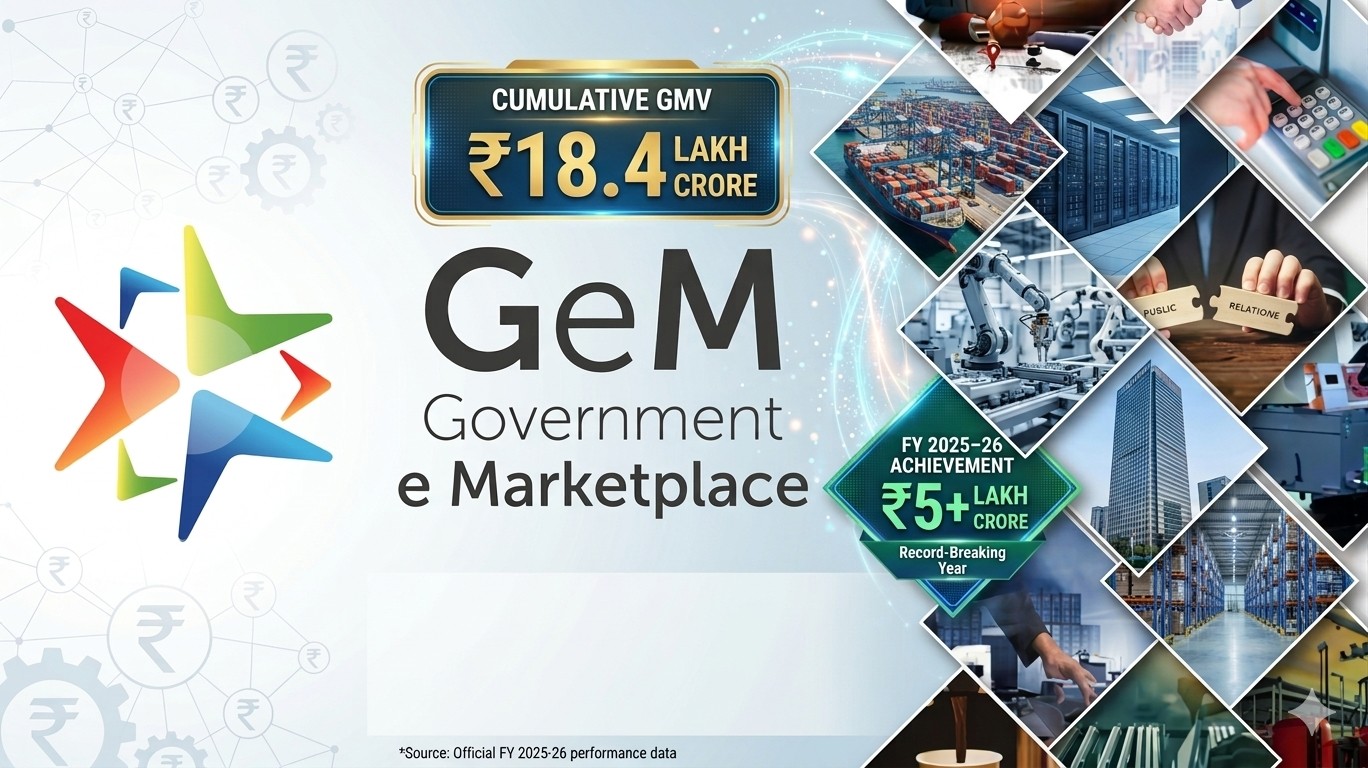
Government e Marketplace (GeM) has achieved a cumulative Gross Merchandise Value (GMV) of ₹18.4 lakh crore, including over ₹5 lakh crore in the financial year 2025–26, reinforcing its position as a key digital public procurement platform.

₹5 lakh crore GMV in FY26; MSEs, women-led firms and startups drive growth
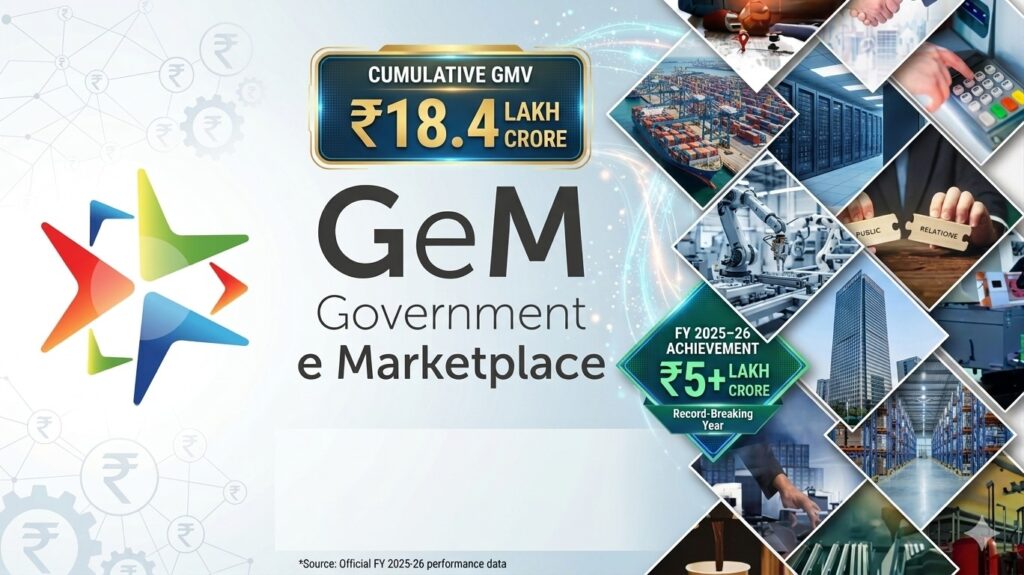
New Delhi: Government e Marketplace (GeM) has achieved a cumulative Gross Merchandise Value (GMV) of ₹18.4 lakh crore, including over ₹5 lakh crore in the financial year 2025–26, reinforcing its position as a key digital public procurement platform.
The milestone highlights the platform’s expanding role in enabling transparent, efficient and inclusive procurement across government entities, while connecting enterprises nationwide to public demand, the government said in a statement on Monday.
Chief Executive Officer, GeM, Mihir Kumar said the achievement reflects growing trust among buyers, sellers and institutions in a technology-driven procurement ecosystem.
GeM’s growth has been driven by strong participation from Micro and Small Enterprises (MSEs), women entrepreneurs, SC/ST enterprises and startups. During FY26, MSEs accounted for 68 per cent of total orders and contributed 47.1 per cent of total GMV.
More than 11 lakh MSEs are registered on the platform, receiving over 51 lakh orders worth ₹2.36 lakh crore during the year, marking a growth of over 20 per cent compared to the previous financial year. Women-led MSEs, numbering over 2.1 lakh, secured orders exceeding ₹28,000 crore, reflecting a growth of around 28 per cent.
SC/ST enterprises recorded orders worth over ₹6,000 crore, while startups secured orders exceeding ₹19,000 crore, registering a growth of more than 36 per cent, underscoring the platform’s role in promoting inclusive economic participation.
Technology continues to underpin GeM’s operations, with the platform leveraging artificial intelligence, machine learning and advanced analytics to enhance transparency and efficiency. Features such as ML-based catalogue validation, pre-sanity checks and real-time monitoring tools are being used to detect anomalies, including abnormal pricing and suspected collusive bidding.
System-driven tools like Bid Health Scores are also being deployed to support better decision-making and strengthen trust in procurement processes.
GeM is also witnessing growing adoption among states and Union Territories. Procurement by states recorded a growth of 38.3 per cent during FY26, indicating increasing confidence in the platform as a transparent and accountable procurement system.
The expansion reflects GeM’s evolution as a critical digital public infrastructure enabling wider access, improved governance and deeper penetration of public procurement across the country, the Ministry of Commerce & Industry said.