CSIR-NPL strengthens national quality infrastructure with inauguration of two apex calibration facilities

The National Primary Standard Facility for Solar Cell Calibration (NPF-SCC) was created to provide India with a world-class system to check the performance of reference solar cells and panels.

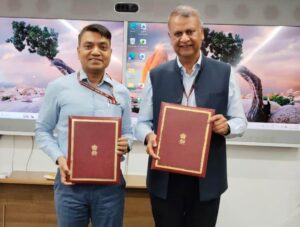
New Delhi, January 9: CSIR-National Physical Laboratory (CSIR-NPL) has inaugurated two apex-level calibration facilities aimed at strengthening India’s indigenous measurement, testing and certification ecosystem, reinforcing the country’s national quality infrastructure.
The launch coincides with the laboratory completing 80 years of service as India’s apex metrology institution and custodian of national measurement standards. As the National Metrology Institute of India, CSIR-NPL establishes reference measurements that underpin industrial quality, fair trade, environmental monitoring, scientific research and public safety across sectors.
Solar cell calibration facility boosts photovoltaic traceability
One of the new facilities, the National Primary Standard Facility for Solar Cell Calibration (NPF-SCC), has been established to provide a world-class system for evaluating the performance of reference solar cells and panels within the country.
The facility is built around a laser-based Differential Spectral Responsivity Primary Reference Measurement System developed in collaboration with Physikalisch-Technische Bundesanstalt (PTB), Germany. It enables measurement of short-circuit current of reference solar cells with an uncertainty of ±0.35 percent at k=2, placing it among the lowest uncertainty levels globally and on par with leading World Photovoltaic Scale laboratories.
The development establishes a complete domestic traceability chain for photovoltaic metrology, significantly reducing dependence on overseas calibration, cutting turnaround time for Indian solar manufacturers, and allowing calibration certificates aligned with Indian climatic, humidity and dust conditions. The facility is expected to support India’s expanding solar manufacturing base, rooftop solar programmes and export competitiveness under production-linked incentive schemes.
Environmental standards laboratory enhances air quality monitoring
The second facility, the National Environmental Standard Laboratory (NESL), has been created to test and recalibrate instruments used in air pollution monitoring systems and environmental sensors under Indian operating conditions.
Until now, most monitoring equipment relied on foreign certifications based on European or US weather profiles, often leading to performance deviations under India’s higher temperature, humidity and dust load. NESL enables domestic validation of instruments, ensuring more reliable and transparent environmental data.
The laboratory will support air quality monitoring under the National Clean Air Programme, industrial emission audits and smart city monitoring networks, while providing reference gases, calibration protocols and uncertainty evaluation services to improve data credibility and public trust.
Support for MSMEs and indigenous manufacturing
Together, the two facilities are expected to benefit MSMEs, start-ups and indigenous manufacturers by lowering certification costs, enabling compliance with tightening quality and transparency norms, and reducing trade and regulatory barriers.
The projects were realised through financial support from the Ministry of New and Renewable Energy and the Ministry of Environment, Forest and Climate Change, highlighting the role of inter-ministerial collaboration in creating advanced national infrastructure.
CSIR-NPL also highlighted its ongoing work in quantum standards, advanced materials and biomedical metrology, as well as the maintenance of Indian Standard Time, underscoring the laboratory’s expanding role in supporting India’s economy, governance systems and daily life through reliable and precise measurements.