Prime Minister Modi sets seven-point growth agenda for developed India by 2047
Prime Minister Narendra Modi has outlined a seven-point growth strategy covering manufacturing, agriculture, technology, infrastructure, defence, green and blue economy, and soft power.
The seven areas identified by the Prime Minister are manufacturing, agriculture and food production, technology and innovation, infrastructure and connectivity under the Gati Shakti framework, defence, the green and blue economy, and India’s soft power.

NEW DELHI: Prime Minister Narendra Modi presented a broad roadmap for India’s transformation into a developed nation by 2047, identifying seven strategic areas that he said must drive the country’s growth over the next five to seven years.
Modi made the announcement from the Red Fort on Saturday while addressing the nation on the occasion of India’s 80th Independence Day.
The seven areas identified by the Prime Minister are manufacturing, agriculture and food production, technology and innovation, infrastructure and connectivity under the Gati Shakti framework, defence, the green and blue economy, and India’s soft power.
He said the objective was not merely to accelerate individual sectors but to adopt a holistic approach to building national capabilities and achieving the scale required for a developed India.
Manufacturing emerged as the first pillar of the proposed strategy. Modi called for India to develop the entire value chain, from components to finished products, and become a trusted global supply-chain hub covering design through manufacturing.
He said Indian manufacturing would have to compete globally on cost, quality and scale, while emphasising zero-defect precision manufacturing, competitive factories, user-friendly products and international-quality packaging.
“Quality, quality, quality” should become India’s manufacturing mantra and a source of global brand value, he said.
Agriculture and food production constitute the second pillar. Modi called for greater emphasis on food processing and connecting Indian farms with global export markets.
He highlighted the export potential of millets, spices, fruits, flowers and other agricultural products, while also pointing to opportunities for chemical-free farming and products that meet global standards.
Technology and innovation form the third pillar. Modi said India must avoid becoming merely a market for emerging technologies and instead position itself as an innovation hub.
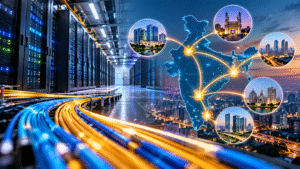
Artificial intelligence, quantum technology, space, robotics and data centres were identified as major areas of opportunity. He also called for India to take a leadership role in next-generation communication technologies, including Made-in-India 6G.
The Prime Minister linked this technology ambition to the country’s push for self-reliance. He cited semiconductor manufacturing as an example, saying three semiconductor plants have already started production and that another five to eight plants are expected to come up in the next seven to eight years.
He also highlighted critical minerals as an essential component of India’s technology and energy security strategy.
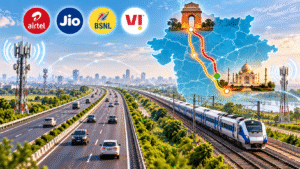
The fourth pillar is Gati Shakti, with the Prime Minister calling for seamless and faster connectivity through high-speed rail, modern highways, inland waterways, airports and multimodal logistics.
He also called for a shift towards port-led development, arguing that ports should become engines of wider economic growth rather than function primarily as locations for loading and unloading cargo.
Defence constitutes the fifth pillar. Modi said India needs to become self-reliant in defence and develop next-generation defence technologies with the ambition of becoming a global supplier.
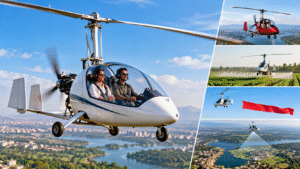
He specifically mentioned drones, counter-drone systems and hypersonic defence technologies, while also identifying cybersecurity as an increasingly important component of national defence.
The sixth pillar combines the green and blue economies. Modi called for India to build global-scale capabilities in green hydrogen, renewable energy, energy storage, green mobility and green manufacturing.
He also highlighted India’s coastline and opportunities in fisheries, coastal tourism and ocean technologies as components of a growing blue economy.
India’s soft power forms the seventh pillar. Modi identified yoga, Ayurveda, holistic healthcare, handicrafts, culture, films, animation, visual effects, gaming and digital content as areas through which India can strengthen its global influence.
He also pointed to tourism, sports events and the growing concert economy as opportunities to attract international visitors and global talent to India.
Beyond the seven pillars, Modi set a series of ambitious targets for Indian companies and institutions. He called for at least 50 Indian companies to be part of the Fortune 500 within the next decade, an Indian bank to enter the world’s top five, and Indian pharmaceutical companies to become global leaders.
He also called for Indian technology, consulting, accounting, legal and rating firms to achieve greater global prominence and for Indian brands to become globally recognised names.
The Prime Minister placed India’s young population at the centre of the developed India strategy. He said the youth would be both the principal contributors to and beneficiaries of the country’s transformation.
According to Modi, India now has more than 2.5 lakh registered startups. He announced a target of training one crore young people in artificial intelligence skills over the next year, with the objective of enabling India’s youth to play a leadership role in the AI economy.
He also highlighted growth in India’s bioeconomy and electric vehicle adoption. The bioeconomy, which he said was valued at about ₹60,000 crore before 2014, has reached ₹20 lakh crore, while electric vehicle sales have risen from about 1.5 lakh in 2009-10 to 25 lakh in 2025-26.
Energy security was another major theme of the address. Modi said India is targeting 100 GW of nuclear power capacity by 2047 and aims to commission five new nuclear reactors during the current decade.
He also highlighted the expansion of solar power, saying India’s solar energy capacity had risen from 2 GW in 2014 to 160 GW. The PM Surya Ghar Muft Bijli Yojana, he said, has already crossed the milestone of 50 lakh households adopting solar energy.
Modi also used the Independence Day address to underline the importance of reforms and a change in India’s work culture. He said reforms should be pursued not as a compulsion or a buzzword but as a matter of conviction.
He called for changes across government, industry, agriculture and society, arguing that policies and regulatory systems must be redesigned around India’s future ambitions rather than the requirements of the past.
The Prime Minister also linked India’s development ambitions with greater economic self-reliance. He cited semiconductors, critical minerals, energy, defence and domestic manufacturing as areas where excessive external dependence could expose the economy to global disruptions.
He pointed to the changing global environment, including the weaponisation of resources, technology, energy and other strategic commodities, as a reason for strengthening India’s domestic capabilities.
The address also placed considerable emphasis on social development and inclusion. Modi said 25 crore people had moved out of poverty over the past 12 years and claimed that India’s social-security coverage had expanded from 25 crore people before 2014 to 100 crore within a decade.
He announced a new target of six crore Lakhpati Didis, building on the achievement of the earlier three-crore target, and called for greater participation of women in political decision-making, including implementation of the 33% reservation for women in legislatures.
On education and skills, Modi highlighted the expansion of universities, medical education, foreign universities in India and Atal Tinkering Labs. He also announced plans for free online coaching for competitive examinations to reduce the financial burden on middle-class and poorer families.
Sports was another area of focus, with Modi saying India is preparing to become a strong contender to host the 2036 Olympics and will host the 2030 Commonwealth Games. He also announced a nationwide talent hunt targeting children aged five to 15 to identify potential athletes for future international competition.
On national security, Modi said the nature of warfare is changing, with threats potentially targeting refineries, banks, data centres and other infrastructure. He announced plans to establish a modern voluntary civil defence network capable of responding to emerging forms of crisis.
The Prime Minister also said India would continue its efforts towards eliminating left-wing extremism while warning against the emergence of ideological forms of extremism. He described the creation of a secure India as a collective responsibility.
The overarching target remains a developed India by 2047, when the country will mark 100 years of Independence. Modi said the next five to seven years would be particularly important and called for India to accomplish in that period tasks that had remained unfinished for several decades.