Dr Jitendra Singh Reviews IMD’s Multi-Hazard Early Warning DSS and ‘Mausamgram’; Commends ₹250 Crore Cost Savings Through Indigenous System

Union Minister of State (Independent Charge) for Science and Technology; Earth Sciences Dr Jitendra Singh visited the India Meteorological Department (IMD) headquarters in New Delhi on Sunday.

New Delhi, October 13: Union Minister of State (Independent Charge) for Science and Technology; Earth Sciences Dr Jitendra Singh visited the India Meteorological Department (IMD) headquarters in New Delhi and reviewed two major technological advancements — the Multi-Hazard Early Warning Decision Support System (DSS) and the citizen-centric platform “Mausamgram”.
The Minister praised IMD’s self-reliant, Web-GIS based DSS for transforming India’s disaster forecasting and early warning ecosystem. Developed entirely in-house, the system has helped save an estimated ₹250 crore by eliminating dependence on foreign vendors and avoiding an annual maintenance expenditure of ₹5.5 crore. Dr Singh described the innovation as a landmark under the Atmanirbhar Bharat initiative, demonstrating India’s growing capability in advanced, indigenous weather technologies.
The DSS integrates multiple data sources to generate accurate, real-time, impact-based weather alerts, enhancing national disaster preparedness and public safety. The Minister highlighted that the DSS not only improves lead time for forecasting but also provides actionable insights for emergency response, helping minimize loss of life and property during extreme weather events.
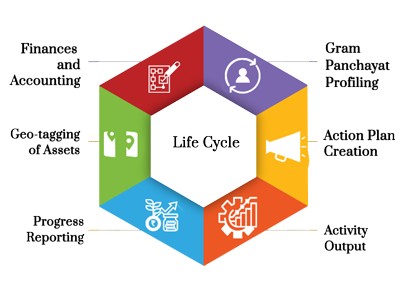
During his review, Dr Singh also launched “Mausamgram” — a citizen-focused digital platform delivering hyperlocal weather forecasts down to the village level. The initiative embodies the vision of “Har Har Mausam, Har Ghar Mausam”, offering hourly updates for 36 hours, three-hourly forecasts for the next five days, and six-hourly updates for up to ten days. Users can access weather details through their PIN code or by selecting state, district, block, and gram panchayat. Available in all official Indian languages, Mausamgram provides accurate and accessible weather data for every household across the country.
IMD officials informed the Minister that the Department has re-engineered its forecast and warning generation process, cutting forecast preparation time by about three hours, extending the lead period from five to seven days, and improving accuracy by nearly 15–20 percent.
Dr. Jitendra Singh encouraged IMD to integrate artificial intelligence (AI) into the system to enhance its user experience, accessibility, and predictive accuracy. He also urged further refinement of the Multi-Hazard Early Warning DSS to ensure that citizens receive clear, easily understandable alerts, enabling better preparedness and timely response.
The Minister congratulated IMD for winning the National Award for e-Governance 2025 at the 28th National Conference on e-Governance in Visakhapatnam for leveraging digital technologies in public service delivery. He lauded the Department’s “Special Swachhata Program” achievements, including the disposal of old files and e-waste that generated ₹30 lakh in revenue and freed up 600 square meters of office space.
Earlier in the day, Dr. Singh participated in Special Swachhata Program 5.0 at IMD headquarters, Mausam Bhavan, where he planted a sapling under the “Ek Ped Maa Ke Naam” initiative and felicitated 50 “Safai Mitras” for their outstanding contribution to cleanliness and maintenance.
The Minister emphasized that under the ongoing Mission Mausam, the IMD aims to achieve 5×5 km scale forecasting, dynamic impact-based warnings, and risk-based early alerts by 2030, ensuring last-mile connectivity so that weather warnings reach every household. “With initiatives like Mausamgram and the Multi-Hazard DSS, India is steadily moving toward a future where every citizen is empowered with timely and precise weather intelligence,” Dr Singh said, envisioning a fully AI-driven, citizen-centric meteorological ecosystem for the nation.