




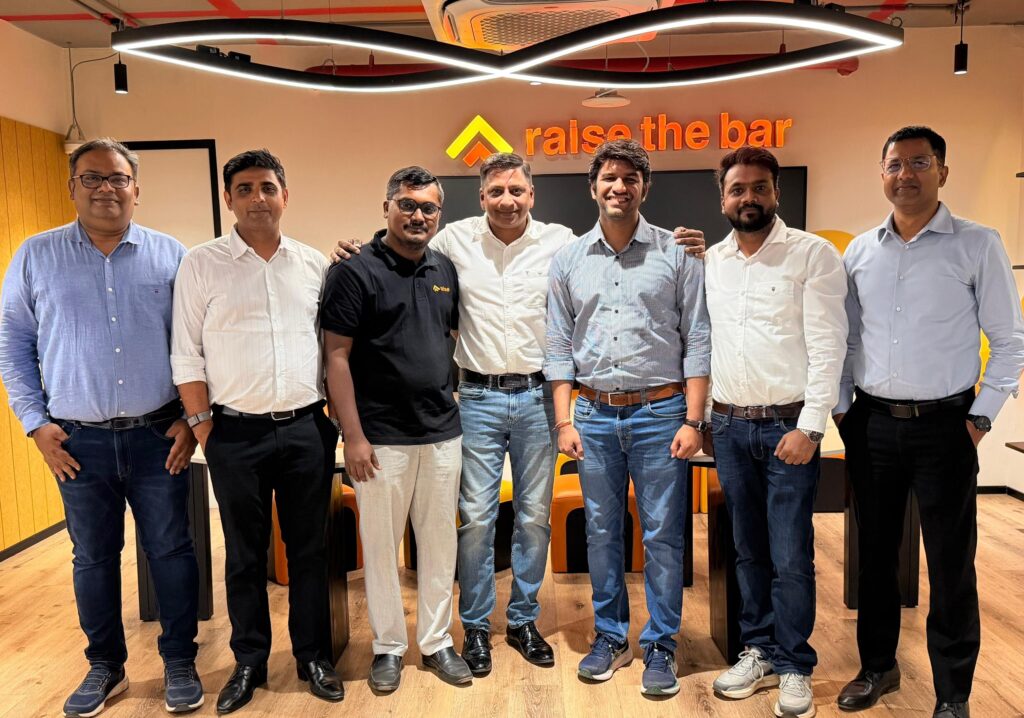
Mumbai: Raise Financial Services, the fintech company behind trading platform Dhan, has acquired GreenLife Insurance Broking Private Limited (GIBL) in an all-cash and stock deal, marking its formal entry into India’s rapidly expanding insurance distribution sector.
The acquisition signals a broader trend underway in India’s fintech ecosystem, where wealth-tech and investment platforms are increasingly moving toward integrated financial services models spanning investing, savings, lending, protection and AI-driven advisory.
Raise said it plans to invest $15 million in GIBL to build a consumer-focused insurance distribution platform centred around:
- product-led experience
- technology infrastructure
- digital insurance management
- advisory support
- customer transparency
The company said GIBL will continue to operate independently as a wholly owned subsidiary and aims to launch its new insurance platform by the end of 2026.
A Larger Fintech Consolidation Story
The acquisition reflects how India’s fintech landscape is evolving beyond standalone apps into integrated financial ecosystems.
Raise Financial Services already operates multiple consumer-facing platforms including:
- Dhan
- Fuzz AI
- Upsurge
- Filter Coffee
- Stratzy
With the addition of insurance distribution, Raise is attempting to position itself as a full-stack financial services ecosystem capable of serving customers across:
- investing
- trading
- wealth creation
- financial planning
- risk protection
This mirrors a broader global fintech pattern where customer acquisition costs in financial services are pushing platforms toward cross-selling multiple financial products through a unified technology stack.
Why Insurance Is Becoming the Next Big Fintech Battleground
India’s insurance sector remains significantly underpenetrated despite rapid growth in digital finance adoption.
Industry analysts believe the sector presents enormous long-term opportunity because of:
- rising financial awareness
- growing middle-class participation
- increasing healthcare costs
- digital onboarding adoption
- expansion of Tier-2 and Tier-3 financial markets
Yet insurance distribution in India continues to suffer from:
- low consumer trust
- policy complexity
- mis-selling concerns
- fragmented advisory systems
- poor customer experience
Raise appears to be positioning its insurance expansion precisely around these pain points.
Raunak Rathi, Co-Founder and Director of Raise Financial Services, said insurance adoption remains low partly because of lack of transparency and complexity associated with understanding insurance products.
The company says it intends to build a “consumer-first” insurance business combining digital convenience with advisory-led support.
The Hybrid Distribution Model
One of the most interesting aspects of the acquisition is Raise’s emphasis on a hybrid online-offline model.
Unlike many digital-first insurance startups that focused purely on app-based distribution, Raise plans to combine:
- digital customer journeys
- technology-driven servicing
- offline advisory support
- Tier-2 and Tier-3 outreach
This may prove strategically important in India’s insurance market where trust and assisted selling still play major roles in customer conversion.
GIBL already possesses an established offline distribution network across East and North-East India covering more than 50 cities and towns.
Founded in 2013 by Subir Mukherjee, GIBL has built partnerships across both public and private insurers and developed a strong B2B insurance distribution presence over the past decade.
Following the acquisition, GIBL’s 25-member team will relocate operations to Mumbai and integrate into the Raise ecosystem.
The Bigger Shift: Fintechs Are Becoming Financial Conglomerates
The Raise-GIBL deal highlights a deeper structural transformation occurring in India’s digital finance industry.
The first generation of fintech firms focused largely on:
- payments
- stock trading
- retail investing
- lending
But as customer acquisition costs rise and competition intensifies, fintech companies are increasingly evolving into diversified financial conglomerates.
The logic is straightforward:
Once a platform acquires financially active users, it can monetise relationships across multiple financial categories.
Insurance is especially attractive because:
- it offers recurring revenue streams
- customer lifetime value is high
- penetration remains low
- digital distribution is still underdeveloped
This explains why investment platforms, banks, neobanks and wealth-tech startups are all racing toward insurance integration.
AI, Personalisation and the Future of Insurance Distribution
Raise’s existing ecosystem also suggests that AI and data-driven personalisation may eventually play a central role in its insurance ambitions.
The company already operates AI-focused products such as Fuzz AI and analytics-driven platforms within its broader fintech portfolio.
This could allow Raise to eventually build:
- personalised insurance recommendations
- AI-assisted financial planning
- predictive risk profiling
- automated policy servicing
- integrated investment-protection journeys
If successful, such models could fundamentally reshape how younger Indian consumers interact with insurance products.
A High-Stakes Expansion Bet
However, the insurance business is fundamentally different from trading and investment platforms.
Unlike stock trading apps that benefit from user activity and transaction frequency, insurance requires:
- long-term trust
- claims servicing credibility
- advisory quality
- regulatory compliance
- relationship management
India’s insurance market is also highly competitive, with:
- established insurers
- banks
- aggregators
- digital brokers
- insurtech startups
all competing aggressively for market share.
The success of Raise’s insurance ambitions may therefore depend less on technology alone and more on whether it can genuinely simplify and humanise insurance experiences for Indian consumers.
The Emerging Shape of India’s Financial Ecosystem
The acquisition ultimately reflects a larger reality:
India’s financial sector is entering a phase where the boundaries between:
- investing
- banking
- insurance
- AI advisory
- wealth management
- financial education
are rapidly dissolving.
The next generation of financial platforms may no longer operate as standalone products. Instead, they are evolving into integrated ecosystems designed to manage an individual’s entire financial life cycle.
Raise’s entry into insurance distribution is one more indication that India’s fintech industry is now moving into its next and more complex phase — the battle to become the primary financial relationship platform for millions of digitally connected Indians.

